English
 Русский
 Français
 Português
 Español
 لالعربية


Food and beverage facilities have far stricter operational requirements than ordinary industrial warehouses, as any potential pollution to raw materials, semi-finished products and finished goods will directly lead to non-compliance with food safety regulations, cause unnecessary product loss and damage brand reputation. From raw material receiving, production line distribution to finished goods storage and delivery, every link of material handling needs to follow strict hygiene, safety and efficiency standards, which puts forward higher requirements for the industrial handling equipment you use.
Traditional internal combustion forklifts will produce exhaust gas containing particulate matter and harmful volatile compounds during operation, which may be deposited on the surface of unpackaged food materials or finished products. In addition, the risk of fuel leakage and greasy maintenance residues also creates hidden dangers to the food safety management system of the facility, which is difficult to be completely eradicated in long-term operation. For lead-acid forklifts, frequent water replenishment maintenance and the risk of electrolyte overflow also make them not a suitable choice for food and beverage scenarios that require a high degree of hygiene.
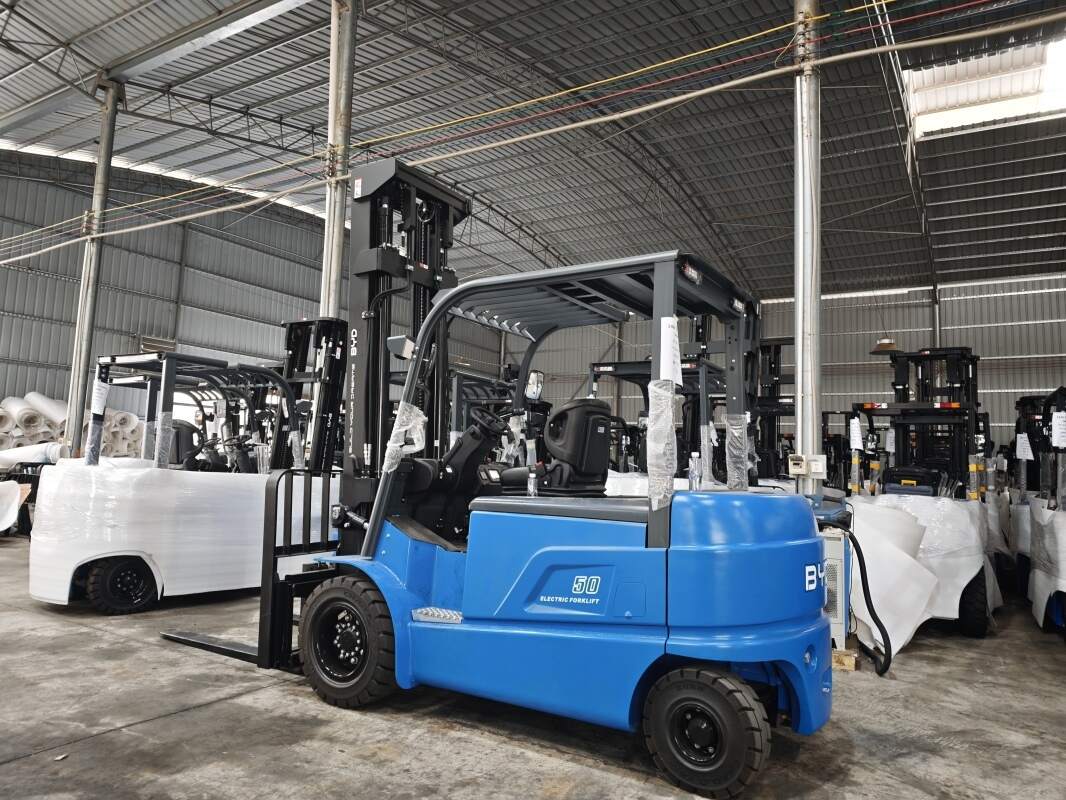
Lithium forklifts can fully avoid the above hidden risks for your food and beverage facility. They produce zero exhaust emissions during the whole operation process, no oily residue will be generated in daily use, and the sealed lithium battery structure will not produce leakage risks under normal use, which can fully meet the food hygiene supervision requirements. Most lithium forklifts can adapt to a wide temperature range, which can operate stably in cold storage scenarios with low temperature, perfectly matching the common low-temperature storage link of frozen food and beverage products. Their low-noise operation design will not interfere with the normal operation of on-site staff and food production equipment, helping to maintain a stable and orderly production rhythm.
In terms of operational efficiency, lithium forklifts support opportunity charging during off-hours such as shift breaks, no need for long waiting for full charging, which can meet the continuous material handling demand during the peak production season of food and beverage facilities. Their long service life and low daily maintenance cost also help enterprises reduce long-term operational input.
As a professional new energy forklift service provider, Jianshu New Energy focuses on BYD electric forklift solutions for various industrial scenarios, we can provide you with targeted lithium forklift configuration suggestions suitable for the actual situation of your food and beverage facility. If you have relevant consultation demands, you can contact us via [email protected].