
 English
 Русский
 Français
 Português
 Español
 لالعربية

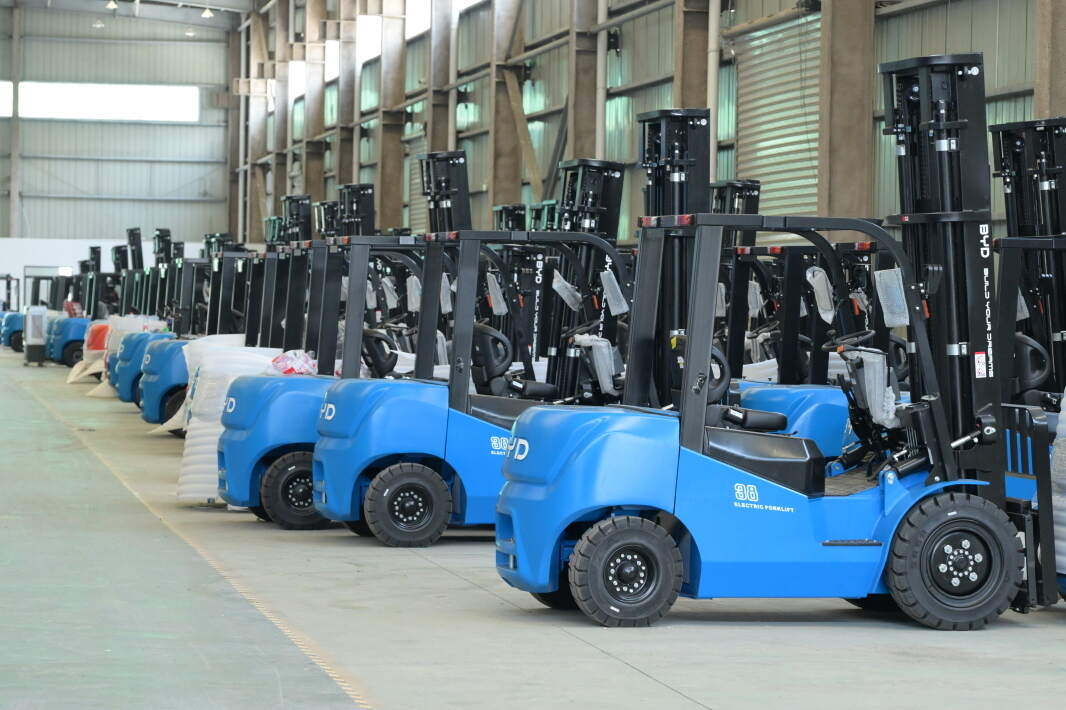
For material handling teams that regularly operate electric forklifts on loading docks, sloped warehouse access roads or graded factory transport routes, the gradient climbing capacity parameter listed on product specification sheets is far more than a trivial technical indicator, it connects directly to the actual operation experience and safety performance of the whole vehicle on all sloped working scenarios.
First of all, this parameter marks the clear basic safety boundary for daily ramp operation. The officially marked gradient climbing capacity value is tested under the standard condition of full rated load, stable driving state, and standard dry and non-slip pavement, which reflects the maximum slope the forklift can pass steadily without slipping or stalling. If the actual slope of the working scene is lower than this marked parameter, the vehicle will not face hidden dangers such as power shortage and backward sliding, and the goods stacked on the forks will not have the risk of shifting or falling due to unbalanced gravity distribution, which provides a clear reference for operation teams to select suitable forklift models according to their on-site ramp conditions.
Secondly, this parameter provides reliable reference for power consumption prediction and route planning. When the forklift runs on the slope that matches the marked climbing capacity, the output current of the drive motor and the power consumption of the whole vehicle will stay within the reasonable design range, the battery discharge curve will not fluctuate sharply, and the staff can calculate the remaining available working time more accurately according to the real-time power level, arrange the subsequent transport routes properly, and avoid the situation that the forklift runs out of power halfway and stays stuck in the middle of the ramp.
Thirdly, this parameter also reflects the expected long-term operation loss of core components. Long-term driving on a slope far exceeding the marked climbing capacity will cause abnormal wear of the drive motor, walking wheel, brake system and battery pack, and shorten the regular maintenance interval of the whole vehicle. When the actual working conditions match the climbing capacity parameter, the loss of each component will follow the normal design life expectation, which helps to control the long-term operation and maintenance cost of the electric forklift fleet.
For most on-site management personnel and operators, fully understanding the practical meaning behind this parameter can help them avoid unreasonable operation habits, give full play to the inherent performance of electric forklifts, and build a more stable and efficient material handling operation system.


