
 English
 Русский
 Français
 Português
 Español
 لالعربية

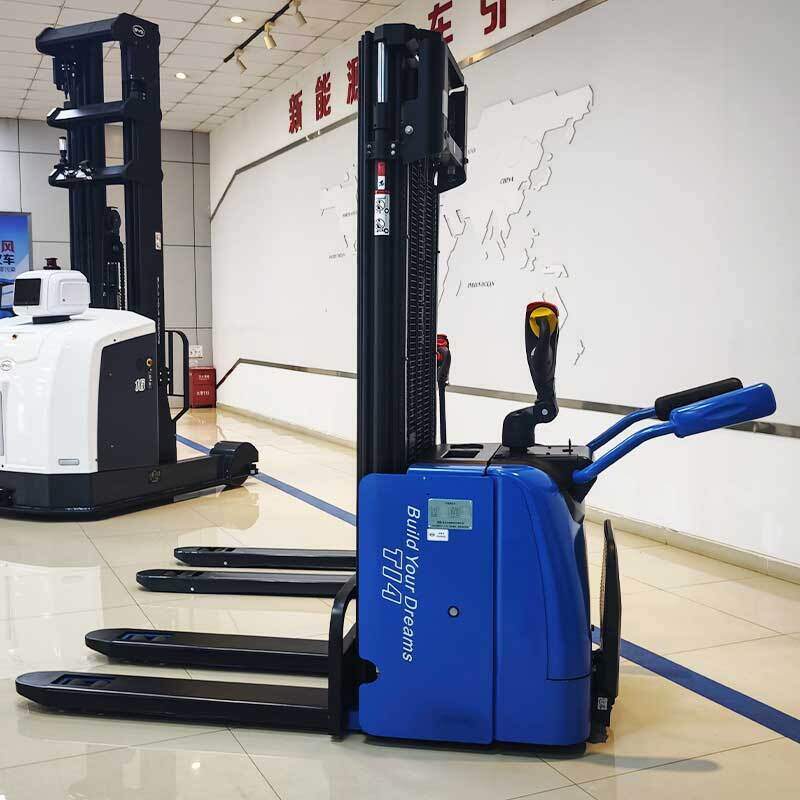
For industrial forklift operation scenarios that involve long-term exposure to low temperature, such as cold chain storage and high-latitude outdoor loading and unloading in winter, the matching of battery performance directly affects the continuity of daily operation. Many operators have noticed significant performance gaps between common standard lithium-ion forklift batteries and cold-climate optimized models, and a systematic comparison of core parameters can help make more reasonable selection decisions.
First, the operating temperature range is the most intuitive differentiated parameter. Standard lithium-ion forklift batteries are designed for conventional normal temperature working environments, with the rated operating temperature range generally covering from -10℃ to 45℃. When the ambient temperature drops below 0℃, the discharge efficiency of standard models will gradually decrease, and the built-in protection mechanism may restrict normal charging operation to avoid damage to the internal structure of the battery. For cold-climate optimized products, the specially adjusted electrolyte formula and low-resistance electrode material can expand the lower limit of the rated operating temperature to -35℃, and the batteries can maintain more than 85% of the rated discharge efficiency at -20℃, and support normal charging operation directly in low temperature environments without moving to a pre-heated space.
Second, the static energy retention performance also shows obvious differences between the two types of products. When the standard battery is left for more than 72 hours in a continuous -10℃ environment, the self-discharge rate is about 3 times that of the normal temperature state, which may lead to insufficient power to start the forklift after long-term idle. The cold-climate optimized lithium-ion forklift battery is equipped with a heat insulation protective layer and a low-power intelligent temperature management module, so the self-discharge rate only increases by about 15% compared with the normal temperature state under the same low temperature static condition, which can stably support the normal startup of equipment after long-term idle.
Third, the cycle life performance under different temperature conditions is also a key reference parameter. Under normal temperature working conditions, the two types of batteries have little difference in the number of available charge-discharge cycles, and both can meet the long-term use needs of conventional industrial scenarios. However, when operating continuously below 0℃ for a long time, the cycle life of standard batteries will be significantly reduced. For cold-climate optimized products, the adjusted internal material and temperature control structure can effectively slow down the performance attenuation rate in low temperature environment, and the actual cycle life under low temperature conditions is much higher than that of standard models.
In terms of scenario matching, standard lithium-ion forklift batteries are more suitable for normal temperature warehouses, ordinary manufacturing workshops and other scenarios where the ambient temperature remains above 0℃ all year round, with more controllable comprehensive use cost. Cold-climate optimized products are more suitable for scenarios with long-term low temperature conditions, which can effectively reduce subsequent operation and maintenance costs, and avoid operation interruption caused by insufficient battery power in low temperature. Operators do not need to blindly select cold-climate optimized products, and they can obtain the best input-output ratio by matching corresponding battery parameters according to the actual ambient temperature of their working scenarios.


