
 English
 Русский
 Français
 Português
 Español
 لالعربية

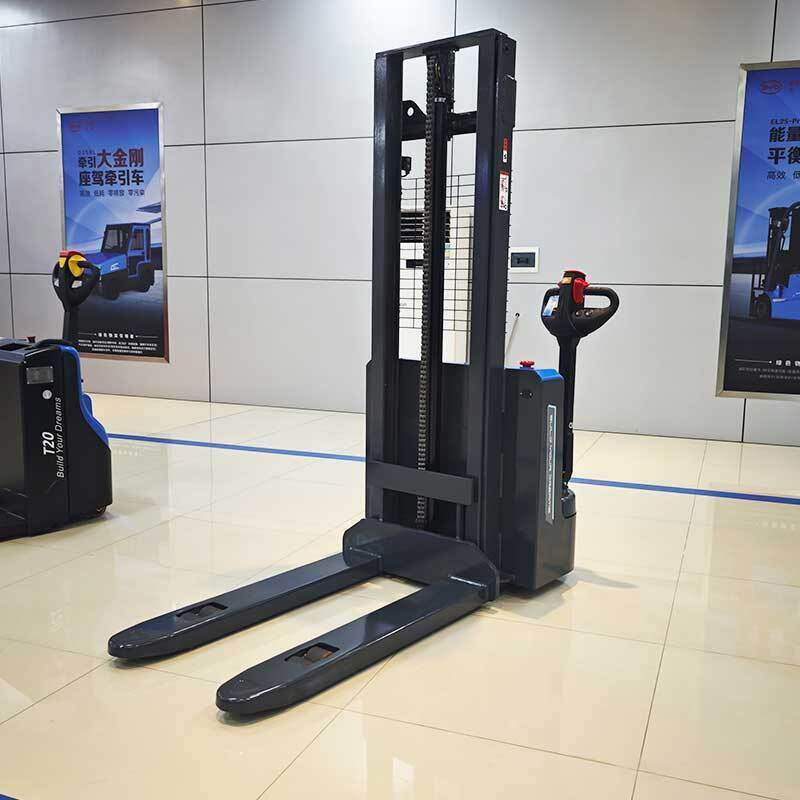
Lithium-ion counterbalance forklift has become a core equipment widely adopted in modern material handling scenarios, covering small e-commerce warehouses, light industrial workshops, large manufacturing plants and heavy cargo storage yards. Reasonable motor power configuration matching is one of the core factors that directly affect the operation stability, energy consumption performance and service life of the whole vehicle, instead of blindly pursuing high power or cutting configuration to reduce cost.
For 1 to 1.5 tonnage small lithium-ion counterbalance forklifts, which are mostly used for short-distance frequent handling in narrow aisles, small parts sorting and light cargo stacking, the standard configuration of traction motor can be set between 4kW to 5kW, and the lifting pump motor can match 3kW to 4kW. This set of configuration can fully meet the basic demand of full load traveling, 2 to 3 meters of normal lifting, and small slope passing, avoiding unnecessary power waste and reducing daily operation power consumption effectively.
For 2 to 2.5 tonnage general-purpose lithium-ion counterbalance forklifts that occupy the largest application proportion, which are widely used in medium-sized warehouses, ordinary manufacturing raw material transfer and conventional cargo loading and unloading, the traction motor can match 5kW to 7kW, and the lifting pump motor can be set between 4kW to 5.5kW. This configuration can support full load lifting above 3 meters, stably passing 8% gradient ramp with full load, and the power reserve can adapt to most conventional operation demands, balancing dynamic performance and energy consumption performance well.
For 3 to 3.5 tonnage heavy duty lithium-ion counterbalance forklifts, which are mainly used for heavy cargo transfer, large finished product handling and high stack operation in heavy industrial scenarios, the traction motor can be configured from 7kW to 9kW, and the lifting pump motor can match 5.5kW to 7kW. Sufficient power reserve can prevent the motor from running under overload state for a long time during frequent full load lifting, frequent start and stop and high gradient ramp driving, effectively reducing the risk of overheating and fault of the power system.
During actual configuration selection, users can make tiny adjustment based on actual operation scenarios. For scenarios with long daily operation time, more than 10% gradient ramps and high frequency full load operation, a 10% appropriate power reserve can be reserved to guarantee stable operation. Avoid choosing excessive high power configuration which will increase unnecessary procurement cost and power consumption, and also avoid selecting insufficient power configuration which will cause long-term overload operation of the motor and reduce the service life. The appropriate matching of motor power will help users obtain more stable operation experience and lower comprehensive use cost in long-term use.


