English
 Русский
 Français
 Português
 Español
 لالعربية


Pedestrian safety around forklifts is one of the top priorities for warehouse, logistics and manufacturing operation teams, as mixed operation of moving forklifts and passing pedestrians accounts for a large proportion of on-site work-related injuries. A scientific, systematic evaluation mechanism can effectively identify hidden risks that are easily ignored in daily operations, cut down accident occurrence probability, and build a more stable safe production environment for all on-site staff.
The first step to conduct the evaluation is to sort out the baseline risk data of the whole operation site. You can mark all the intersection points of forklift moving routes and pedestrian dedicated passages, record the pedestrian flow density in different time periods such as shift changing peak and cargo loading peak, and sort out the hidden danger records in the past 6 months near these high-frequency intersection areas. This step helps you clarify which areas need higher level of safety protection, and avoid uniform and inefficient safety input across the whole site.
The second evaluation dimension focuses on the validity of existing safety configurations. You can check the working status of audible and visual warning devices installed on electric forklifts, verify whether the blind area monitoring system can capture all moving pedestrians within the preset sensing range, and inspect the clarity and reasonable installation position of pedestrian priority warning signs, speed limit marks and safety isolation barriers on the site. It is also necessary to test the response speed of all safety alert systems under actual operation scenarios, to make sure there is no obvious delay that may cause safety hazards.
The third core evaluation part is to check the implementation status of personnel operation specifications. You can carry out random assessment for forklift operators on their awareness of active deceleration at pedestrian crossing points, and test the safety avoidance awareness of walking staff when they meet moving forklifts. Simulated interaction drills can be arranged to record the reaction time of both sides when hidden dangers appear, to confirm whether their coping behaviors meet the pre-set safety standards.
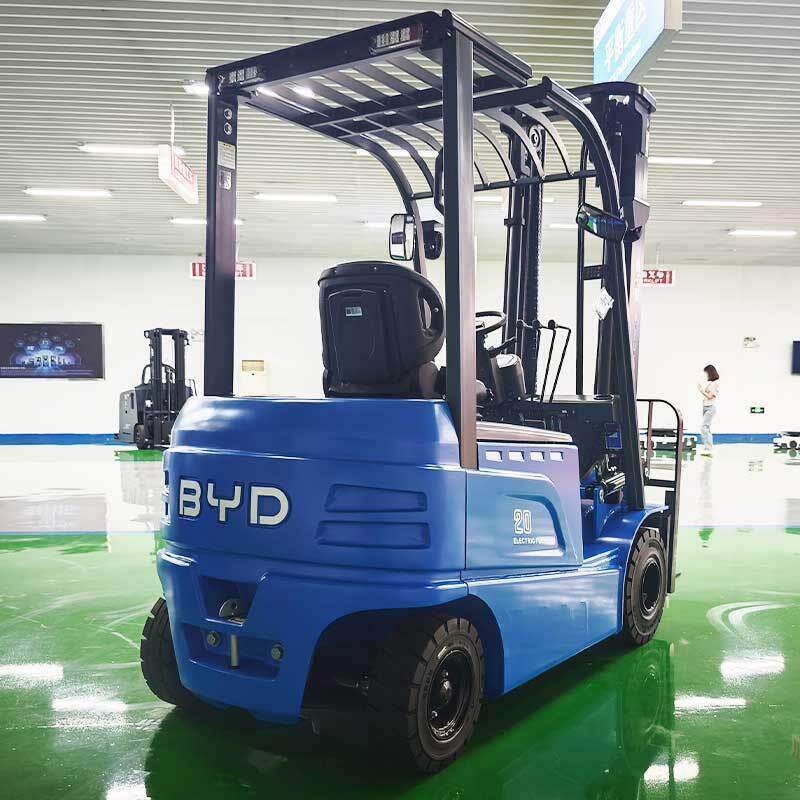
It is also necessary to establish a long-term dynamic evaluation mechanism. Weekly spot check on the running status of key safety points, monthly review of newly generated hidden danger records, and quarterly full coverage of safety level re-evaluation can help you adjust the safety protection scheme in time according to the changes of cargo flow routes, new staff joining and operation mode adjustment. As Jian Shu New Energy, we focus on BYD electric forklifts, if you need professional customized pedestrian safety evaluation service for your operation site, you can send emails to [email protected] for more details.