
 English
 简体中文
简体中文 Русский
 Français
 Português
 Español

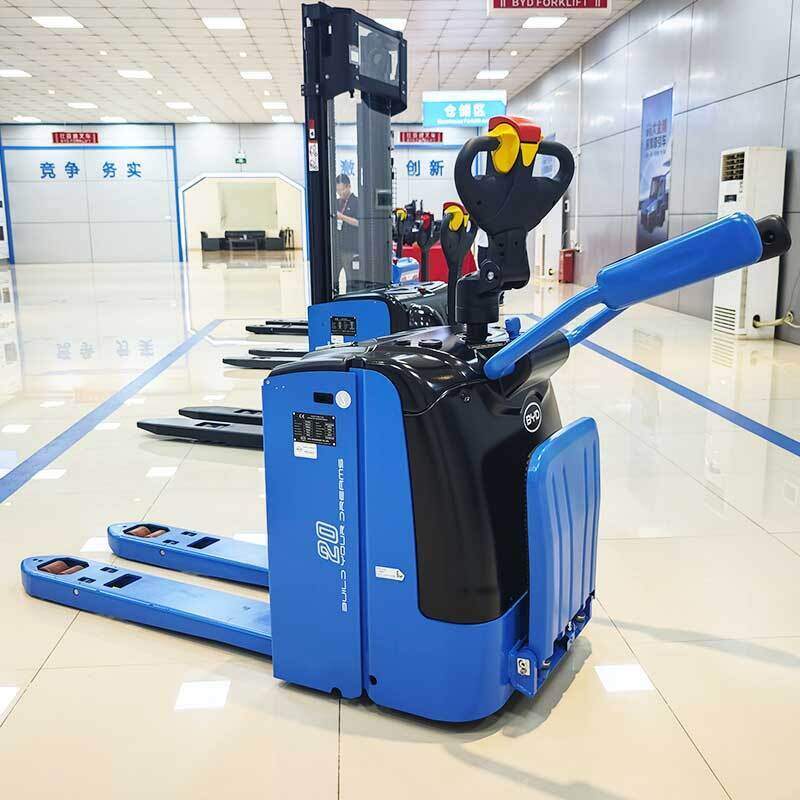
Against the background of global low-carbon transformation in logistics and warehousing sectors, electric forklifts have become one of the most widely adopted core handling equipment for indoor operation scenarios, due to their low noise, zero local emission and relatively flexible operation characteristics. Many frontline operators and warehouse managers still lack systematic, practical guidance to make full use of the equipment’s advantages while avoiding unnecessary damage and hidden safety risks.
Core Pre-operation Safety Check Specifications
Before each formal operation, operators should conduct a full visual and functional check of the whole equipment first. They need to test the response sensitivity of the brake system, confirm the remaining power level matches the scheduled operation tasks on that shift, check if there is obvious deformation or crack on the surface of forks, and clear up possible obstacles on the planned operation route. Operators should never try to overload the equipment beyond the rated load weight, and avoid sharp turns on sloped surfaces to reduce sideslip risks.
Scientific Daily Maintenance Rules to Extend Service Life
Formulating a regular, standardized maintenance routine can effectively reduce unexpected downtime caused by sudden failures. After each shift, operators should wipe off dust and residual cargo scraps accumulated on the motor heat dissipation structure, and check if there is any visible leakage on the hydraulic system pipelines. For power battery packs, operators should follow the official charging guidance, avoid fully draining the power before charging, and arrange regular supplementary charging if the equipment will be left idle for more than two weeks. Lubrication for movable connection parts can be arranged as per the operation hour record of the device, to reduce abnormal wear of mechanical structures.
Practical Tips to Improve Operation Efficiency
To get better performance output from the electric forklift, operation teams can sort out the storage area distribution in advance, and make reasonable operation routes for different handling tasks to reduce unnecessary no-load driving distance. Operators are suggested to keep smooth acceleration and deceleration habits, reduce frequent sudden brake operations, which can cut extra power consumption and reduce impact loss on related components. Regular skill sharing sessions for frontline operators can help all team members master proper operation postures faster, and further improve the overall operation flow of the whole warehouse. Following the above practical guidance can help operation teams build a safer, more stable low-carbon material handling system, and balance the operation cost and output performance in long term usage.


