
 English
 简体中文
 Русский
 Français
 Português
 Español


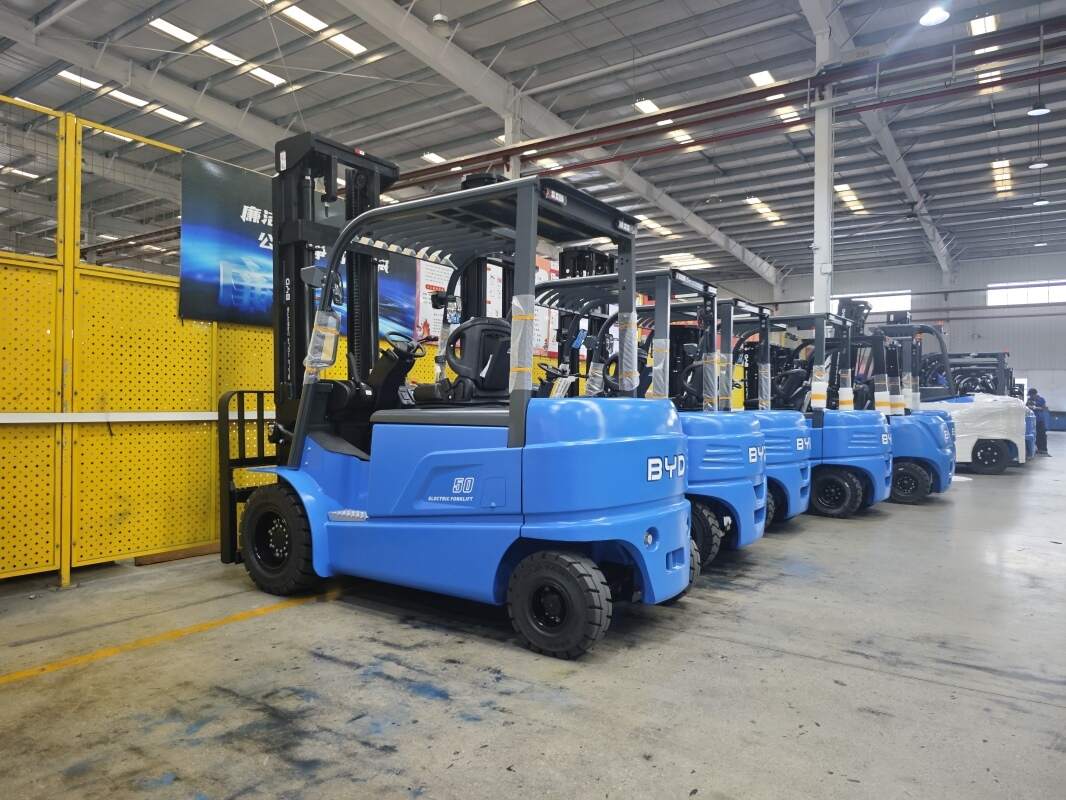
As low-carbon logistics development accelerates, electric forklifts have become the preferred material handling tool for most indoor and enclosed operation scenarios, with obvious advantages in energy consumption, noise control and operation flexibility. Mastering correct usage and maintenance rules can help operation teams give full play to the equipment’s inherent performance, reduce unnecessary operating costs, and create a safer working environment for frontline workers.
Core Operation Specification for Electric Forklifts
Before starting each shift, operators should conduct a basic inspection around the vehicle, including checking the tire pressure, brake sensitivity, lifting chain tightness and battery shell integrity, to eliminate hidden risks before formal operation. During the operation process, operators should avoid sudden acceleration or sudden braking as much as possible, keep the load center within the allowable range of the load weight mark, and do not carry over-limit goods that exceed the rated load of the equipment. When walking on narrow warehouse passages, operators need to slow down in advance, pay attention to the surrounding passing personnel and stacked goods, and avoid sharp steering at high speed. Operators should also not stretch their limbs out of the operation range of the vehicle to avoid collision with surrounding facilities.
Daily Maintenance Tips for Battery Components
The power battery is the core component that determines the continuous working time of the electric forklift, and regular standardized maintenance can effectively extend its service life. When charging, it is necessary to use the matching charging equipment in a well-ventilated environment, avoid charging in a high temperature closed space, and do not pull out the power plug forcibly during the whole charging process. After the daily operation is completed, operators should wipe the dust and sundries on the surface of the battery shell, check whether the connection port is loose, and do not store the power supply in a state of long-term power loss. For the models that need to add electrolyte on a regular basis, relevant operations need to be carried out in accordance with the specified operation flow.
Long-term Operation Performance Optimization Suggestions
To maintain the stable operation state of the electric forklift for a long time, the operation team can arrange regular professional inspection and maintenance according to the actual use frequency of the equipment. For the wearing parts such as brake pads and lifting rollers, regular wear check should be carried out, and replacement should be arranged in time when the wear degree reaches the specified threshold. In different working scenarios, reasonable adjustment of the operation rhythm according to the load demand can effectively reduce the unnecessary loss of the motor and control system, and maintain the high efficiency of material handling for a long period.


