
 English
 简体中文
 Русский
 Français
 Português
 Español


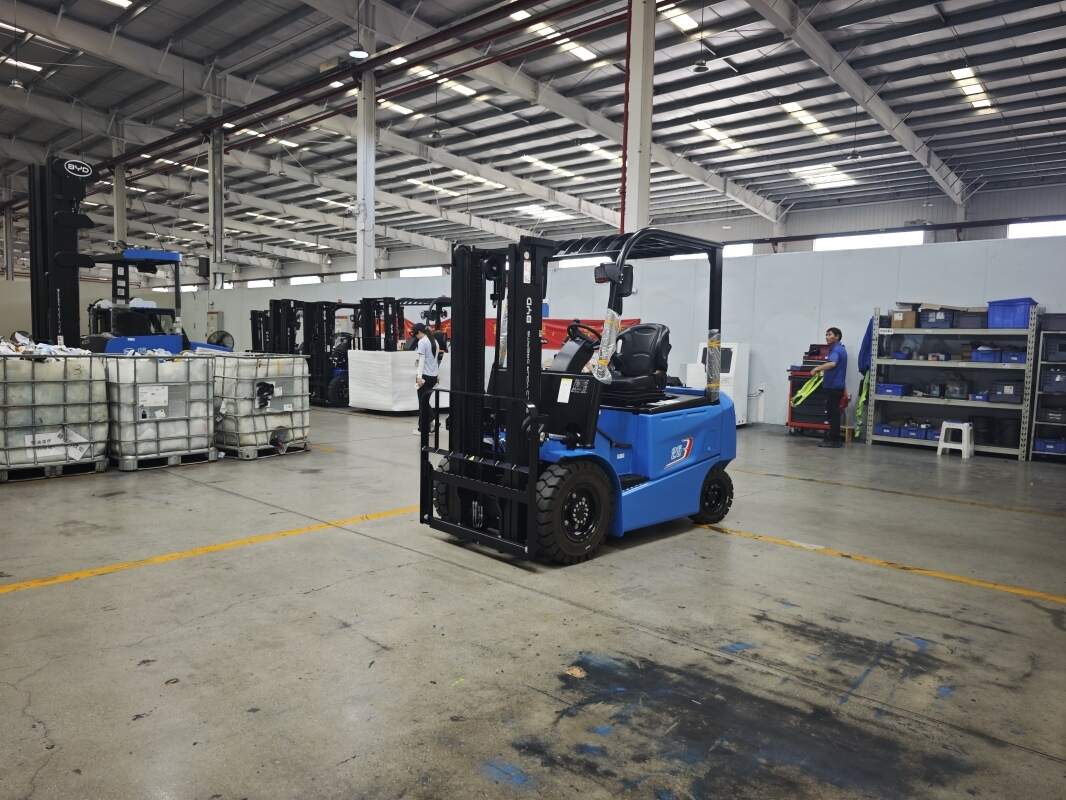
Electric forklifts have become one of the mainstream material handling equipment widely used in modern logistics, manufacturing and retail storage scenarios, with their low noise, zero local emissions and flexible operation features. Mastering systematic professional knowledge related to its use and management can help enterprises fully release the value of equipment investment, and create more stable operating conditions for the whole logistics and storage process.
Core Standardized Operation Specifications
Operators need to receive systematic pre-post training to be familiar with the basic control logic of the equipment, including acceleration and deceleration adjustment, fork lifting and lowering operation, and steering sensitivity control. Before each start-up, operators need to check the surrounding working environment to confirm there are no obstacles or unrelated personnel in the operating radius, and avoid sudden acceleration, sharp steering or overloading the equipment during operation, to reduce unnecessary wear of the power system and mechanical structure. Operators should also keep a clear sight line during the whole handling process, and adjust the driving state timely according to changes of site conditions.
Routine Daily Maintenance Guidelines
Regular standardized daily maintenance can effectively reduce the failure rate of electric forklifts and prolong the overall service cycle. After each use, operators need to wipe the surface of the equipment, check the remaining power of the battery, and arrange charging in time according to the actual use situation to avoid deep power loss that affects the long-term performance of the battery pack. It is also necessary to regularly check the wear degree of tires, the flexibility of the braking system, and the tightness of the connecting parts of the hydraulic system, and arrange professional personnel for troubleshooting in time when abnormal conditions are found, to avoid small problems expanding into larger equipment failures.
Scenario-based Performance Adjustment Tips
Different working scenarios have different requirements for electric forklift operation parameters. For narrow channel storage scenarios, operators can adjust the equipment running speed to a reasonable low level to ensure the accuracy of high-position goods access. For outdoor flat operation scenarios, you can adjust the power output mode appropriately to meet the demand of conventional heavy load handling, while keeping the power consumption within a reasonable range to avoid excessive power consumption in a single operation cycle that affects the follow-up work arrangement.
Basic Safety Management Requirements
Enterprises need to establish a complete safety management system for electric forklift use, arrange regular safety inspection of equipment every week, and carry out regular re-training for operators to update relevant operation knowledge. It is not allowed to modify the core structure and power parameters of the equipment without permission, which can effectively reduce the potential safety risks in the daily production and operation process, and ensure the stability of the whole material handling link.


