
 English
 简体中文
 Русский
 Français
 Português
 Español


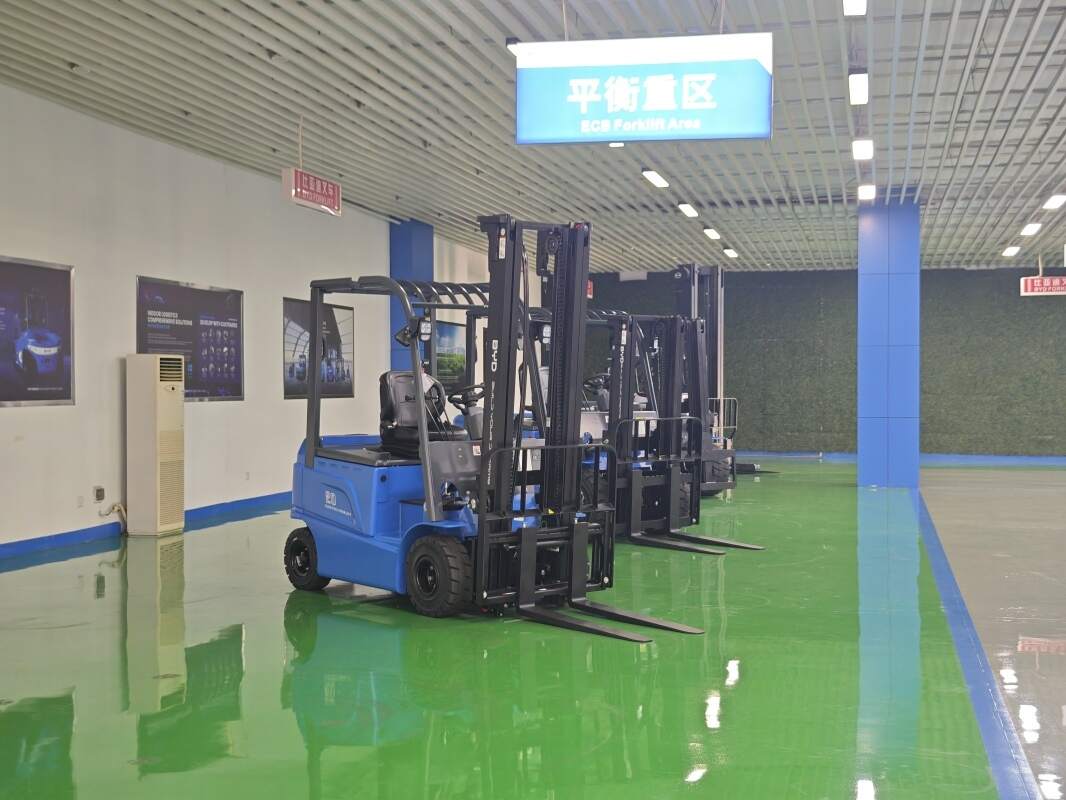
As the logistics and warehousing industry accelerates its transformation to low-carbon operation, electric forklifts have gradually become the core material handling equipment for most indoor operation scenarios, thanks to their low noise, zero local emissions and flexible operation characteristics. Many frontline operators and warehouse managers still lack systematic practical guidance to maximize the value of these devices while avoiding unnecessary safety risks and extra operation costs.
Core Standard Operation Specifications for Daily Use
Before starting the device each shift, operators need to conduct a full-circle visual inspection to check the tire pressure, brake sensitivity, lifting chain tightness and residual charge level, instead of directly starting the operation process. During the driving process, it is necessary to keep the load center within the allowable range specified in the operation manual, avoid sharp turns or sudden braking when carrying heavy loads, and keep a sufficient safe distance from surrounding personnel and stacked goods. For indoor narrow aisle scenarios, operators should adjust the driving speed to a level that allows timely response to unexpected obstacles, and it is not recommended to use the device on slopes with a gradient exceeding the specified limit unless relevant protective measures are taken in advance.
Routine Maintenance Points to Extend Service Life
Unlike internal combustion forklifts, electric forklifts have power systems that are more sensitive to irregular charging habits, so operators should avoid deep discharge of the power battery as much as possible, and arrange supplementary charging in time when the remaining power drops to 20% to 30%, which can effectively maintain the overall health state of the battery pack. Daily maintenance work also includes regular cleaning of the dust and debris accumulated on the motor surface, timely checking the tightness of all wiring interfaces, and regularly lubricating the rotating parts such as the steering shaft and lifting pulley according to the operation frequency. Routine inspections do not involve professional disassembly of the core power or control system, and all fault diagnosis and repair work for abnormal conditions should be completed by professionally trained technical personnel.
Performance Optimization for Different Scenarios
For cold storage operation scenarios with low ambient temperature for a long time, operators can appropriately adjust the pre-operation warm-up time of the device, and take necessary heat preservation measures for the power system according to the actual ambient temperature, to avoid obvious attenuation of output performance. For frequent high-intensity operation scenarios, the management team can arrange reasonable shift rotation plans to avoid long-time continuous overload operation of a single device, which can balance the operation load of all equipment in the fleet. When carrying special types of goods such as fragile high-value products, operators can adjust the lifting and lowering speed of the gantry to a gentle level, so as to reduce the vibration amplitude of the goods during the handling process. Following these practical operation and maintenance suggestions can help enterprises give full play to the advantages of electric forklifts in daily material handling work, reduce the overall operation cost of the equipment fleet, and create a safer working environment for frontline operation personnel.


