English
 简体中文
 Русский
 Français
 Português
 Español


Understanding forklift weight is core fundamental knowledge for all warehouse operation teams, logistics managers and material handling personnel, as it directly relates to operational safety, site pavement protection and overall work efficiency. Many practitioners have misunderstandings on relevant weight indicators, which may bring unnecessary hidden risks in daily operation.
The first point you need to clarify is the difference between two core weight related concepts: service weight and rated load capacity. Service weight refers to the total mass of the forklift itself with fully charged standard battery, standard matching attachment and full ready-to-run state, while rated load capacity indicates the maximum allowed weight of cargo the equipment can lift to the specified standard height under conventional working condition. Many new operators tend to mix up these two independent indicators, which may lead to wrong selection of supporting pavement, or improper overloading operation that brings hidden safety risks.
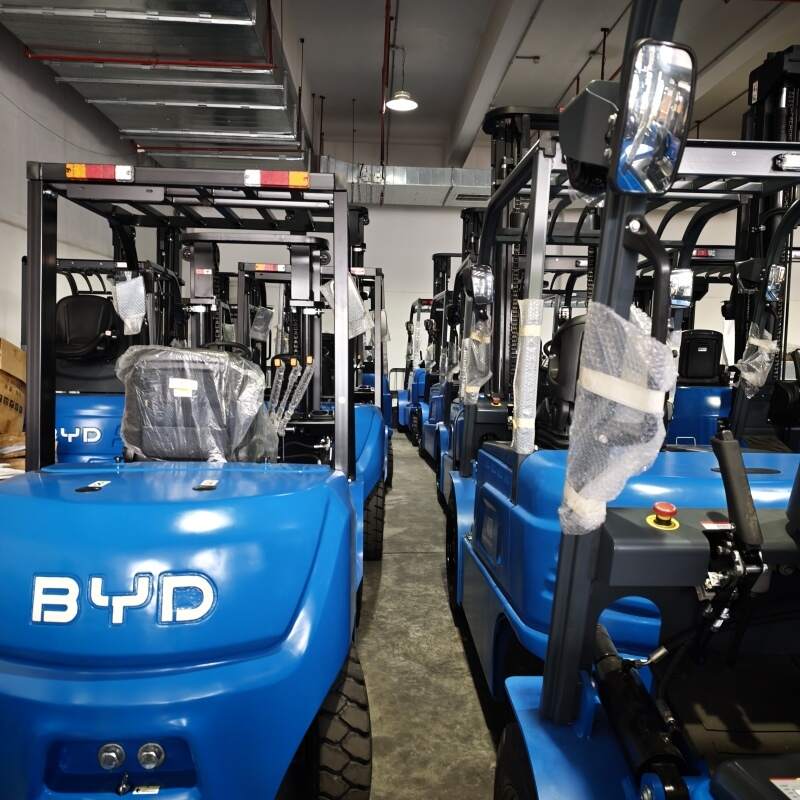
Then you need to know the actual value of forklift weight data in your daily operation scenarios. First, for pavement and site protection: most of the indoor warehouse floors, elevated mezzanine platforms and warehouse dedicated elevator access passages have clear load bearing limits. If the total combined weight of the forklift plus fully loaded cargo exceeds the pavement bearing threshold, it will cause pavement cracking, platform deformation or even accidental structural damage. Second, for operation safety: proper matching between forklift self-weight and load capacity ensures the equipment has enough counterweight to keep stable when lifting goods. If you operate overloaded cargo far beyond the rated load limit, the equipment may lose balance and tip forward, causing unnecessary property loss and personal injury. Third, for cross-site transportation arrangement: when you need to transfer the forklift to different work sites via flatbed truck, you need to get the exact forklift weight data to arrange suitable transportation vehicle and reliable binding scheme, to avoid safety risks during the whole transit process.
There are also simple and effective ways to get accurate forklift weight data. Before you put one electric forklift into daily formal use, you can check the official nameplate fixed on the side of the equipment body, which marks the clear service weight, rated load capacity, and corresponding lifting height parameters for your direct reference. You can also consult the professional supplier team to get full parameter sheet for different configuration versions, as different attachment options, different battery capacity will bring slight difference on the total service weight of the same base model.
As a professional new energy material handling solution provider, we are Jianxin New Energy, and we focus on high quality BYD electric forklift products. If you have any inquiry about forklift weight parameter matching, equipment selection or standard operational guidance, you can send email to [email protected] for our dedicated support team's timely reply.