
 English
 简体中文
简体中文 Русский
 Français
 Português
 Español

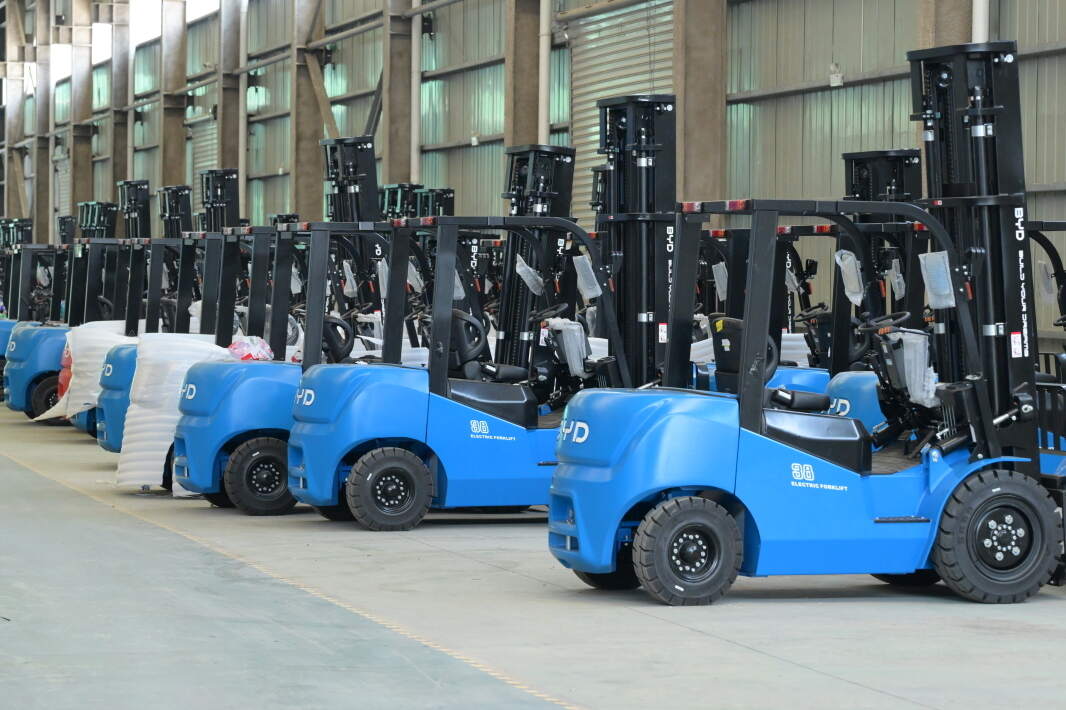
Attachments expand the functional scenarios of electric counterbalance forklift equipment, enabling enterprises to handle different types of goods such as drums, rolls, and special-shaped packages without replacing the whole vehicle, greatly improving the flexibility of material handling. However, improper use of attachments may lead to load falling, vehicle tipping and other safety hazards, which will threaten the safety of operators and on-site staff. Following standardized safety rules to use attachments is an essential part of daily industrial operation management.
Before using any attachment on electric counterbalance forklift, operators must complete full pre-use inspection as required. First, check the connection part between the attachment and the forklift body, confirm all locking pins, fixing bolts and hydraulic connectors are installed firmly without looseness or leakage. Second, verify the nominal load capacity of the matched attachment, never exceed the maximum bearing limit of both the forklift and the attachment even for short-distance transportation. Third, check the wear condition of the working components of the attachment, if there is obvious crack, deformation or excessive wear on the fork arm, clamp body or support structure, the equipment must not be put into operation before troubleshooting.
During the operation process, relevant safety rules should be strictly implemented. All operators must receive targeted professional training for the specific type of attachment, master the operation points of different functions before taking up the post. When the attachment is carrying goods, the driving speed should be kept at a safe level, avoid sharp steering, sudden braking and bumpy road sections as much as possible, do not lift or lower the attachment rapidly in driving state. It is strictly forbidden to use attachments to carry personnel, and if the view is blocked by the carried goods during operation, a special commanding staff should be arranged to guide the driving route to avoid collision with surrounding facilities.
Daily maintenance and regular management of attachments also play a key role in long-term safe use. After each operation, adjust the attachment to the lowest safe position, park the whole forklift in the designated non-working area, and cut off the power supply of the equipment. Regularly add lubricant to the movable connection points of the attachment to reduce friction loss, and arrange professional personnel to conduct overall performance inspection at least once every quarter. Establish a special management account for all forklift attachments, record each use, maintenance and repair situation, and stop using the attachment that reaches the specified service life for scrapping treatment. Following the above safety use specifications can effectively reduce the occurrence of operation accidents, extend the service life of electric counterbalance forklift and matched attachments, and create a stable and efficient working environment for on-site material handling.


