
 English
 简体中文
简体中文 Русский
 Français
 Português
 Español

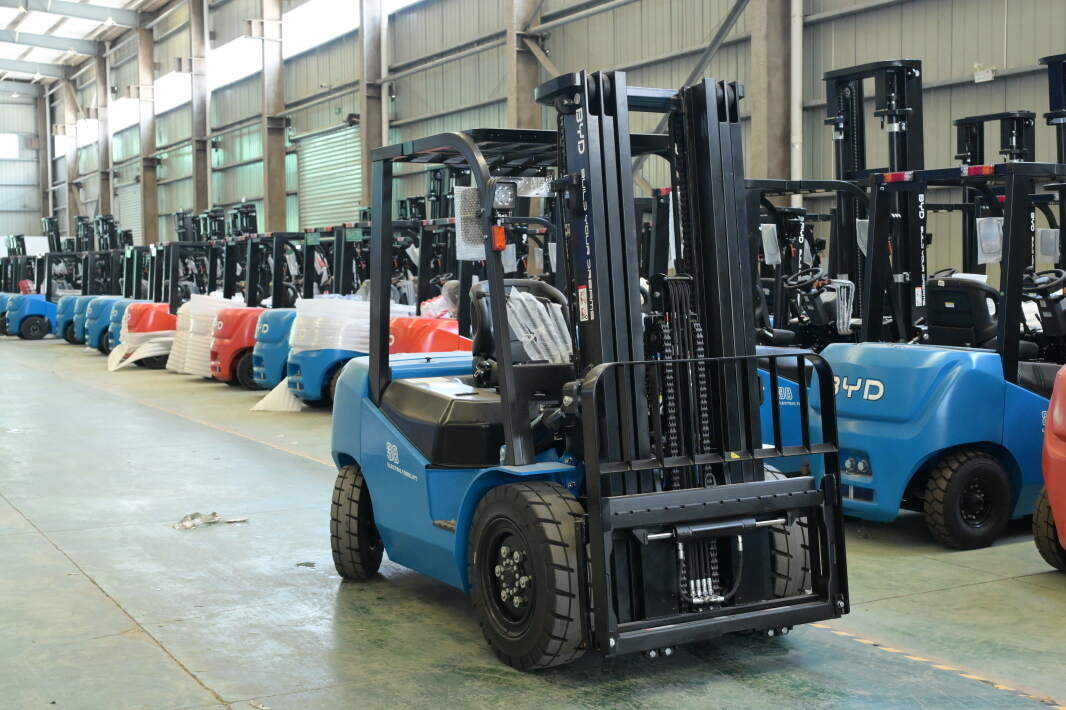
As low-carbon logistics development accelerates across global industrial scenarios, electric forklifts have gradually become the mainstream choice for indoor and enclosed workplace material handling, due to their relatively low noise emission, zero on-site exhaust and flexible operation features. For most warehouse and logistics operators, mastering systematic electric forklift application knowledge can effectively extend equipment service life, reduce unnecessary operating costs, and improve the overall safety level of on-site material handling procedures.
Core Standard Operation Specifications
Before starting any formal operation, operators need to complete pre-start inspection routines including checking battery power status, brake sensitivity, tire wear condition and the flexibility of lifting and tilting mechanisms. During formal operation, operators should avoid sudden acceleration or frequent emergency brake as much as possible, keep a safe distance from surrounding personnel, shelves and stacked goods, and never overload the rated load capacity specified by the equipment specification. For narrow indoor operation scenarios, operators also need to keep the driving speed within the reasonable range that matches the site space, to avoid potential collision risks caused by improper operation.
Scientific Daily Maintenance Guidelines
Different from internal combustion forklifts, electric forklifts focus more on the maintenance of power systems and electrical components in daily management. The battery pack should be charged in the designated well-ventilated area after daily work, and over-discharge and over-charge should be avoided to maintain stable battery performance for a longer period. Operators should also regularly clean the dust and sundries accumulated on the surface of motor and electrical connection terminals, and check the tightness of connection points regularly to avoid poor contact caused by long-term vibration in operation. All non-routine maintenance work on core components should be completed by trained professional technical personnel, to avoid unnecessary damage caused by improper disassembly.
Practical Energy Efficiency Improvement Strategies
Reasonable arrangement of daily operation routes can effectively reduce the unnecessary empty driving distance of electric forklifts, which can lower overall energy consumption to a certain extent. Operators can combine the actual goods storage layout of the workplace, optimize the picking and delivery sequence, and reduce the repeated lifting and moving actions that do not create actual value. For long-term idle equipment, operators should turn off the total power supply in time to avoid unnecessary power consumption, and park the vehicle in a designated dry, cool place to avoid direct long-term exposure to strong sunlight or heavy rain, which can slow down the aging speed of internal spare parts.


