
 English
 简体中文
简体中文 Русский
 Français
 Português
 Español

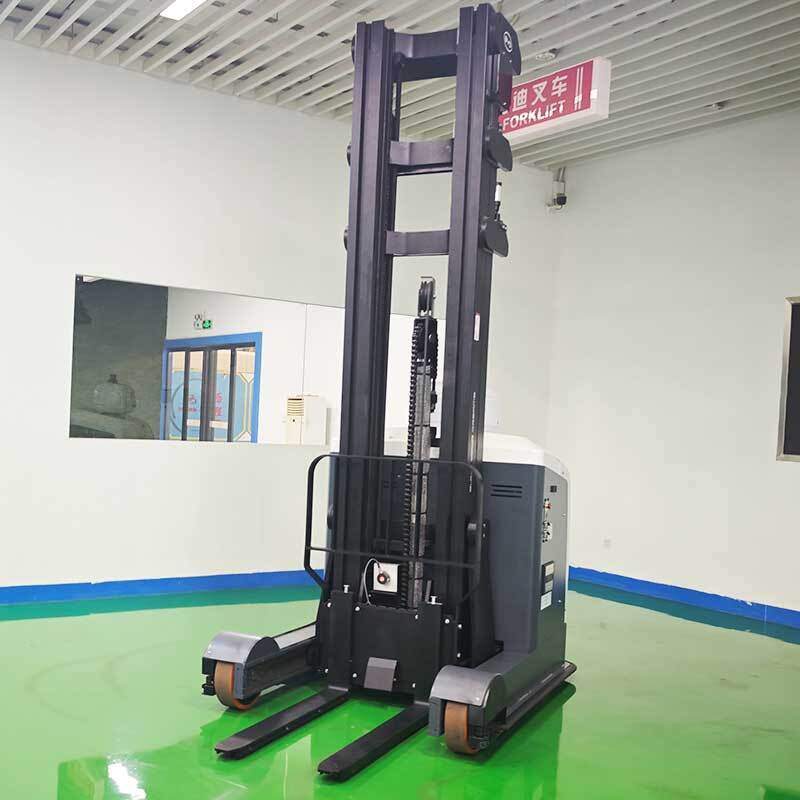
Against the background of accelerating low-carbon transformation in the logistics industry, electric forklifts have become one of the most widely used material handling equipment in indoor warehouse scenarios. Mastering standardized operation rules and scientific maintenance schemes can help give full play to the equipment’s performance, reduce unexpected downtime, and create higher value for daily logistics operation.
Core Daily Operation Specifications for Electric Forklifts
Before starting each shift, operators need to conduct a full visual inspection of the equipment, including checking remaining battery power, braking system sensitivity, fork surface wear condition and operating flexibility of the lifting structure. All personnel participating in operation need to receive systematic pre-job training to get familiar with the basic performance parameters of the equipment. During driving, operators need to control the driving speed according to the on-site channel condition, slow down when passing cross areas with frequent pedestrian flows, and avoid sharp steering and sudden braking as much as possible. It is not recommended to operate the equipment with overload, which may cause extra wear to the load-bearing structure and power system. When operating on sloped areas, operators should keep the goods at a relatively low position to reduce the risk of tipping.
Scientific Daily Maintenance Suggestions for Electric Forklifts
For the power system, operators should follow the standard charging rules, avoid excessive deep discharge, and do not keep the equipment in overcharged status for a long time after the battery is fully filled. It is advisable to regularly check the tightness of the battery electrode connectors, clean the accumulated dust on the surface of the electrodes and heat dissipation components in time, and check whether the surface of the internal wiring has cracks or aging phenomena. For the mechanical structure, regular lubrication for the rotation points of the steering system can effectively reduce the friction resistance during operation. After finishing each operation task, operators need to park the equipment in the designated fixed area, pull up the hand brake, lower the fork to the ground, and do not suspend heavy goods on the fork for a long time.
Scenario Adaptation Features of Electric Forklifts
Different from internal combustion power handling equipment, electric forklifts produce no exhaust emission during operation, and the overall operating noise level is relatively low, which is very suitable for closed indoor storage scenarios that have high requirements for air cleanliness, such as food warehouses and pharmaceutical storage areas. Products optimized for narrow channel conditions can also adapt to high-density shelf layouts, effectively improving the utilization rate of unit storage space. For long-term operation, the energy consumption cost of electric forklifts stays at a relatively controllable level, which can match the current mainstream industrial low-carbon operation trend. Formulating targeted use schemes according to the actual operation demand of different warehouses can further optimize the use experience of the equipment.


