
 English
 简体中文
 Русский
 Français
 Português
 Español


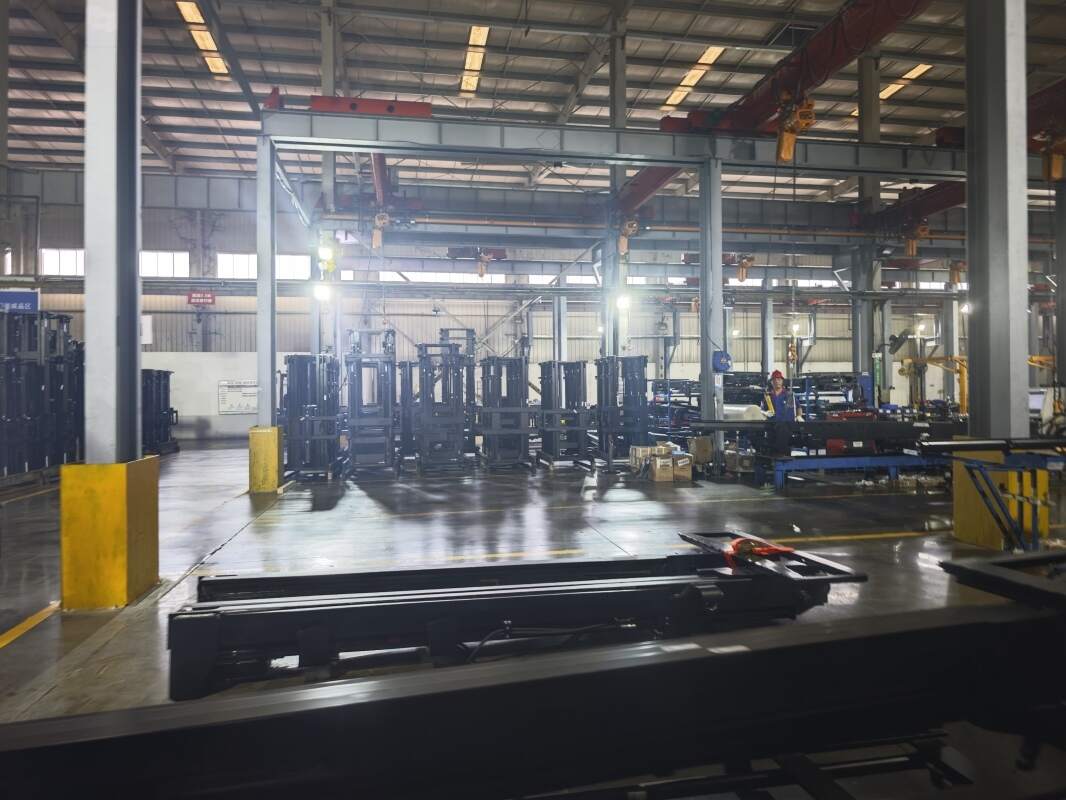
Against the background of continuous popularization of low-carbon industrial logistics, electric forklifts have gradually become one of the most common material handling equipment in closed warehouses, distribution centers and manufacturing workshops. Relevant professional knowledge about its correct use and management can help relevant personnel give full play to the use value of such equipment, avoid unnecessary wear and potential safety risks in daily work.
Core Performance Characteristics of Electric Forklifts
Different from fuel-powered handling equipment, modern electric forklifts rely on electric energy to provide power output, which produces no exhaust emission during the whole operation process, and the overall operating noise is controlled at a relatively low level. This feature makes it highly adaptable to closed indoor operation scenarios with strict requirements for environmental air quality and working noise. Its energy consumption structure is simpler than traditional fuel equipment, and the daily energy supply cost is relatively controllable, which is suitable for long-term high-frequency operation scenarios. Most existing products also have relatively compact body structure, which can pass through narrow operation aisles more smoothly and improve the space utilization rate of the storage area.
Standard Daily Operation Specifications
Before each operation, operators need to complete basic inspection work, including checking the remaining power level, the flexibility of the braking system, and the integrity of the hydraulic lifting structure. During the operation, it is necessary to match the actual load weight with the rated load range of the equipment, avoid over-lifting goods beyond the specified height limit when the load exceeds the conventional threshold, and properly control the driving speed when turning or passing narrow aisles. When parking, the equipment should be stably placed on a flat hard ground, the lifting fork should be lowered to the lowest position, and the power supply should be cut off in time to avoid long-term idling power consumption. Operators need to receive necessary pre-job training before taking up the post to be familiar with the operation logic of different functional modules of the equipment.
Routine Maintenance and Management Suggestions
For the power battery component, operators need to follow the specified charging process to complete the power supplement, avoid frequent deep discharge or long-term overcharging, and keep the surface of the battery and the connecting interface clean and dry to avoid poor contact caused by dust accumulation. For the mechanical moving parts, regular lubrication treatment can reduce the friction loss between parts, and regular inspection of the wear degree of the tire and brake pad can find hidden problems in time. Scientific maintenance habits can effectively prolong the overall service life of the equipment, reduce the frequency of unexpected failures, and support the stable operation of daily material handling work.


