
 English
 简体中文
 Русский
 Français
 Português
 Español


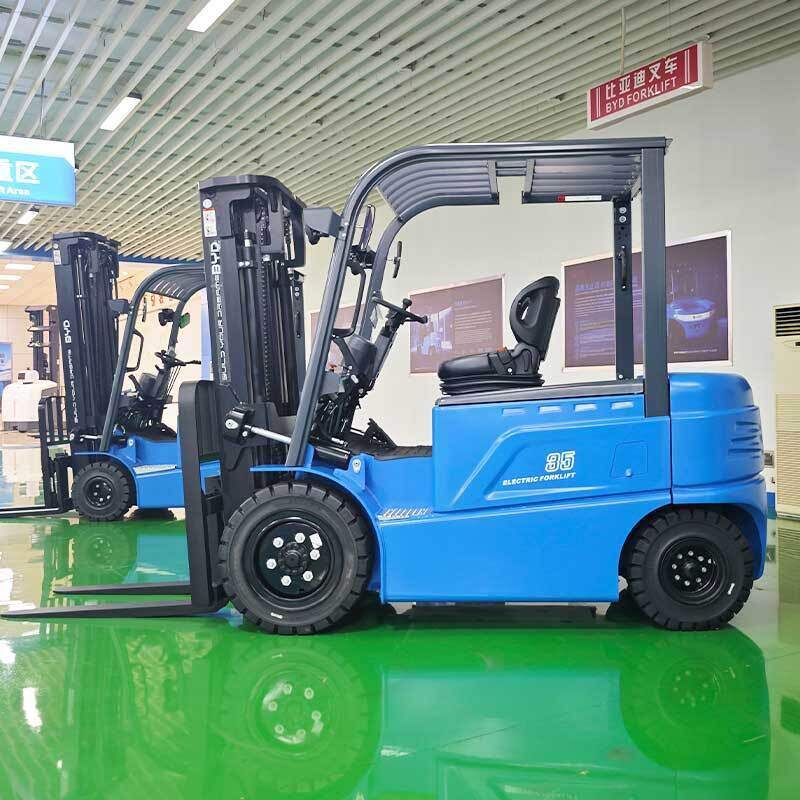
Against the backdrop of rising demand for low-carbon, efficient intra-facility material handling across logistics, manufacturing and retail sectors, electric forklifts have gradually become a mainstream alternative to traditional internal combustion counterparts for most operation scenarios. This guide sorts out practical, field-verified knowledge points for users from different dimensions, to help operators and facility managers maximize the value of their equipment investment.
Core Performance and Application Boundaries of Electric Forklifts
Unlike fuel-powered models, current electric forklifts rely on rechargeable battery packs as the only power source, with zero on-site exhaust emission and relatively low overall operation noise, which makes them suitable for enclosed working spaces such as indoor warehouses, food processing workshops and cold storage areas. Most standard models can support stable load handling within common tonnage ranges, and their climbing performance and travel speed can meet the daily operation needs of most flat or slightly sloped industrial sites. Users can match corresponding configuration parameters according to their actual site conditions, instead of blindly pursuing excessive power output that brings extra unnecessary cost.
Standard Safe Operation Specifications for Operators
All personnel who operate electric forklifts need to receive systematic professional training before taking up the post, and fully familiarize themselves with the basic function layout of the operation panel, emergency braking measures and load weight limit rules before formal operation. Before each shift starts, operators need to conduct simple pre-shift inspections, including checking the remaining power level, the flexibility of lifting and tilting mechanisms, and the integrity of safety warning lights and alarm devices. During the operation process, operators should avoid sudden acceleration, sudden braking and sharp steering as much as possible, and strictly control the load center within the specified allowable range to avoid unbalanced tipping risks.
Routine Daily Maintenance Recommendations
Reasonable daily maintenance work can effectively extend the service life of core components of electric forklifts, and reduce the frequency of unexpected equipment failures that disrupt normal operation rhythm. After the daily operation is completed, operators need to park the vehicle in the designated charging position, lower the forks to the ground level, turn off the total power supply, and carry out standardized charging operations in accordance with the battery operation manual. Regularly clean the dust and debris accumulated on the surface of the vehicle body, check the connection tightness of the wiring harness, and arrange for professional personnel to conduct regular performance tests on the motor and hydraulic system according to the specified cycle.
Efficiency Optimization Strategies for Different Scenarios
For high-frequency continuous operation scenarios, users can configure a sufficient number of backup battery packs to achieve quick swap, to shorten the non-working downtime caused by long charging cycles. For low-temperature operation scenarios, adding a proper thermal insulation configuration for the battery pack can effectively prevent the excessive attenuation of battery output performance in low temperature environments. Combined with the actual flow of goods in the site, reasonably planning the driving path of the electric forklift can further reduce unnecessary repeated driving, and improve the overall material handling efficiency of the whole facility.


