
 English
 简体中文
 Русский
 Français
 Português
 Español


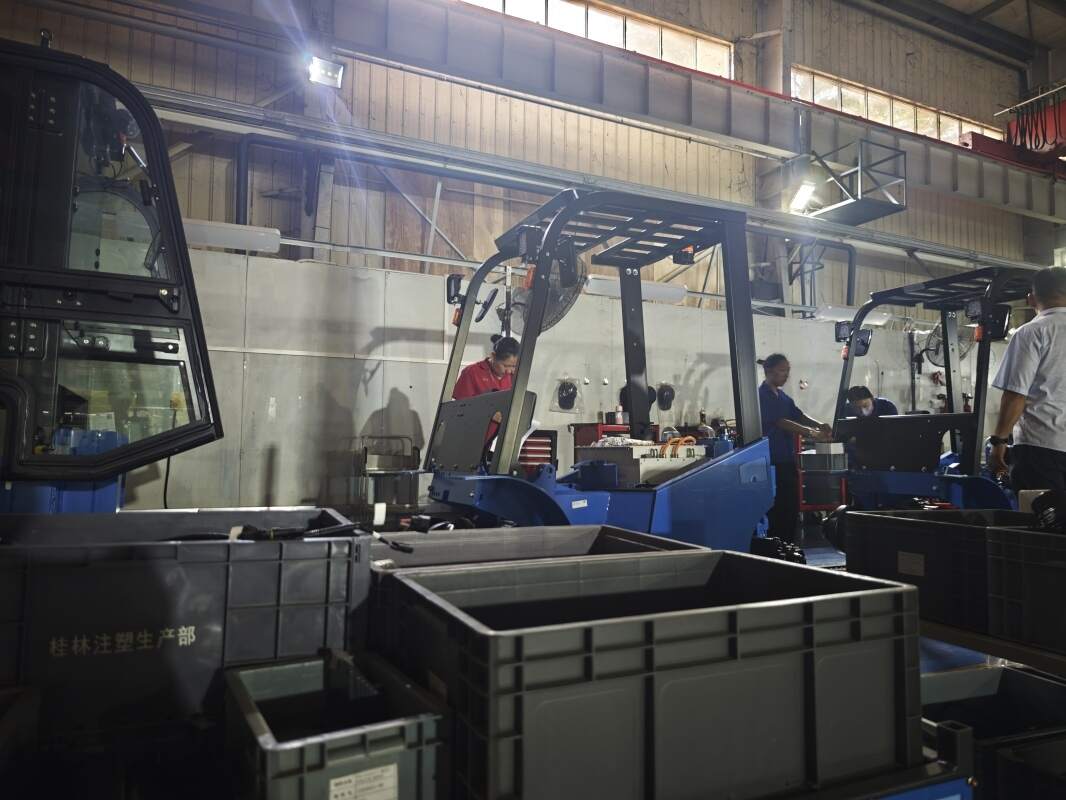
Against the background of growing demand for green and low-carbon logistics, electric forklifts have become one of the most widely used material handling equipment in indoor warehouses, distribution centers and light industrial production scenarios in recent years. For frontline operators and equipment managers, mastering systematic and practical electric forklift related knowledge can effectively improve work efficiency, reduce potential safety risks, and extend the overall service cycle of the equipment.
Standardized Operation Specifications for Electric Forklifts
Before each daily operation, operators need to complete necessary pre-inspection work, including checking remaining battery level, brake sensitivity, fork deformation status, and whether the surrounding operation area has obstacles or unrelated personnel. During the operation process, keep the running speed within the safe range according to the load weight, avoid sudden steering and sudden braking when carrying heavy goods, and keep the goods in the low position when traveling to avoid blocking the operator's line of sight. For narrow aisle operation, operators should adjust the body position slowly to avoid collision with shelf facilities.
Daily Maintenance Guidelines for Electric Forklifts
Routine maintenance is a key link to ensure the stable performance of electric forklifts for a long time. For the power battery part, operators should avoid overcharging and over-discharging during daily use, regularly clean the dust and impurities on the surface of the electrode interface to keep the connection state stable. For the hydraulic lifting system, check the sealing performance of the oil pipeline regularly to avoid oil leakage affecting the lifting stability. After each operation, the equipment should be parked in the designated fixed area, pull up the hand brake, turn off the power supply in time, and do not leave the key inserted on the vehicle for a long time.
Energy Efficiency Optimization for Electric Forklifts
Reasonable operation habits can effectively improve the energy efficiency performance of electric forklifts and reduce the overall operating cost. Before the centralized operation period, managers can plan the operation route in advance to reduce unnecessary no-load driving distance. It is not recommended to use equipment with small rated load to carry overweight goods for a long time, which will cause additional loss to the power system. Maintaining the equipment in a suitable ambient temperature range can also give full play to the battery performance, and obtain longer continuous working time under the same power consumption condition. These practical operation and maintenance points can help enterprises give full play to the advantages of electric forklifts in different application scenarios, and support the stable operation of daily material handling work.


