
 English
 简体中文
 Русский
 Français
 Português
 Español


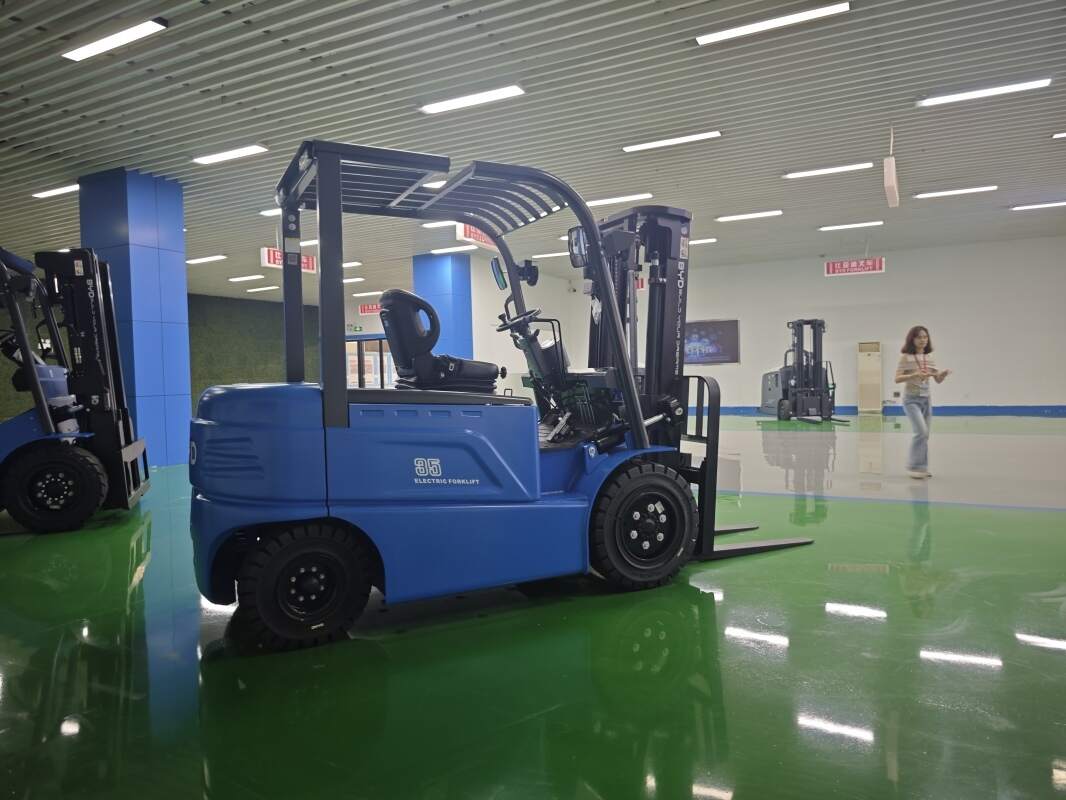
In recent years, the global logistics and warehousing industry has shown growing demand for low-noise, zero-direct-emission material handling equipment, and electric forklifts have gradually become one of the most widely used handling tools in various indoor and semi-enclosed operation scenarios. As a low-carbon oriented handling device, its performance characteristics match the development trend of current logistics operations, and reasonable application and maintenance can bring stable operation support for daily cargo handling work.
Core Functional Advantages of Electric Forklifts
Compared with traditional fuel-powered handling equipment, electric forklifts do not produce exhaust gas during operation, which avoids the pollution of volatile waste gas to the storage environment that stores food, medicine or precision electronic parts. The average operating noise of qualified electric forklifts is far lower than that of internal combustion models, which can reduce the noise interference to on-site operators and the surrounding working environment. The power output system of electric forklifts has fewer mechanical friction parts, so the daily maintenance workload is relatively reduced, and the long-term operating energy cost is relatively lower than that of traditional fuel equipment under the same working intensity.
Standard Operation Rules for Daily Use
Operators need to complete corresponding basic operation training before using electric forklifts to avoid misoperation that may cause unnecessary equipment wear or cargo damage. Before each startup, it is necessary to check the remaining battery power, the flexibility of the braking system and the lifting gantry, and confirm that there is no foreign matter stuck in the walking wheel set. During the handling process, overloaded operation is not recommended, and the speed should be reduced in advance when turning to avoid cargo slipping caused by excessive centrifugal force. Do not use the equipment until the battery is completely exhausted, and it is recommended to arrange the charging process in a dry, ventilated designated area, to avoid liquid splashing on the charging port which may cause poor contact.
Scenario Matching Selection Suggestions
For different actual operation demands, users can choose the corresponding configuration of electric forklifts to achieve better application effects. For warehouses with narrow access aisles and high-level shelves, models with a more flexible steering structure can be selected, to adapt to the limited operating space and improve the access efficiency of high-position cargo. For semi-outdoor operation scenes with a lot of dust or occasional light rain, you can choose products with higher shell protection levels, to prevent dust or water droplets from entering the internal circuit and affecting the stable operation of the equipment. Users with long daily operation hours can choose models with larger battery capacity, to reduce the waiting time caused by midway charging during peak operation hours. Regularly cleaning the dust accumulated on the surface of the equipment and checking the tightness of each connecting part can help maintain the stable operation state of the electric forklift, and further extend the overall service life of the equipment.


