
 English
 简体中文
 Русский
 Français
 Português
 Español


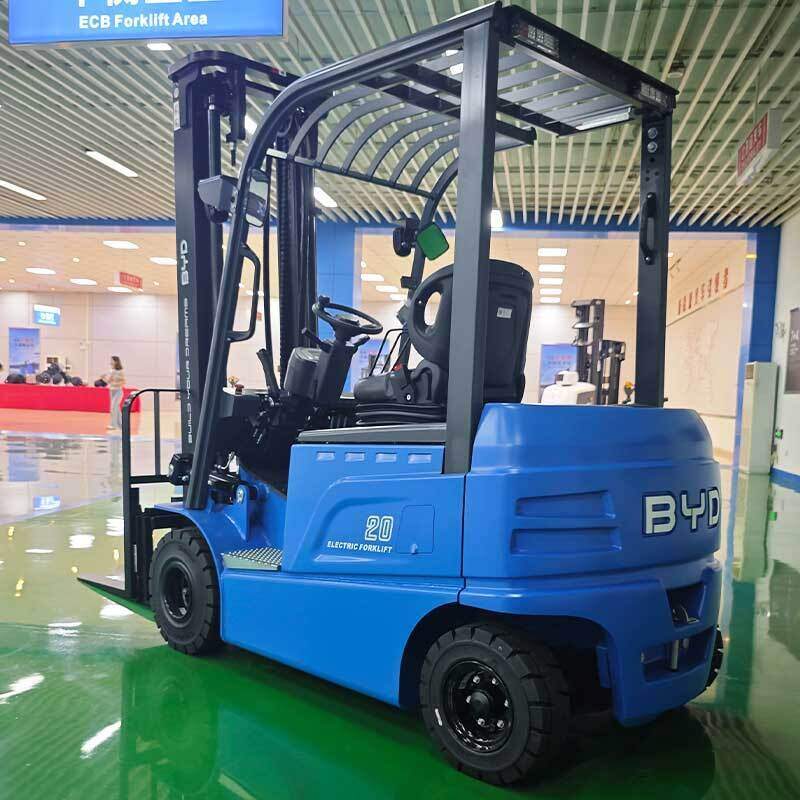
As the global warehousing and logistics industry increasingly focuses on low-carbon operation and comprehensive cost control, electric forklifts have become one of the most widely used material handling equipment in indoor enclosed working scenarios. Many new operators and enterprise equipment managers still lack systematic cognition of the proper use rules and maintenance specifications of such equipment, which easily leads to shortened service life of core components and hidden safety risks in daily operation.
Core Standard Operation Specifications for Electric Forklifts
Before starting the equipment, operators should first check the surrounding working environment to confirm there are no pedestrians or obstacles within the 3-meter operation radius. It is not allowed to adjust the mast tilt angle or lift goods to an excessive height during high-speed moving, and the actual load weight should be controlled within the rated load range marked on the equipment nameplate. For narrow aisle working scenarios, operators should reduce the moving speed properly and keep the goods at a low position, so as to avoid collision with surrounding shelves or stacked goods. Operators should also adjust their operation rhythm according to the ground condition to avoid skidding on wet or slippery ground.
Practical Daily Maintenance Tips to Optimize Equipment State
After completing each daily shift, operators should wipe off the surface dust and residual sundries on the vehicle body, check the wear degree of tires and brake pads, and confirm the remaining battery power can support the basic operation of the next shift. It is recommended to arrange professional technicians to conduct a full inspection of the power system, walking mechanism and hydraulic lifting structure every 300 working hours, to eliminate potential hidden troubles in time. Operators should not charge the battery under high temperature environment for a long time, and keep the charging port dry and clean to avoid poor contact caused by accumulated sundries.
Safety Management Points for Different Working Scenarios
In cold low-temperature working environments, preheating the power system for 3 to 5 minutes before formal operation can effectively reduce the loss of core components. Operators should not carry people on the cargo forks, and it is not recommended to overuse the equipment beyond the continuous operation time limit for a long period. For long-term idle equipment, staff should charge the battery to 70% of full power every 15 days to avoid irreversible damage to the internal battery core.


