
 English
 简体中文
 Русский
 Français
 Português
 Español


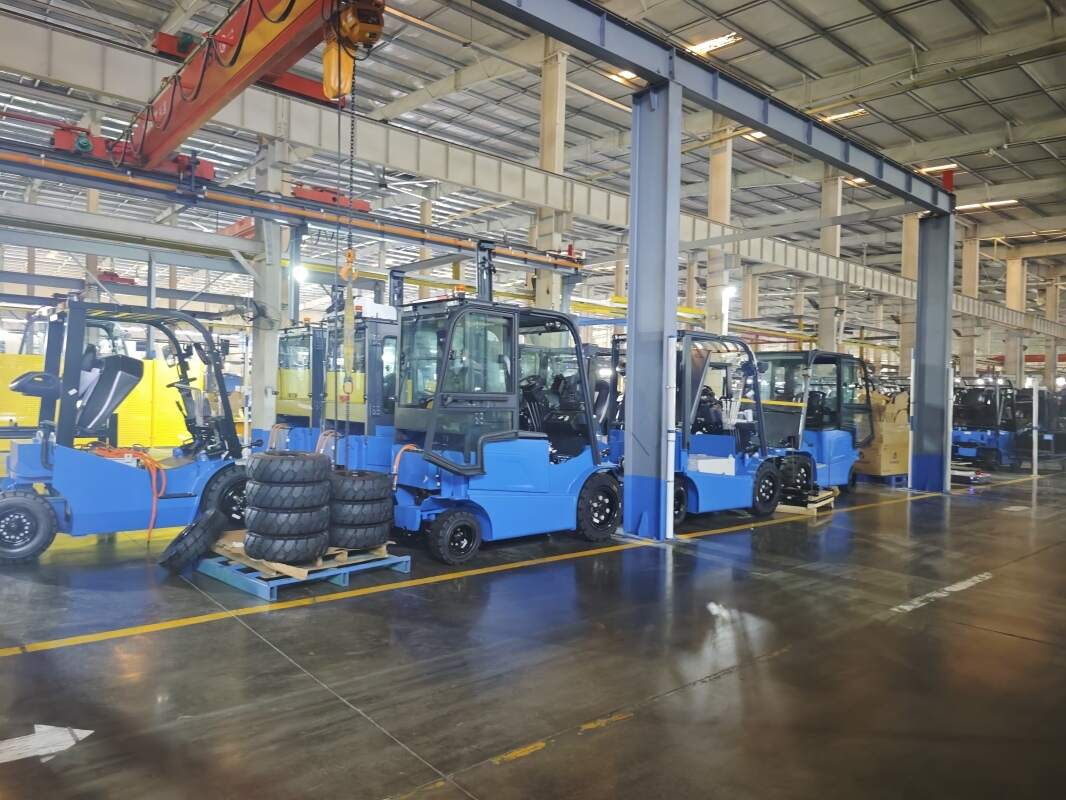
Against the background of global logistics industry accelerating low-carbon transformation, electric forklifts have gradually become the mainstream material handling equipment in most closed operation scenarios such as ordinary warehouses, cold storage and pharmaceutical storage areas. Many frontline operators and warehouse managers still lack systematic and comprehensive understanding of the full-process use points of this kind of equipment, which may lead to insufficient performance output or extra unnecessary loss in daily use.
Core Functional Advantages of Electric Forklifts
Compared with traditional fuel-driven handling equipment, electric forklifts produce no local exhaust emission during operation, which will not cause hidden dangers to the air quality of the relatively closed warehouse space, and can meet the strict environmental protection access requirements of food, medicine and other special storage scenarios. Its whole operation process produces far less noise and vibration, which can effectively reduce the physical fatigue of operators after long hours of continuous work, and its daily energy replenishment cost is relatively stable, which will not be greatly affected by the fluctuation of traditional fuel price in a short period.
Standardized Operation Specifications for Daily Use
All operators need to complete systematic pre-job training before officially using the equipment. They need to conduct a full-circle inspection before each start-up, focusing on checking the sensitivity of the braking system, whether the fork has obvious deformation, and the remaining power level. Operators should not carry out overload operation beyond the rated load, keep the driving speed within the limit range set by the operation scenario, and ring the warning device in advance when turning in narrow channels. It is not allowed to turn or unload goods at will on the ramp, so as to avoid safety risks such as side rollover.
Routine Maintenance Suggestions to Prolong Service Life
Battery maintenance is the core link of electric forklift daily maintenance. Users are not advised to wait until the power is completely exhausted before charging, and the charging operation should be completed in a ventilated and dry designated area, and no sundries should be stacked around the charging interface. The tightness of the hydraulic system and the wear degree of the tire should be checked regularly, and the dust and debris accumulated at the heat dissipation port should be cleaned in time to avoid poor heat dissipation under high temperature working conditions. After each operation, the fork should be lowered to the lowest position, the handbrake should be pulled up, and the main power supply should be turned off.
Scenario Adaptation Notes for Different Use Demands
For special scenarios such as low-temperature cold storage, users can select configurations with corresponding low-temperature resistance performance to ensure the stable operation of core components. For scenarios with long-term high-intensity continuous operation, the power swap system can be configured to reduce the waiting time for energy replenishment. When the equipment needs to run in outdoor open space, corresponding waterproof protection measures should be taken to prevent the electric control system from being eroded by rainwater. Forming good use habits can give full play to the performance advantages of electric forklifts, balance operation efficiency and long-term use cost, and better meet the development needs of green logistics.


