
 English
 简体中文
 Русский
 Français
 Português
 Español


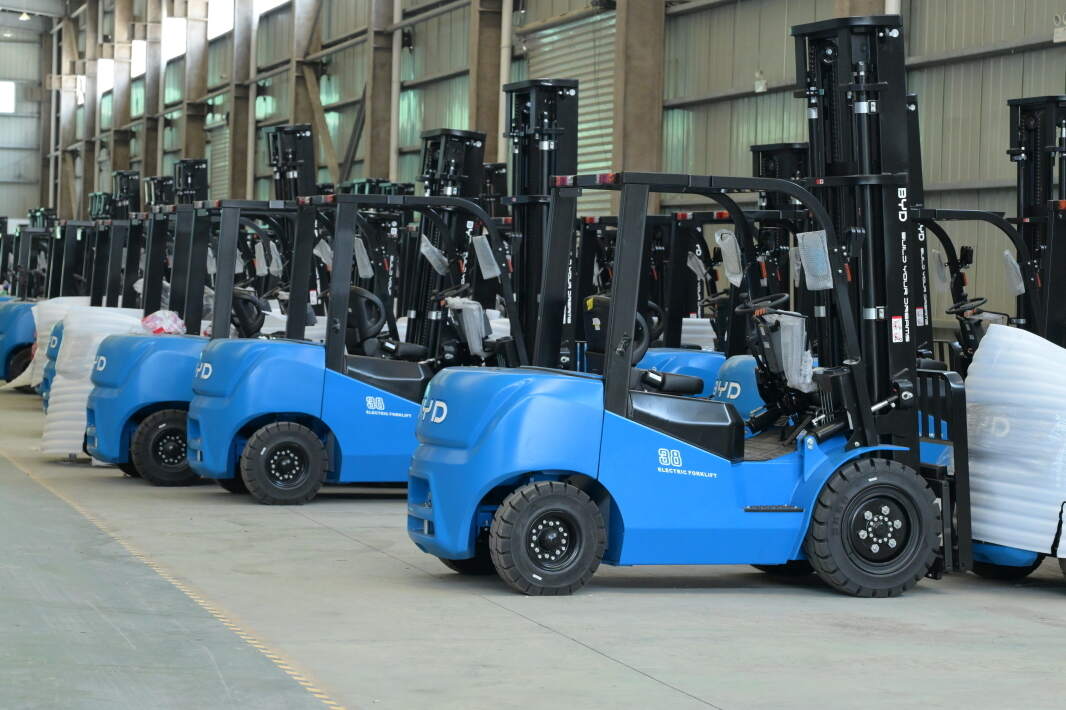
As low-carbon and low-noise on-site material handling demands keep rising across industrial sectors, electric forklifts have become one of the most widely deployed handling equipment in warehouse, manufacturing and retail logistics scenarios. A systematic understanding of its performance traits, scenario matching logic and operation specifications can help operators maximize the value of the equipment during daily usage.
Core Performance Traits of Modern Electric Forklifts
Different from internal combustion powered counterparts, electric forklifts complete power output relying on battery packs and driving motors, which generates no tail gas emission on the working spot. This trait effectively avoids exhaust accumulation in enclosed working spaces, and brings lower working noise to create a more comfortable working environment for on-site staff. The power output of electric forklifts is relatively smooth, with adjustable speed modes to fit different on-site safety operation requirements, and the unit energy consumption cost of long-term operation stays at a relatively manageable level for most enterprises.
Common Applicable Scenarios for Electric Forklifts
Electric forklifts can fit most conventional indoor handling scenarios, including general storage warehouses, food and pharmaceutical production workshops with high requirements for environmental cleanliness, supermarket backstage sorting areas, and low-temperature cold chain warehouses. Users can select equipment with corresponding parameters according to actual operation indicators, such as maximum load weight, working aisle width, required lifting height and ground flatness of the working zone, to get better matching between equipment performance and actual working demands, and avoid performance redundancy or insufficient power during operation.
Standard Daily Operation and Maintenance Suggestions
Before each shift, operators are suggested to check the remaining battery level, the sealing condition of hydraulic components, the sensitivity of steering and braking systems, to rule out hidden safety risks in advance. When the equipment is going to be stored for a long time, the remaining battery level should be kept in a reasonable range to avoid irreversible capacity loss of the battery pack. Regular cleaning of dust and sundries accumulated on the heat dissipation parts of the equipment, as well as regular lubrication of the moving connection parts, can effectively reduce the occurrence of sudden failures, and extend the whole service life of the equipment. Following these standardized operation and maintenance rules, enterprises can effectively optimize the on-site material handling efficiency, and control the comprehensive long-term operation cost of the electric forklift fleet.


