
 English
 简体中文
 Русский
 Français
 Português
 Español


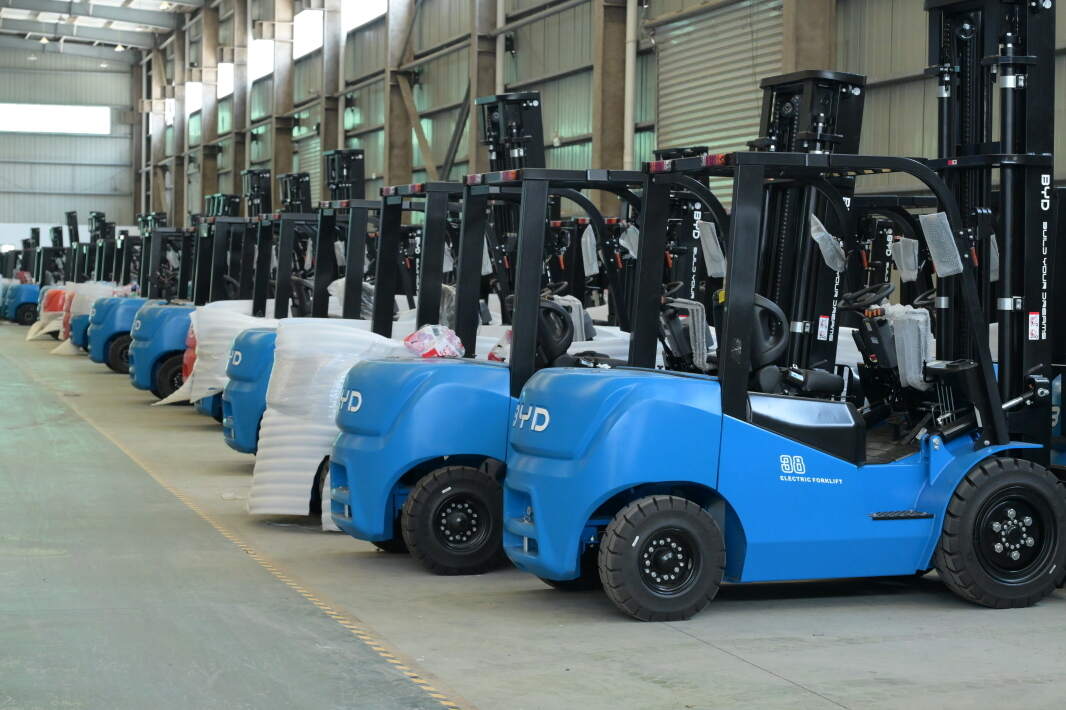
With the continuous popularization of low-carbon material handling solutions in modern industrial and warehouse scenarios, electric forklifts have become one of the most widely used handling equipment due to their low noise, zero local emission and flexible operation features. Mastering standardized use and management rules can help operators give full play to the performance of the equipment while reducing unnecessary operation risks.
Pre-operation Standard Inspection Process
Before starting the equipment every shift, operators need to complete a series of basic inspection work to eliminate hidden risks in advance. The inspection scope covers the remaining power of the power system, the flexibility of the steering and braking system, the wear degree of the load-bearing forks, the integrity of the safety warning lights and horns, and the cleaning condition of the operation cab. If any abnormal sign is found during the inspection, operators should report to the management personnel in time instead of starting the equipment forcibly, so as to avoid unexpected faults in the subsequent operation process.
Daily Routine Maintenance Specifications
Daily maintenance work that matches the use frequency can effectively extend the service life of electric forklifts, and reduce the overall comprehensive use cost of the equipment. After each shift is completed, operators need to wipe the dust and residual goods debris on the surface of the equipment, check the connection tightness of the power interface, and park the equipment in the designated ventilation and dry area for charging as required. It is not recommended to place the equipment in a high temperature or humid environment for a long time, which may cause unnecessary corrosion to the internal circuit and structural parts.
Scenario Adapted Operation Optimization Tips
In different operation scenarios, operators can adjust the operation mode according to the actual working conditions to improve the operation efficiency properly. For narrow channel operation in the warehouse, operators need to control the running speed at a low level, and pay attention to the passing clearance between the equipment and the shelf body to avoid accidental collision. When carrying heavy goods close to the rated load, operators should keep the goods in the lowest possible position during the moving process, and avoid lifting the goods to a high position for long-distance moving, so as to keep the operation state stable. Following the above set of operation and management rules, the electric forklift can maintain a good working state for a long time, and create more stable value for the daily material handling work of the team.


