
 English
 简体中文
 Русский
 Français
 Português
 Español


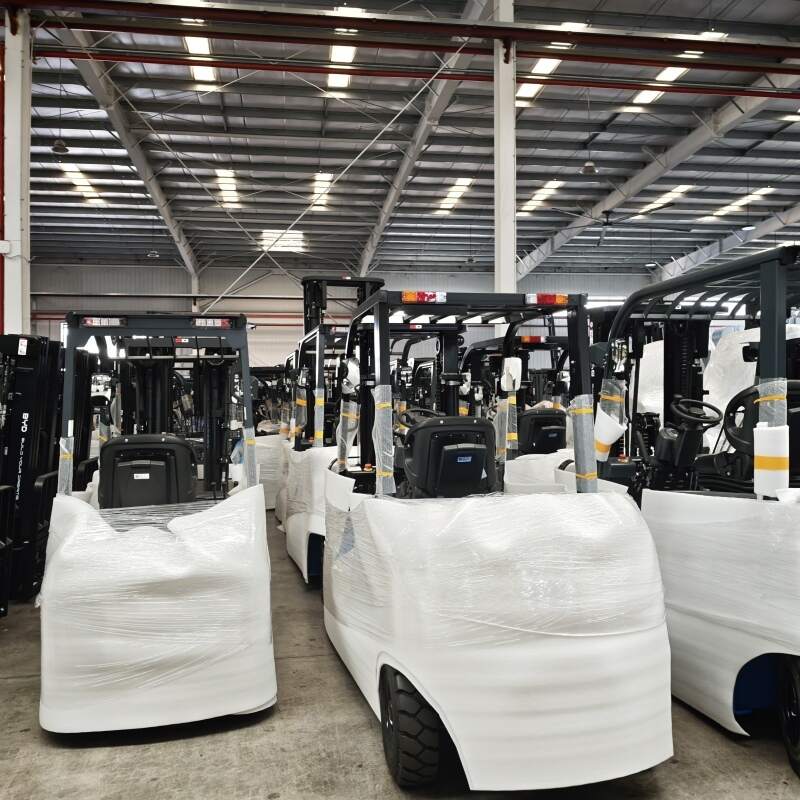
As low-carbon logistics development accelerates across global industrial and warehousing sectors, electric forklifts have become a widely adopted material handling option for most operation teams, as they produce zero on-site emissions and generate far lower noise levels than traditional internal combustion counterparts. Mastering proper use and management rules of such equipment can help operation teams maximize their value in daily workflows.
Core Functional Advantages of Modern Electric Forklifts
Unlike fuel-powered equipment, electric forklifts rely on stored electric energy as the sole power source, which avoids frequent fuel filling steps and reduces extra input of fuel procurement, exhaust treatment and related accessory replacement. Most mainstream models on the current market are designed with compact body structure, which can adapt to narrow aisle operation scenarios that are hard for large combustion forklifts to access, and bring more flexible layout space for warehouse storage planning. The operation system of electric forklifts is also designed with more humanized control logic, which reduces the learning threshold for new operators to get familiar with basic operation points.
Standardized Daily Operation Protocols
Before each formal shift starts, operators need to conduct a full-circle check around the equipment, confirm the tire pressure, brake sensitivity, mast lifting smoothness and light indicator status are all in normal condition, and adjust the seat position and operation lever angle to fit their own operation habits. During the operation process, operators need to keep the load center within the allowable range marked on the equipment nameplate, avoid sharp turning or sudden braking when carrying heavy loads, and remind surrounding staff to keep a safe distance through prompt signals when moving in areas with dense pedestrian flow. Overload use of equipment in any case is not recommended, as it will bring extra pressure to the power system and operation structure.
Routine Maintenance Tips to Reduce Running Loss
For the power battery pack, it is recommended to arrange charging work after 80% of the stored power is consumed, and avoid long-term over-discharge or full-charge state storage for more than 72 hours. After each 100 hours of cumulative operation, the maintenance team can clean the dust and debris accumulated on the surface of the motor and heat dissipation structure, check the wear degree of the transmission parts, and add a small amount of special lubricating oil according to the actual situation to reduce friction loss. Regular maintenance can effectively extend the overall service cycle of the equipment, and reduce the unexpected downtime that affects the whole operation schedule.
Scenario Adaptation Adjustment for Special Work Conditions
For high-cold working scenarios below zero degrees Celsius, the equipment can be preheated for 5 to 10 minutes before starting formal operation, to prevent the poor activity of power units caused by low temperature from affecting operation stability. For high-humidity storage scenarios such as cold fresh-keeping warehouses, operators can regularly check the tightness of the internal electrical interface, to avoid potential safety hazards caused by moisture condensation. By following these reasonable operation and management rules, enterprises can give full play to the performance advantages of electric forklifts, and achieve balanced improvement of operation efficiency and equipment service life.


