
 English
 简体中文
 Русский
 Français
 Português
 Español


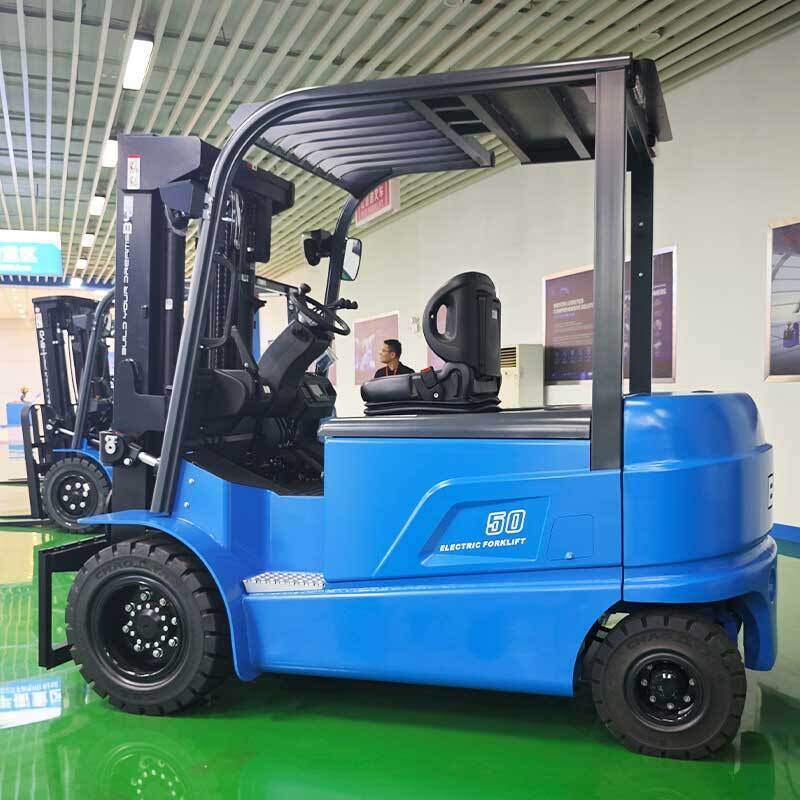
Against the background of rapid development of modern green logistics, electric forklifts have become one of the most widely used core material handling equipment in indoor warehouses, distribution centers and light manufacturing workshops, thanks to their low noise, zero local emission and flexible operation characteristics. Mastering systematic operation and maintenance rules can help enterprises give full play to the value of such equipment in daily work.
Basic Operation Specifications for Electric Forklifts
Before starting the equipment every day, operators need to check the power remaining, brake sensitivity, lifting function flexibility and the integrity of surrounding safety protection components first. During the driving process, it is necessary to keep a safe distance from surrounding personnel, shelves and stacked goods, avoid sharp turns and sudden braking on wet and slippery ground, and control the driving speed within a reasonable range according to the site environment. When lifting and stacking goods, adjust the fork spacing according to the size of the cargo pallet to ensure that the stress on the goods is uniform, to avoid the risk of goods slipping and falling during the handling process.
Daily Routine Maintenance Points
Good daily maintenance work can effectively extend the service life of electric forklifts, and reduce unexpected failure rate in daily operation. The power core component needs to be charged in accordance with the specified operation rules, avoid over-discharging and over-charging, and regularly clean the dust and accumulated debris on the surface of the battery module and the heat dissipation position of the motor. After finishing the daily work, the equipment should be parked in the designated stable area, the fork should be lowered to a position 10 to 15 cm above the ground, and the power supply should be cut off completely. Regularly check the wear degree of tires, transmission parts and hydraulic sealing components, and replace the aging parts in time when abnormal wear is found, to avoid hidden safety risks in subsequent operation.
Performance Optimization for Different Application Scenarios
For different operation scenarios, users can adjust the parameter setting and operation mode of electric forklifts to get better use effect. For narrow aisle warehouse scenarios, operators can adjust the operation sensitivity of the steering system appropriately, to improve the flexibility of the equipment when passing through narrow channels. For long-time continuous operation scenarios in large distribution centers, it is possible to arrange the charging and equipment shift plan reasonably according to the actual power consumption, to avoid the situation of sudden power failure in the middle of operation. For low temperature operation scenarios, pre-heat the core power and driving components properly before starting work, to ensure that the equipment can operate stably in low temperature environment. When all these standardized rules are implemented in daily work, enterprises can give full play to the advantages of electric forklifts, and steadily improve the overall operation efficiency of material handling links.


