
 English
 简体中文
 Русский
 Français
 Português
 Español


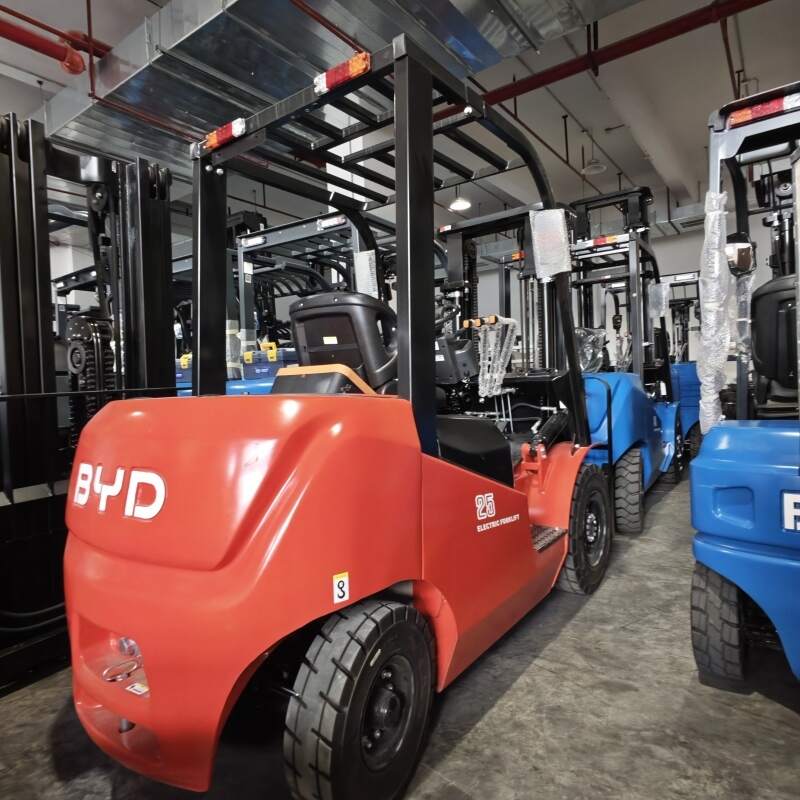
With the continuous expansion of low-carbon logistics requirements in the material handling industry, electric forklifts have become one of the most widely used loading and unloading equipment in indoor storage scenarios in recent years. As a professional practitioner with years of research in this field, this article sorts out practical guidelines for ordinary operators to refer to in daily work.
Core Application Advantages of Electric Forklifts
Different from traditional fuel-powered handling equipment, electric forklifts produce no local exhaust emissions during operation, and the overall operating noise is kept at a relatively low level, which can meet the strict environmental control requirements of scenarios such as food storage, pharmaceutical warehouses and enclosed e-commerce sorting centers. The power output of the equipment is stable, and the operation is more responsive during low-speed material stacking, which reduces the misoperation probability of operators in dense goods placement areas. The long-term energy consumption cost is more predictable, which is convenient for warehouse managers to make reasonable operation budgets.
Standardized Daily Operation Specifications
Before each shift, operators need to complete pre-operation checks, including the remaining power of the power system, the flexibility of the braking mechanism, the smoothness of the lifting hydraulic rod, and the integrity of the light and warning horn. During the driving process, the operator should avoid overloading beyond the rated load, keep the height of the forks from the ground at the specified safe range, and do not lift the goods to a height that blocks the front view during driving. When passing through narrow passages and working near the pedestrian flow area, slow down in advance and send out warning signals to avoid sudden braking or sharp acceleration which may cause the goods to fall and cause unnecessary safety risks.
Routine Maintenance Skills to Extend Equipment Service Life
After the daily operation is completed, the operator should wipe off the dust and sundries accumulated on the surface of the equipment in time, especially the heat dissipation part of the drive motor, to avoid excessive dust accumulation affecting the normal heat dissipation effect. For the power battery, follow the official recommended charging process, avoid long-term over-discharge or over-charging, and check the wiring connection of the circuit regularly to rule out hidden dangers of aging line skin. Check the liquid level of the hydraulic oil every fixed cycle, replenish or replace the hydraulic oil according to the actual use, and do not park the equipment in a long-term humid and high-corrosion environment, so as to avoid damage to the internal electrical components. Reasonable operation and regular maintenance can help the equipment maintain a stable working state for a long time, improve the overall turnover efficiency of warehouse material handling, and create higher value for the daily operation of the storage system.


