
 English
 简体中文
 Русский
 Français
 Português
 Español


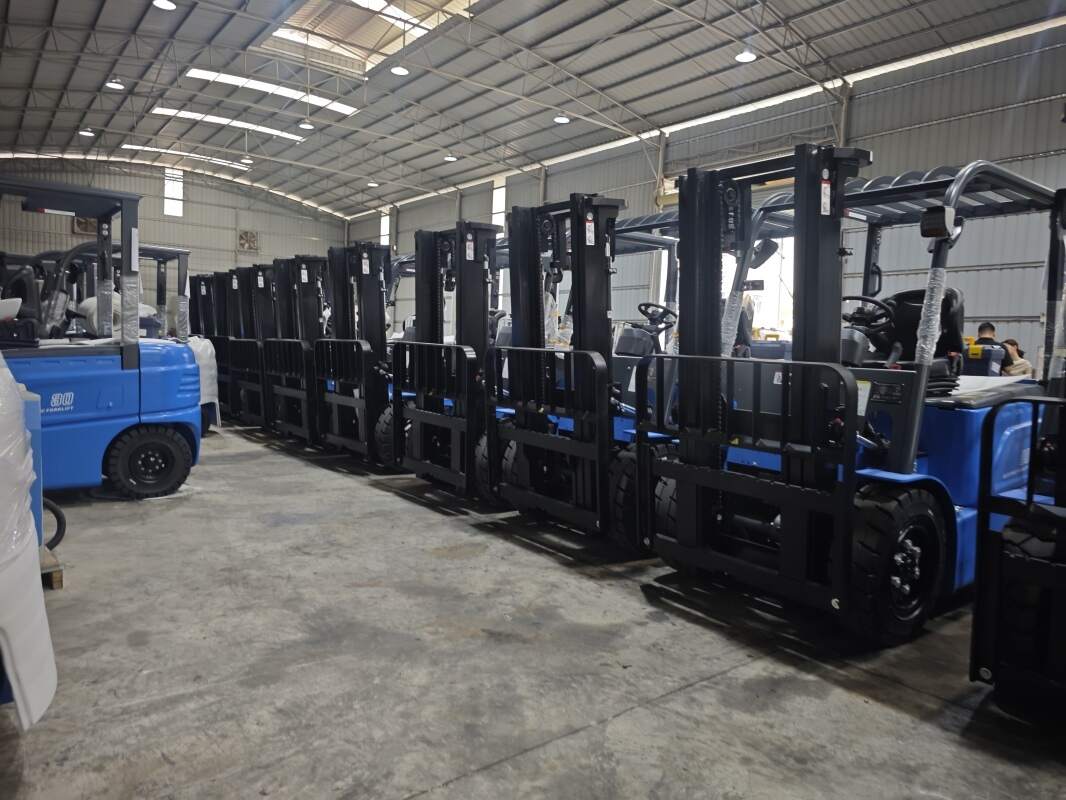
With the continuous development of low-carbon logistics and intelligent warehousing, electric forklifts have gradually become one of the most widely used material handling equipment in indoor closed scenarios, cold storage and urban distribution parks. Mastering correct use and maintenance knowledge can help relevant personnel give full play to the value of the equipment in daily work.
Core Advantages of Electric Forklifts in Daily Application
Different from internal combustion power equipment, electric forklifts produce no direct exhaust emission during operation, and the overall operation noise is controlled at a relatively low level, which can effectively reduce the health impact on operators working in enclosed spaces for a long time. Its power output is more stable in low-temperature environments, and will not be affected by incomplete combustion of fuel in cold weather, which can meet the continuous operation needs of special scenarios such as cold storage. The energy cost per unit operation is also lower than that of fuel-powered equipment, which fits the current low-carbon operation trend of logistics parks.
Standardized Daily Operation Specifications
Before each start-up, operators need to check the remaining power of the power system, the flexibility of the braking and steering system, and the clarity of the operation vision, and adjust the sitting position and operation lever sensitivity to the state suitable for personal habits. During the operation process, operators should avoid overloading beyond the rated load range, slow down in advance when turning and passing through narrow passages, and avoid sudden braking and sharp steering when the vehicle is running with loads. After the daily operation, the equipment should be parked in the designated special area, the power supply should be cut off, and the goods on the fork should be lowered to the safe position close to the ground.
Routine Maintenance Points for Long-term Stable Operation
For the power core part, personnel should check the connection tightness of the wiring terminals and the liquid level state of the battery regularly, keep the surface of the battery clean and dry, and avoid overcharging or complete power loss for a long time. For the hydraulic system, check the sealing state of the oil circuit and the residual amount of hydraulic oil every certain working cycle, replace the aging sealing parts in time to avoid oil leakage that affects the lifting stability. In addition, personnel should regularly check the wear degree of the driving wheels and the operation sensitivity of the safety warning components, and eliminate potential safety hazards in the early stage.
Scenario-based Efficiency Optimization Strategies
Combined with the actual layout of different operation sites, personnel can adjust the corresponding operation parameters of the equipment according to the channel width, cargo weight and continuous operation duration. For the working scenes that require multi-shift continuous operation, a reasonable battery rotation scheduling mechanism can be formulated to reduce the waiting time for power replenishment, and further improve the overall operation efficiency of the material handling link.


