
 English
 简体中文
 Русский
 Français
 Português
 Español


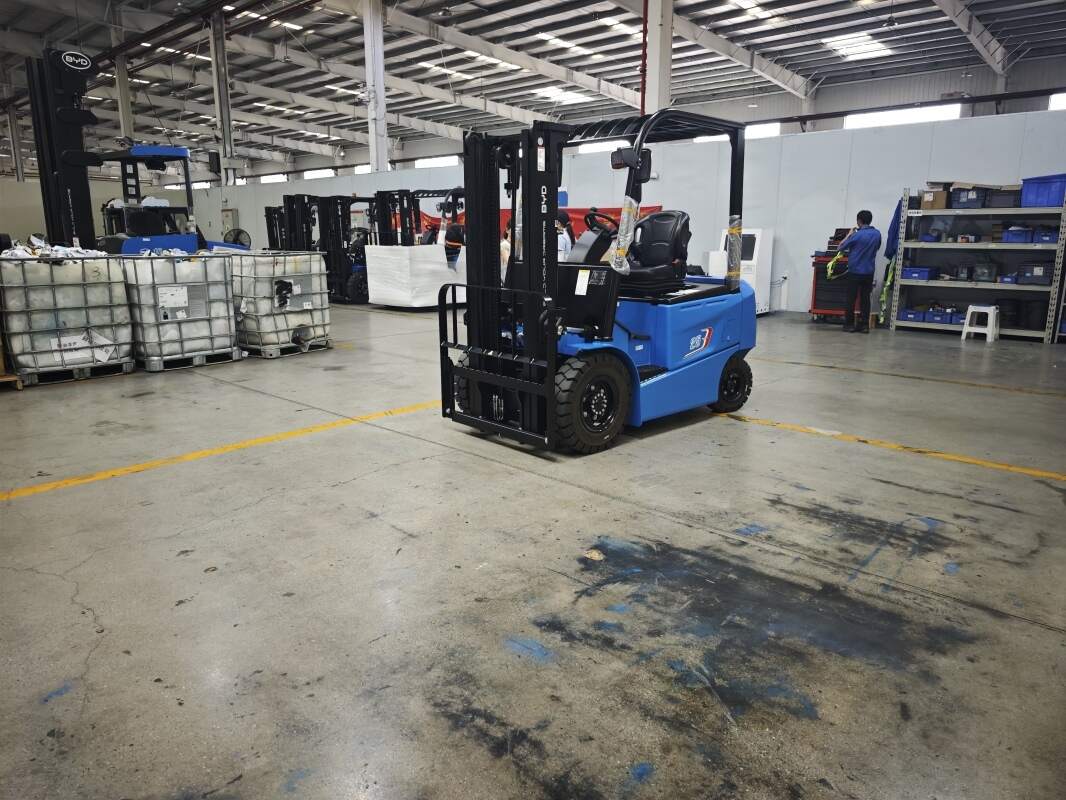
Against the background of continuous popularization of new energy material handling equipment, electric forklifts have become a core tool widely adopted in most logistics and production warehouses for their low noise, zero on-site emission and relatively low operation cost. Many frontline operators and warehouse managers still lack systematic, practical guidance for daily use, which easily leads to unexpected equipment wear and unplanned downtime.
Core Standardized Operation Norms
Before starting the equipment every shift, operators need to complete basic visual inspection around the vehicle, check the state of tire wear, braking sensitivity and power connection status, to avoid hidden safety risks caused by neglected minor faults. During the operation process, operators need to keep stable driving speed according to on-site environment conditions, avoid sudden acceleration or sharp steering when carrying loads, and adjust the lifting speed of goods properly according to the weight and stacking height, to reduce the risk of goods falling and equipment stress. It is also not recommended to operate the equipment on slopes with gradient exceeding the rated parameter range of the product, to prevent potential tilt or power loss issues.
Scientific Routine Maintenance Arrangement
The daily maintenance of electric forklifts does not require overly complicated professional skills for frontline teams, but needs to follow a regular fixed schedule. After each shift ends, operators should wipe the dust and residual cargo debris on the body surface and battery ventilation parts, and park the equipment in the designated area with hand brake locked. For the power system, relevant personnel should check the battery cell voltage and connection terminal stability on a weekly basis, and avoid over-discharging the battery for a long time to protect the overall service life of the power module. The regular lubrication of transmission and lifting components can be arranged every 200 to 300 working hours, to reduce component friction loss in long-term operation.
Application Optimization for Different Working Scenarios
For closed indoor warehouse scenarios, operators can adjust the running power output properly according to the narrow channel width, to keep low noise operation and reduce the disturbance to other on-site workers. For the scenarios that need frequent long-distance transfer of goods, arranging reasonable shift handover and charging schedule can avoid sudden power interruption in the middle of operation. Proper matching of the load weight with the equipment rated load parameter can effectively bring the operation performance of electric forklift into full play, and further improve the overall material handling efficiency of the whole warehouse.


