
 English
 简体中文
 Русский
 Français
 Português
 Español


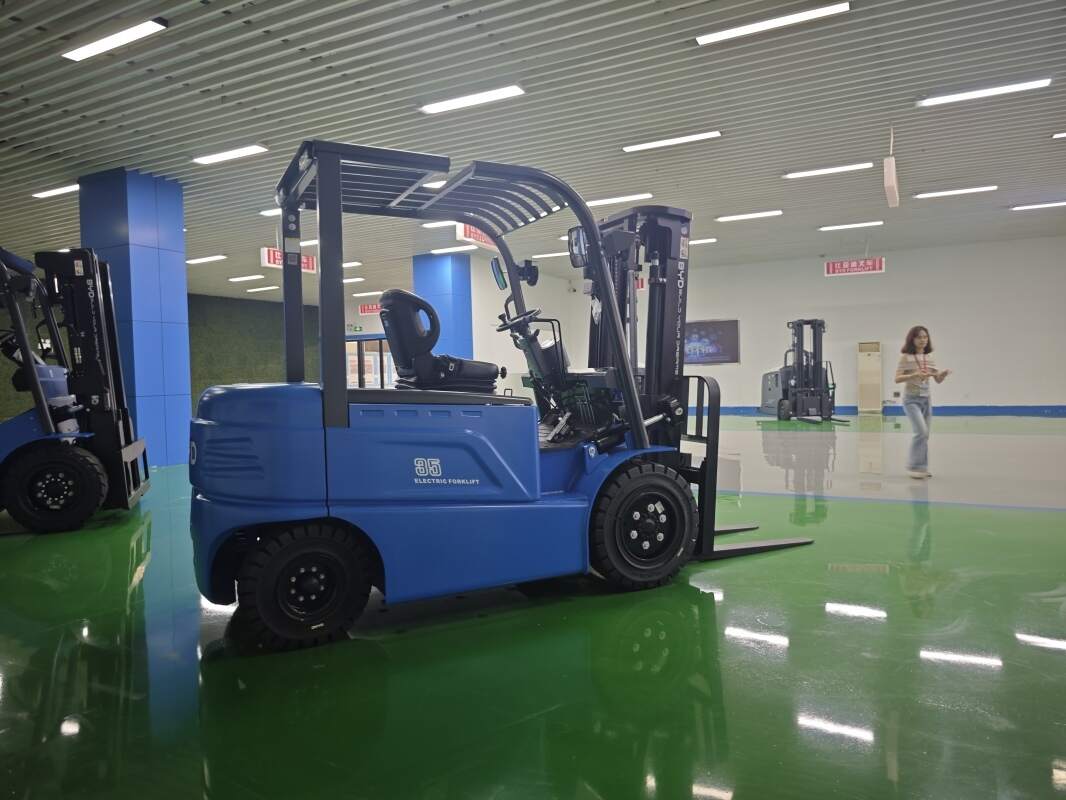
As the core component of modern warehouse and industrial material handling systems, electric forklifts are widely applied in diversified logistics operation scenarios for their features of low noise, zero local emission and relatively low long-term operating cost. For most frontline operators and enterprise facility managers, mastering systematic professional knowledge can help maximize the service performance of the equipment and avoid unnecessary operation risks.
Basic Standard Operation Specifications for Electric Forklifts
Before starting the equipment every shift, operators need to complete full pre-operation inspection work, including checking remaining battery power, the flexibility of lifting and tilting mechanism, the sensitivity of braking system and the intact status of all warning lights. During moving process, operators need to keep the load at a proper low height, avoid sudden acceleration or emergency braking under full load status, and strictly follow the site speed limit rules set for internal industrial areas. When operating on ramp roads, operators are required to move forward uphill and drive backward downhill to prevent goods from slipping off the forks, and do not turn the equipment on sloped surfaces at any time.
Daily Routine Maintenance Guidelines
Different from internal combustion forklifts, electric forklifts focus more on the maintenance of power systems and electronic control components. Operators need to wipe the surface of battery poles regularly to avoid accumulated dust or liquid leakage causing poor electric conduction, and follow the officially specified charging procedures to prevent overcharging or undercharging that will damage the overall battery performance. For hydraulic parts, operators can check the sealing condition of oil pipes every two weeks, and replenish qualified hydraulic oil in time if slight leakage is found. The tyre wear condition also needs to be inspected at regular intervals, and replace the worn tyres in time when the remaining tread depth is lower than the specified threshold to ensure driving stability.
Scenario Matching for Higher Operation Efficiency
Selecting the right configuration of electric forklifts according to actual operation scenarios can further improve the overall logistics handling efficiency. For narrow aisle warehouses, models with compact body size can effectively save the aisle space occupied by the equipment, and increase the total storage capacity of the whole warehouse. For outdoor operation scenarios with flat and solid ground, the models with proper higher load capacity and larger battery capacity can support longer continuous operation time without frequent charging. Operators can formulate corresponding operation routes according to daily goods sorting and handling volume, reduce unnecessary repeated moving paths to cut down extra power consumption and shorten the single handling cycle. Regularly organizing standardized operation training for frontline staff can also help reduce misoperation caused by unfamiliar operation rules, creating a safer and more efficient material handling working environment for the whole team.


