
 English
 简体中文
 Русский
 Français
 Português
 Español


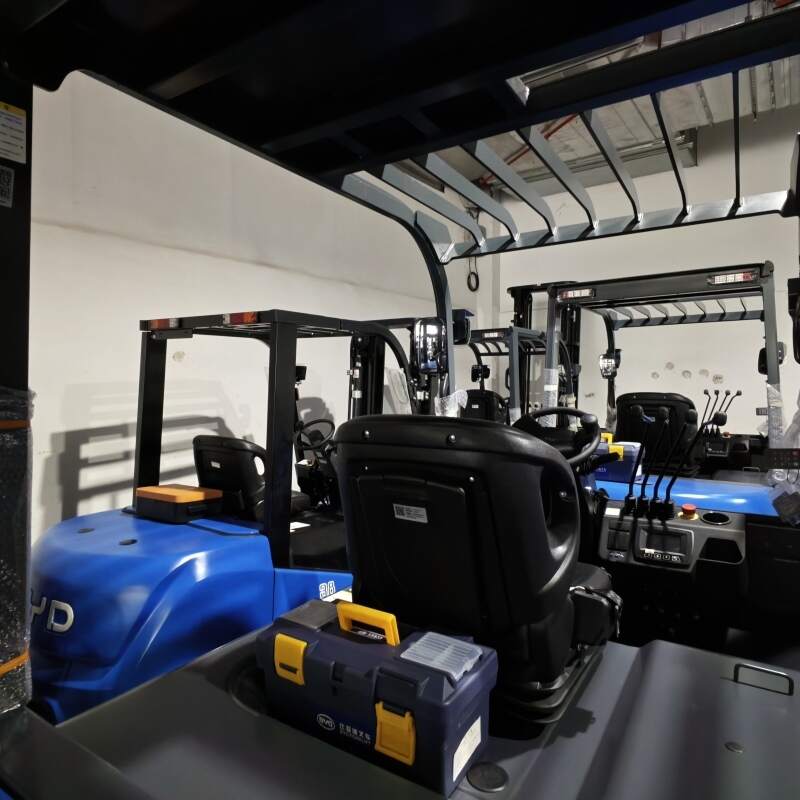
As the logistics and warehousing industry shifts towards low-carbon, energy-efficient operation modes, electric forklifts have become one of the most widely used material handling equipment in various industrial scenarios. Mastering proper operation and maintenance knowledge can help operators improve work efficiency and avoid unnecessary equipment loss in daily work.
Pre-operation Daily Check Protocols
Before starting any electric forklift work shift, operators need to complete a series of basic checks to eliminate hidden risks in advance. The first step is to confirm the remaining power level of the power supply system, make sure the power connection parts are free of loose or exposed wires, and check the tire surface for obvious scratches or embedded hard sundries that may affect driving stability. Operators also need to test the normal response of the braking system, steering system and warning horn before formal loading and unloading work, to ensure all functional parts can work as designed.
Standardized Operation Guidelines for Daily Use
During the operation process, operators should keep the driving speed within the safe range adapted to the site road conditions, avoid sharp turns or sudden braking when carrying heavy loads, and keep the load center within the allowed range marked on the equipment nameplate. When working in narrow warehouse aisles, operators need to pay close attention to surrounding pedestrians and stacked goods, reduce the driving speed appropriately, and avoid overloading the forks to lift goods beyond the rated load range. It is also not recommended to leave the equipment with the load lifted in an idle state for a long time, which may cause extra pressure on the hydraulic lifting system.
Simple Routine Maintenance Practices
After finishing the daily work shift, operators should park the equipment in the designated parking area, lower the forks to the horizontal position close to the ground, and cut off the main power supply of the equipment in time. The surface of the equipment can be wiped with a soft dry cloth to remove dust and spilled sundries on the body and hydraulic parts, and the power supply can be connected to charge according to the relevant operation instructions to prepare for the use of the next shift. Regularly check the lubrication status of the rotating and connecting parts of the equipment, add appropriate amount of special lubricating oil according to the operation manual requirements, which can effectively reduce the friction loss of mechanical parts. Following these practical rules can help enterprises give full play to the performance of electric forklifts, create a safer and more efficient material handling working environment, and support the stable operation of daily warehousing and logistics links.


