
 English
 简体中文
 Русский
 Français
 Português
 Español


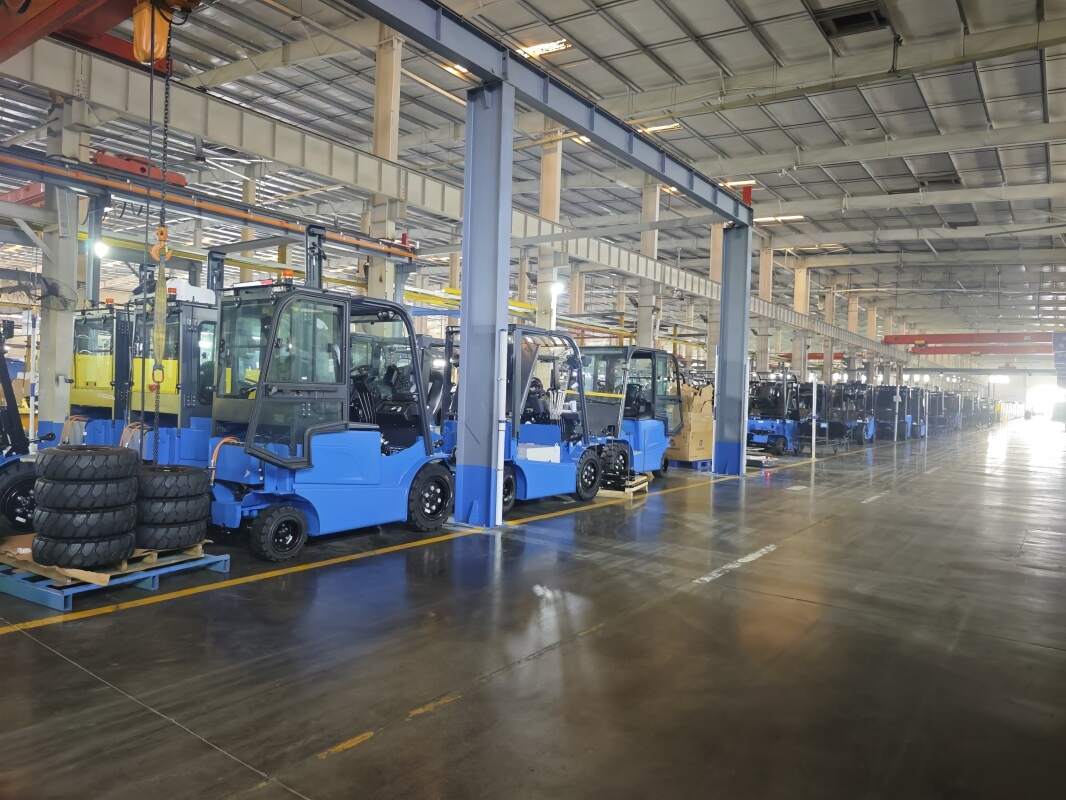
In recent years, electric forklifts have been widely applied in various industrial scenarios including distribution warehouses, manufacturing workshops, logistics transfer yards and cold storage facilities, for their features of low noise, zero local emission and relatively low long-term operating cost. Many frontline operators and facility managers still lack systematic cognition of proper usage details, which may lead to unnecessary energy consumption, shortened equipment service life and hidden safety risks in daily operations. This article sorts out practical, easy-to-follow guidelines to help users maximize the value of electric forklift equipment in daily work.
Basic Pre-operation Check and Standard Operation Rules
Every formal shift should start with a comprehensive pre-operation inspection, covering remaining battery level, flexibility of braking system, wear condition of fork arms, normal working state of warning lights, and clearance of surrounding operation routes. Operators should avoid overloading beyond the rated load capacity, make smooth acceleration and deceleration movements, prevent sharp turns at high speed, keep driving at limited speed in designated pedestrian crossing areas, and send clear warning signals when moving around blind corners. These basic operation habits can effectively reduce the occurrence of accidental collisions and sudden equipment failures.
Scientific Battery Usage Optimization Practices
As the core energy component of electric forklifts, the battery’s service life and performance directly determine the overall operation efficiency. Users should avoid full discharge of the battery before recharging, and stop charging in time when the battery reaches full capacity to prevent overcharging. The charging area should be kept dry, well-ventilated and within a reasonable ambient temperature range, to avoid performance attenuation caused by extreme high or low temperature. For equipment that will be idle for more than 7 days, regular supplementary charge should be arranged to maintain the battery activity, which can reduce unnecessary battery replacement cost in the long run.
Routine Maintenance and Fault Prevention Measures
Operators should clean the dust and debris accumulated on the equipment heat dissipation structure on a regular basis, to avoid heat dissipation blockage that may cause overload operation of the motor. After every certain hours of cumulative operation, check the lubrication condition of transmission components and add appropriate amount of lubricant as required. Once minor abnormal noise or unsmooth operation response is found during work, operators should stop the equipment in a safe area for inspection timely, instead of carrying out continuous operation with hidden troubles, so as to avoid expanding small faults into expensive maintenance problems. Targeted adjustment on inspection frequency can also be made according to specific operation scenarios, to further improve the running stability of the equipment throughout its whole lifecycle.


