
 简体中文
简体中文 Русский
 Français
 Português
 Español
 لالعربية

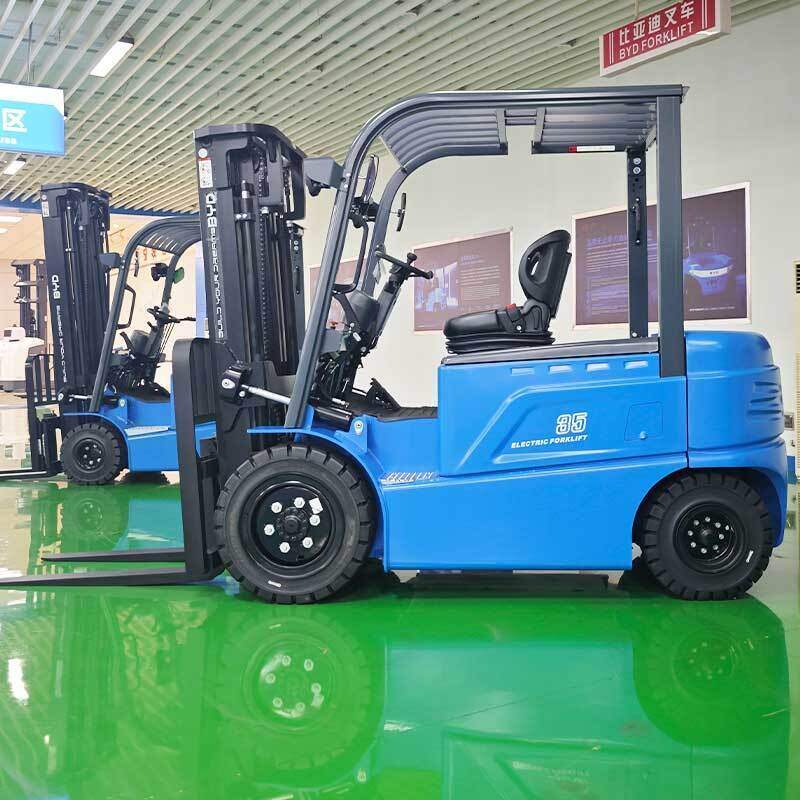
In recent years, lithium-ion powered forklifts have been widely applied in various industrial warehousing, manufacturing logistics and cargo distribution scenarios, and most operation teams focus on the full load working energy consumption during handling tasks, while easily ignore the standby power consumption of hardware modules, which may accumulate to form considerable unnecessary energy loss in long-term daily operation. It is necessary for all relevant operators to master basic and practical knowledge of this indicator to make more reasonable energy management arrangements.
First, it is important to clarify the definition of standby power consumption of lithium-ion forklift hardware. It refers to the total power consumption of all on-board functional hardware when the forklift stops all handling actions, the operator leaves the operation position without triggering the full main power cut-off. These hardware modules include the vehicle main control board, real-time status sensor group, position tracking module, fault data storage unit, and low-level auxiliary indicator lights. This continuous low power supply is a standard design for industrial forklifts, to prevent the loss of historical operation fault data, keep the remote management system online state, and ensure the vehicle can complete quick response after the operator restarts the device, instead of spending extra time to complete full system self-check again.
Second, you need to know the reasonable range of normal standby power consumption. For compliant, qualified industrial lithium-ion forklifts, the normal total standby power consumption is controlled within a reasonable range that meets industrial device safety standards, which will not cause obvious power drop in short standby period. If the operation team finds that the forklift loses excessive power within 48 hours of standby state, it is recommended to arrange professional maintenance personnel to check if there is non-original external additional device taking power directly from the battery loop, or loose wiring insulation layer causing hidden abnormal current leakage, instead of regarding it as normal standby power loss.
Third, there are easy and operable measures to optimize standby power consumption in daily operation. If the forklift is planned to be out of service for more than 72 consecutive hours, operators can refer to the official operation manual to turn off the main power switch of the whole vehicle, completely disconnect all low-voltage power supply loops to eliminate standby power consumption. During regular work breaks, if the operator leaves the forklift for more than 30 minutes, it is recommended to activate the system dormancy function, to turn off power supply of all non-necessary functional modules, only keep the minimum power supply for core fault data storage unit, which can reduce most standby power loss. Regular inspection of power supply lines every quarter also helps eliminate hidden troubles of abnormal extra power consumption.
With correct cognition of the standby power consumption characteristics of lithium-ion forklift hardware, operation teams can avoid unnecessary anxiety over tiny normal standby power drop, make proper energy management arrangements to improve overall energy utilization efficiency, extend the service life of the whole battery system, and reduce the comprehensive long-term operation cost of the fleet stably.


