简体中文
 Русский
 Français
 Português
 Español
 لالعربية


Forklift battery charging is a core daily operation for industrial logistics scenarios, which directly relates to the service life of power units, operation safety of on-site staff, and the continuity of warehouse handling workflow. Unstandardized charging operations often lead to unnecessary capacity attenuation of batteries, extra operation cost increase, and even hidden safety hazards in high-density storage areas.
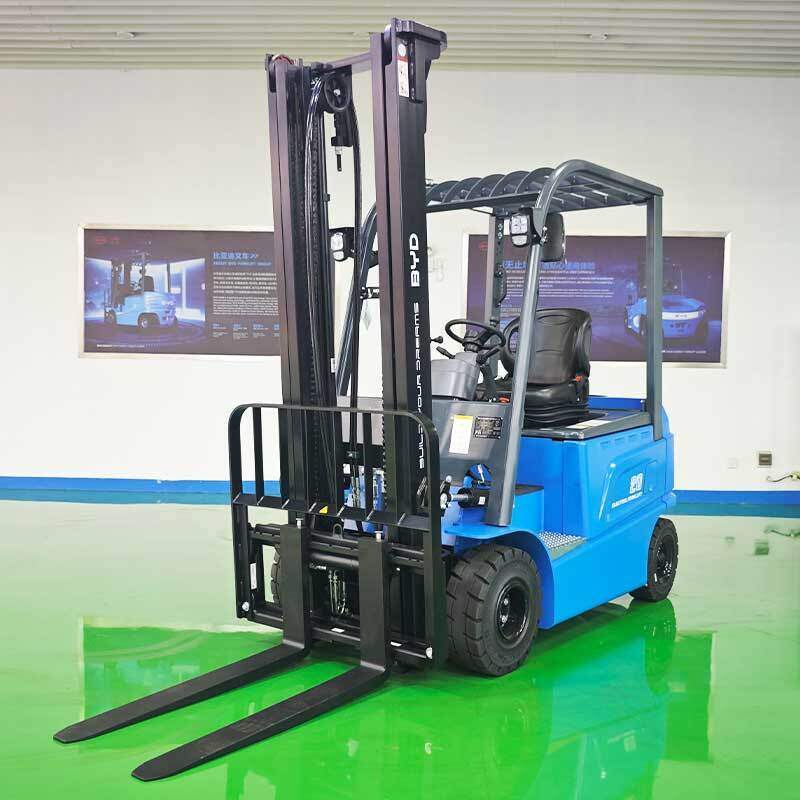
The first core factor is the matching degree between charging parameters and battery attributes. Different battery types have corresponding requirements on charging voltage, current and curve settings. Users are advised to use matched chargers designated for corresponding battery models, instead of using mismatched charging equipment arbitrarily. Before starting the charging process, operators can check the parameter labels on both the charger and battery nameplate to confirm the matching status, and do not modify the preset charging parameters without professional guidance.
The second key factor is reasonable management of the charging environment. The fixed charging area should keep ventilated and dry, and stay away from stacked flammable and explosive materials in the warehouse. The ambient temperature of the charging zone is suggested to be controlled within the range from 0℃ to 40℃, and operators should avoid carrying out charging operations under direct strong sunlight or in open areas exposed to rain. Suitable fire protection facilities shall be arranged around the charging positions, and no sundries are allowed to pile up around the area to block the access passage.
The third critical factor is standardized implementation of the full charging operation process. Before powering on the charger, operators need to check the appearance status of the battery, confirm there is no obvious crack on the shell, no leakage of internal medium, and no oxidation or deformation of the charging interface. The connection port should be inserted firmly to avoid virtual connection and abnormal heat generation. Do not pull out the connector randomly during the whole charging process, and turn off the power of the charger first before disconnecting the battery after charging is finished. Long time over-charging is not recommended, and users can make simple operation records for each charging session to track the battery operating state regularly.
In daily use, users also need to do regular maintenance work for the battery, wipe off the accumulated dust and residual stains on the surface, check the tightness of the wiring terminals, and avoid squeezing and collision of the battery during moving and placing. For batteries that are left idle for a long time, regular supplementary charging is required to avoid long-term storage under power deficit state.
For users who need full-process supporting services for electric forklifts and professional battery operation guidance, you can contact us via [email protected]. We are Jianshu New Energy, focusing on high-quality supporting services for BYD electric forklifts, to provide you with reliable and compliant power operation solutions for industrial handling scenarios.