简体中文
 Русский
 Français
 Português
 Español
 لالعربية


For logistics and manufacturing sites operating a certain scale of forklift fleet, energy consumption cost accounts for a large proportion of daily operation expenditure. Many operators only calculate the total monthly energy cost roughly, but do not carry out systematic targeted analysis, which leads to a lot of hidden unnecessary energy loss that remains unnoticed for a long time. Mastering the basic logic of forklift fleet energy consumption analysis can help operators effectively control operation cost and improve the comprehensive use efficiency of equipment.
The core dimensions of energy consumption analysis need to cover multiple practical operation scenarios. First, the matching degree between actual load and equipment parameters is a key indicator. Long-term overloaded operation will significantly increase the unit energy consumption of each handling cycle, while selecting equipment with excessive power parameters for long-term light load operation will also lead to unnecessary energy waste. Second, the difference of operation scenarios also has obvious impact on total energy consumption: the operation with frequent start and stop in narrow channel intensive storage scene, the operation with frequent climbing in three-dimensional goods yard, and the long-distance transfer operation in open site, the average energy consumption per unit of handling ton-kilometer is quite different. Operators can mark the energy consumption data of different scenarios separately to find out the links with the largest energy consumption fluctuation.
In the process of energy consumption data sorting, operators can also find out many easily ignored energy waste points. For example, many drivers keep the vehicle power on for a long time during 10 to 15 minutes of rest between shifts, which will produce no-load energy consumption that does not create any value. Bad driving habits such as frequent sharp acceleration and sharp braking will also increase extra energy loss, which may lead to more than 10% increase of overall fleet energy consumption in the long run. In addition, failure to carry out regular maintenance of power system and walking mechanism as required will also reduce the energy conversion efficiency of the equipment gradually.
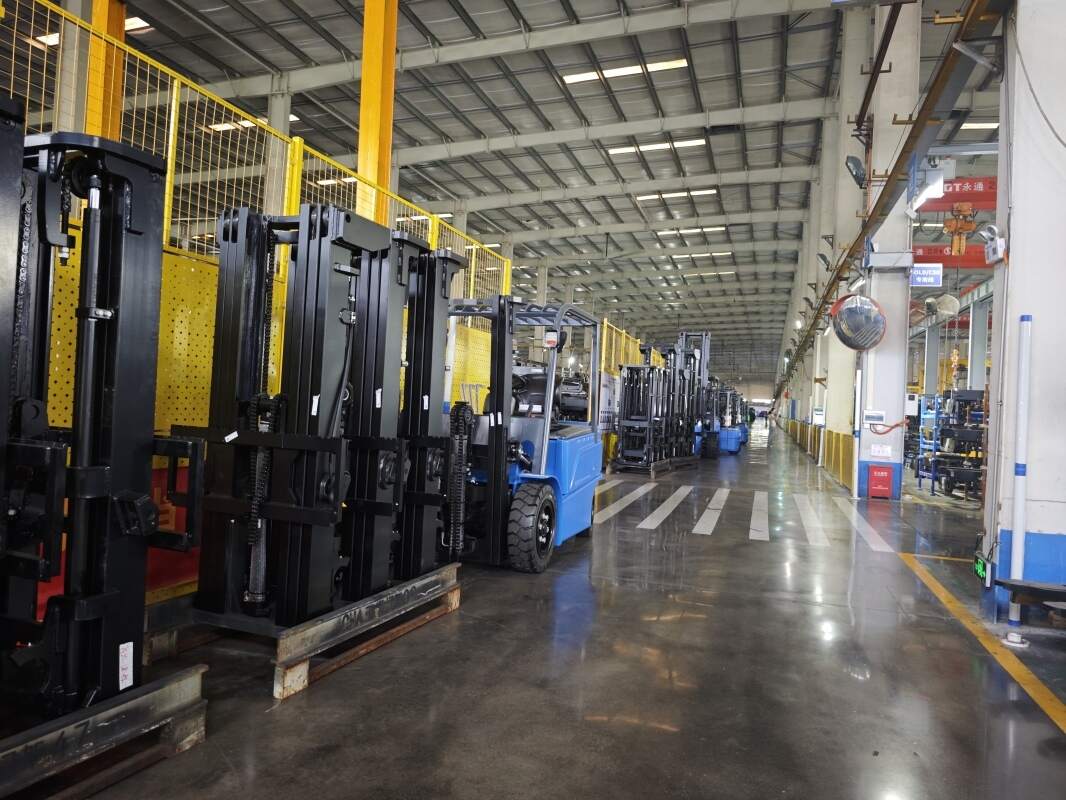
After completing the basic energy consumption analysis, operators can carry out targeted optimization measures. They can allocate different types of electric forklifts to matching operation scenarios according to the data characteristics, arrange the handling path reasonably to reduce the no-load driving mileage, and establish a daily energy consumption account for each single equipment, so as to find out the abnormal energy consumption of individual vehicles in time and arrange inspection and maintenance. As Jianshu New Energy, we focus on BYD electric forklift, and can provide professional customized energy consumption optimization support for different scales of forklift fleets. If you have relevant demands, please contact us via [email protected].