
 简体中文
简体中文 Русский
 Français
 Português
 Español
 لالعربية

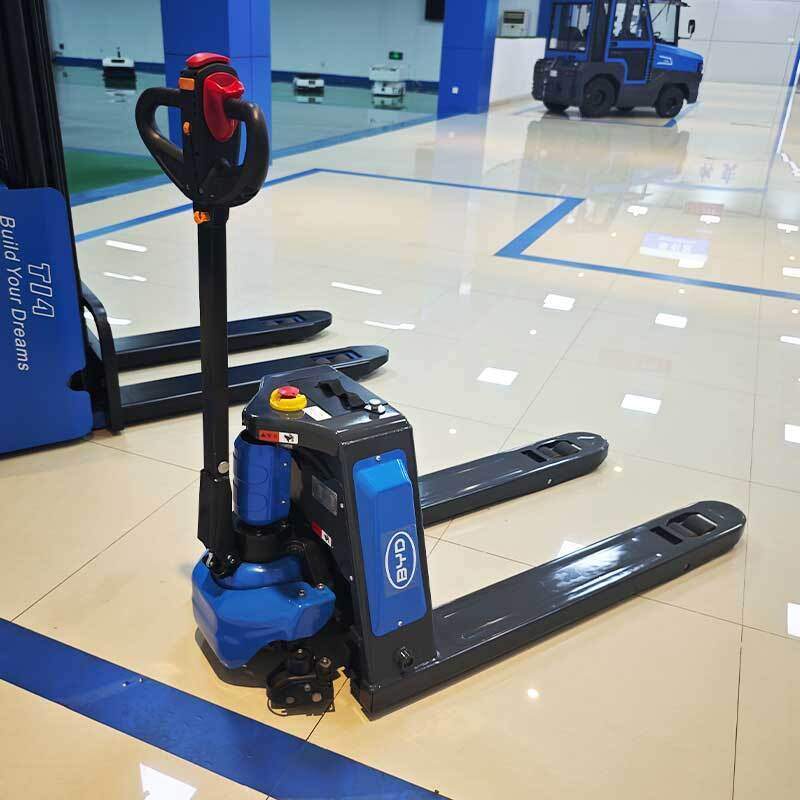
Round-the-clock distribution centres that run 24 hours a day all week long have put forward higher requirements for the continuous operation capability of material handling equipment, and power supply arrangement for electric forklifts has become a core link affecting overall operation efficiency. As two mainstream mature power supply solutions in current market, integrated lithium battery and battery-swap system have different performance characteristics and applicable scenarios, which can meet the differentiated demands of different logistics operation modes.
For the integrated lithium battery solution, the power pack is fixedly installed inside the electric forklift body as a unified component, no extra disassembly and assembly operation is required in daily use. Operators can complete the charging process by connecting the dedicated charging pile to the reserved interface of the forklift during the non-peak period of operation, such as the shift handover gap with no material handling task arranged. This solution does not need to reserve extra special operation area for battery handling, the daily maintenance work is relatively simple, and the overall upfront investment for supporting facilities is controllable. It is suitable for distribution centres that have short reserved idle time between operation shifts, no ultra-high peak demand for instantaneous material throughput, and limited site space that cannot accommodate large supporting facilities. In the long-term operation process, the integrated lithium battery solution can also reduce the hidden safety risks caused by frequent battery handling, and keep the daily operation management flow of the forklift fleet more smooth.
For the battery-swap system, the core design is to separate the power battery module from the forklift main body, and set up a special battery swapping station in the designated area of the distribution centre. When the power level of the forklift is about to run out, the operator can drive to the swapping station to replace the empty battery with a fully charged spare one within a short period of time, without waiting for the long battery charging process. This solution can reduce standby time for the material handling equipment in the peak operation period, ensure the forklift fleet can keep running stably around the clock, and avoid the operation stagnation caused by centralized charging of all equipment. It is suitable for large-scale distribution centres with extremely high daily material throughput, three-shift continuous operation arrangement and sufficient site space to set up supporting swapping stations. The operation management party only needs to arrange special personnel to uniformly charge and maintain all spare batteries in the swapping station, which can reduce the scattered charging management work for single forklift.
When choosing between the two solutions, distribution centre operators can combine their actual operation scale, daily forklift average running time, supporting site conditions and overall operation budget to conduct comprehensive assessment, so as to select the most adaptive power supply arrangement, balance the operation efficiency and full life cycle cost of the material handling system.


