
 简体中文
简体中文 Русский
 Français
 Português
 Español
 لالعربية

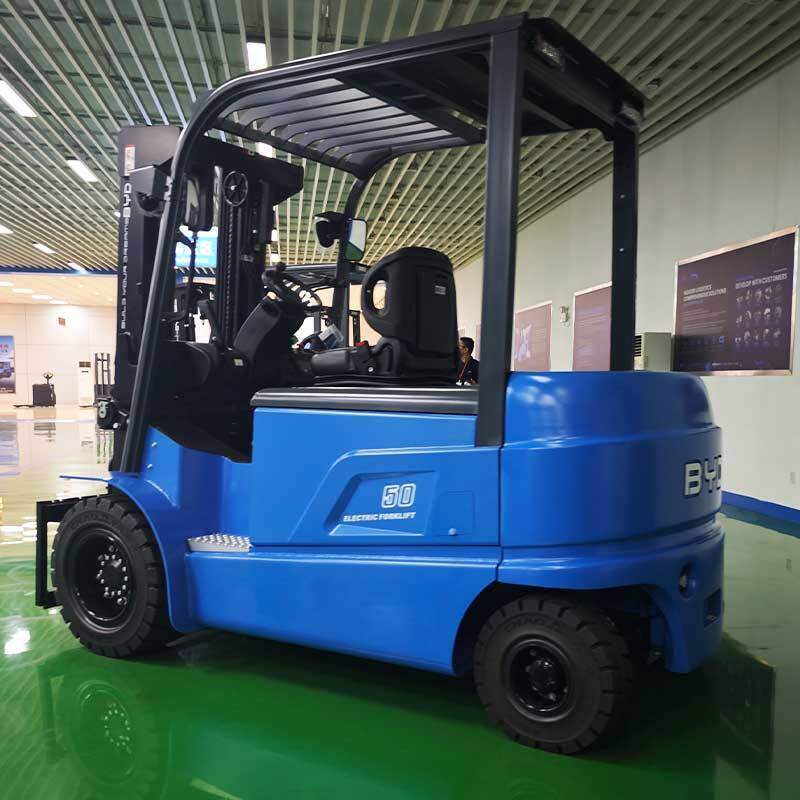
As the core equipment of modern warehouse material handling, electric forklifts have been widely applied in various industrial scenarios for their low noise, zero local emission and easy operation features. Mastering scientific operation and maintenance knowledge can help operators give full play to the equipment’s advantages, reduce unnecessary operation risks and control long-term use cost properly.
Core Safety Operation Specifications
Before starting the equipment every day, operators need to complete full pre-use inspection, including checking the braking sensitivity, steering flexibility, and the integrity of the warning light system. During the moving process, operators shall keep full attention to the surrounding environment, avoid sudden steering or sudden braking, and keep a safe distance from surrounding personnel and storage racks. When carrying goods, the actual load shall not exceed the rated load capacity marked on the equipment specification, and the goods shall be placed stably on the pallet to avoid falling off during lifting. When driving on the ramp, keep the load facing the upward direction of the ramp, and do not turn on the slope to avoid side slipping risk.
Routine Daily Maintenance Points
Daily simple maintenance work can effectively avoid most common equipment faults. Operators can wipe the surface of the battery and the contact points regularly to keep the contact area dry and clean, which can reduce the unnecessary energy loss caused by poor contact. It is also necessary to check the wear degree of the walking tires every shift, and remove the embedded sundries in the tire gap in time to keep the driving stability. For the hydraulic lifting system, operators can observe the sealing parts of the oil pipeline regularly, and add the designated type of hydraulic oil as required according to the operation manual, to avoid the situation that the goods cannot be lifted smoothly due to insufficient hydraulic pressure.
Energy Efficiency Promotion Strategies
Reasonable operation habits can effectively extend the single continuous working time of electric forklifts. Operators can plan the driving route in advance according to the distribution of goods in the warehouse, reduce unnecessary repeated long-distance driving, and avoid frequent acceleration and deceleration in the working process. It is not recommended to discharge the power to the state of alarm at low battery frequently, and the charging operation shall be carried out in accordance with the standard process in the designated ventilation and cool charging area. For different operation intensity scenarios, operators can switch to the corresponding operation mode properly, to balance the work efficiency and energy consumption level. Following the above scientific operation and maintenance rules can help enterprises get more stable use experience of electric forklifts, and create more value for daily warehouse material handling work.


