简体中文
 Русский
 Français
 Português
 Español
 لالعربية


Retail warehouses face unique operational challenges that range from frequent high-volume stock turnover, dense multi-SKU storage, peak-season order surges to strict requirements for low pollution and low noise in enclosed working spaces. As one of the most widely used material handling equipment in such scenarios, counterbalance forklifts deserve full understanding from retail warehouse managers to maximize their operational value.
First, it is essential to clarify the core structural advantages of counterbalance forklifts adapted to retail warehouse scenarios. Different from other types of warehousing forklifts that rely on front outriggers to stabilize loads, counterbalance forklifts use heavy counterweights installed at the rear of the vehicle to offset the weight of goods on the front forks. This design eliminates the extra space occupied by outriggers, so it will not scratch or squeeze the goods stored on the bottom layer of the shelf when carrying out stack or pickup operations, which effectively reduces the cargo damage rate of retail goods including food, daily chemicals and packaged merchandise. It can also adapt to the conventional channel width settings of most retail warehouses, completing whole-pallet goods handling, high-position stacking and loading and unloading operations smoothly.
For retail warehouses that arrange long hours of operation, electric counterbalance forklifts bring more obvious comprehensive benefits. It produces no exhaust emissions during operation, which avoids the risk of odor or pollutant residue on sensitive retail products, and the low operation noise will not interfere with the normal communication between picking staff and warehouse managers, helping to create a more comfortable working environment. The stable endurance can meet the daily 8-10 hours of continuous operation demand of conventional retail warehouses, and the convenient supplementary power mode can also adapt to the peak operation demand of large promotion stocking periods.
For warehouse managers, reasonable management rules can further improve the input-output ratio of counterbalance forklifts. It is recommended to select the corresponding load and lifting height parameters according to the actual maximum weight of conventional pallets and the height of the highest shelf in the warehouse, to avoid unnecessary cost waste caused by blindly choosing over-specification models. Arrange daily pre-shift inspection for operators, focusing on checking the braking performance, wear degree of forks and the fixing state of rear counterweight, and carry out regular safety operation training to standardize the driving route in the warehouse, which can effectively reduce safety risks and equipment loss.
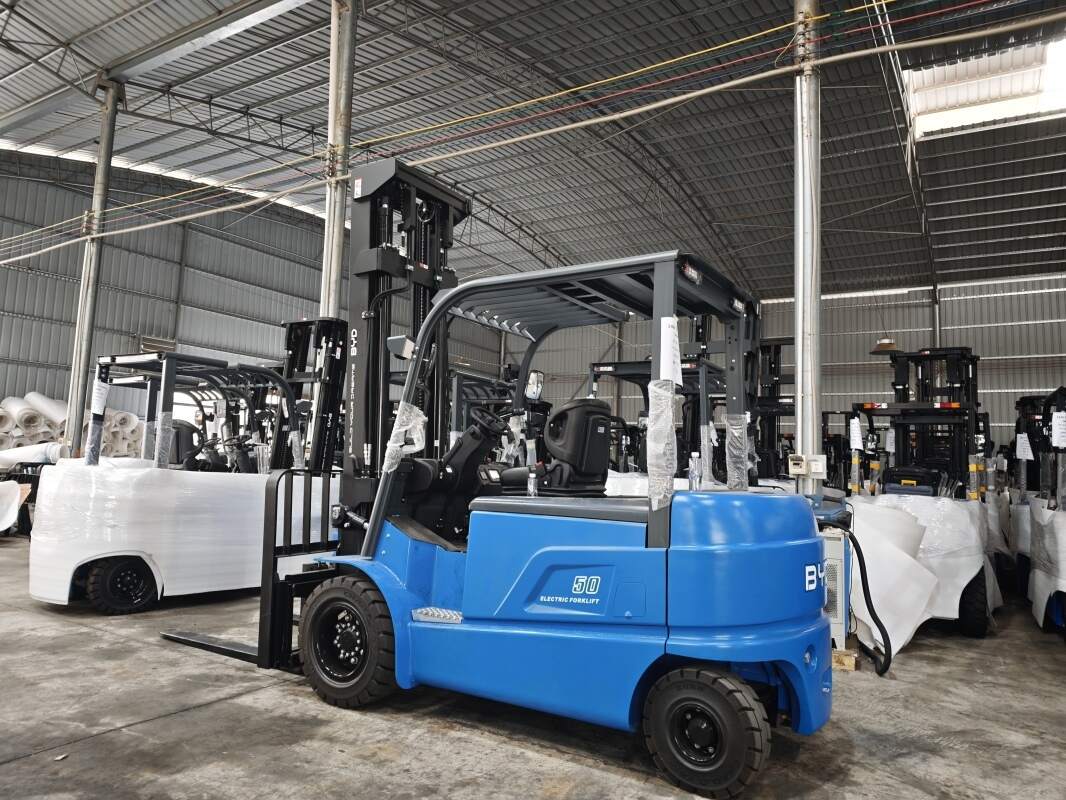
We are Jianshu New Energy, focusing on BYD electric forklifts. If you have demand for counterbalance forklift selection and supporting solutions, you can send an email to [email protected] for more professional support.