简体中文
 Русский
 Français
 Português
 Español
 لالعربية


In Bulawayo, the core logistics, agricultural processing and mining supporting sectors are seeing growing demand for heavy-load material handling solutions. Many local operation teams used to select handling equipment only by initial purchase price, while ignoring accumulated expenses during the full service lifecycle, which often leads to unexpected extra expenditure after 1 to 2 years of operation. Calculating the total cost of ownership (TCO) of high-capacity electric forklifts from multiple dimensions can help local enterprises make more scientific equipment purchasing decisions.
The first core dimension of TCO calculation is daily operating energy cost. Different from internal combustion forklifts that need continuous diesel supply, high-capacity electric forklifts can be charged through local public grid at relatively stable electricity price. For most operation scenarios with 8-hour daily working hour, the energy cost of electric forklifts per working hour is far lower than the corresponding diesel cost, and the expense fluctuation is much smaller even under the influence of global fuel price change.
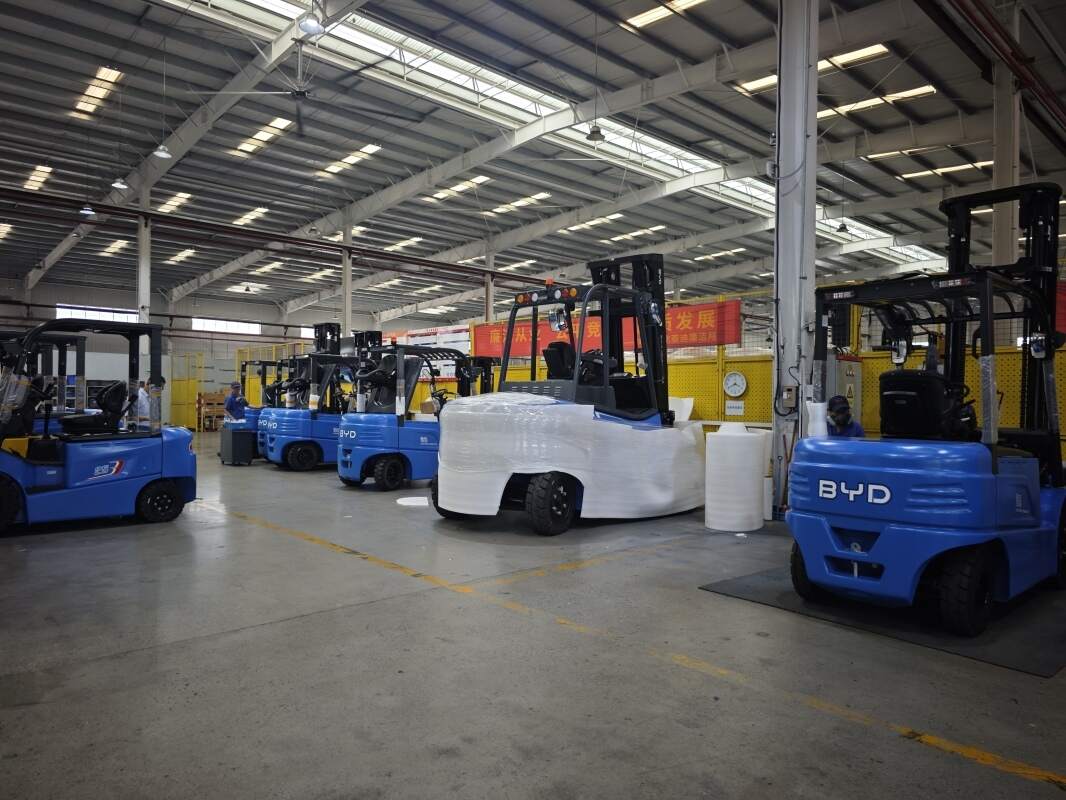
The second part is routine maintenance cost. High-capacity electric forklifts have no complex internal combustion structure, which means no need to replace engine oil, fuel filter, spark plug and other wearing parts on a regular basis. The routine maintenance work is only limited to checking motor status, battery health and tire abrasion, which cuts down the annual maintenance labor cost and spare parts expense significantly. The operation teams also do not need to arrange special storage space for flammable fuel, which saves extra site management cost.
The third dimension covers compliance and potential hidden cost. In recent years, local environmental management rules in Bulawayo have put forward clear requirements for exhaust emission and operation noise of industrial handling equipment. High-capacity electric forklifts produce no tail gas emission and much lower operation noise, which can meet relevant regulatory requirements without extra transformation cost, and are also suitable for indoor warehouse and closed processing workshop operation scenarios. The residual value of high-quality high-capacity electric forklifts after 5 to 7 years of normal operation also stays at a relatively reasonable level, which further reduces the net comprehensive expense of the whole lifecycle.
As Jian Shu New Energy, we focus on BYD electric forklift supply and local operation support. If you need a customized total cost of ownership assessment for your on-site operation scenarios in Bulawayo, please send your inquiry to [email protected].