
 简体中文
 Русский
 Français
 Português
 Español
 لالعربية


As a core industrial and logistics hub in southern Nigeria, Port Harcourt hosts a large number of port yards, distribution warehouses and manufacturing facilities that rely heavily on electric forklifts for daily material handling operations. Many local operation teams face common confusion when configuring power sources for their fleets, choosing between lithium-ion and lead-acid batteries without calculating the full cost dimension beyond initial purchase price. This practical breakdown is tailored for local operation scenarios, to help operators make reasonable decisions that match their actual demand.
First, the initial procurement cost gap is the most intuitive factor for most buyers. For the same rated capacity, lead-acid battery packs usually have a lower upfront purchase cost, which seems more friendly for teams with short-term limited budget. But it is worth noting that Port Harcourt has a typical hot and humid tropical marine climate, the average ambient temperature in most months of the year stays above 30 degrees Celsius, which will accelerate the electrolyte evaporation and plate aging process of lead-acid batteries, making their actual service life far shorter than the data marked in standard temperature test conditions.
Then we look at the daily operation and maintenance cost part. Lead-acid batteries need regular manual maintenance work, including electrolyte level inspection, distilled water replenishment, pole position cleaning and equalization charging, which takes up a lot of working hours of on-site management personnel, and the labor cost for these routine maintenance is not negligible in the local Port Harcourt market. For lithium-ion batteries, there is no need for such frequent manual intervention, and only regular simple line status check is required to keep normal operation, which greatly saves labor input in the full operation cycle.
As for the power consumption and operation efficiency cost, the energy conversion efficiency of lithium-ion batteries is about 30% higher than that of lead-acid products, which means that under the same daily operation workload, the total power consumption of lithium-ion forklifts is significantly lower, bringing continuous savings in electricity bills. In the high-intensity three-shift operation scenario common in port yards, lithium-ion batteries support fast partial charging during break time, no need to arrange extra spare battery packs for replacement, which also saves the extra procurement cost and special storage space occupation for spare batteries.
When calculating the average annual amortization cost across the full service life, the gap becomes even more obvious. Under the high-load operation scenario in Port Harcourt, the actual available life of lead-acid batteries is usually 1.5 to 2 years, while the high-quality lithium-ion battery packs can operate stably for 5 to 7 years, which means the total cost spread to each year of use is far more competitive for lithium-ion solutions.
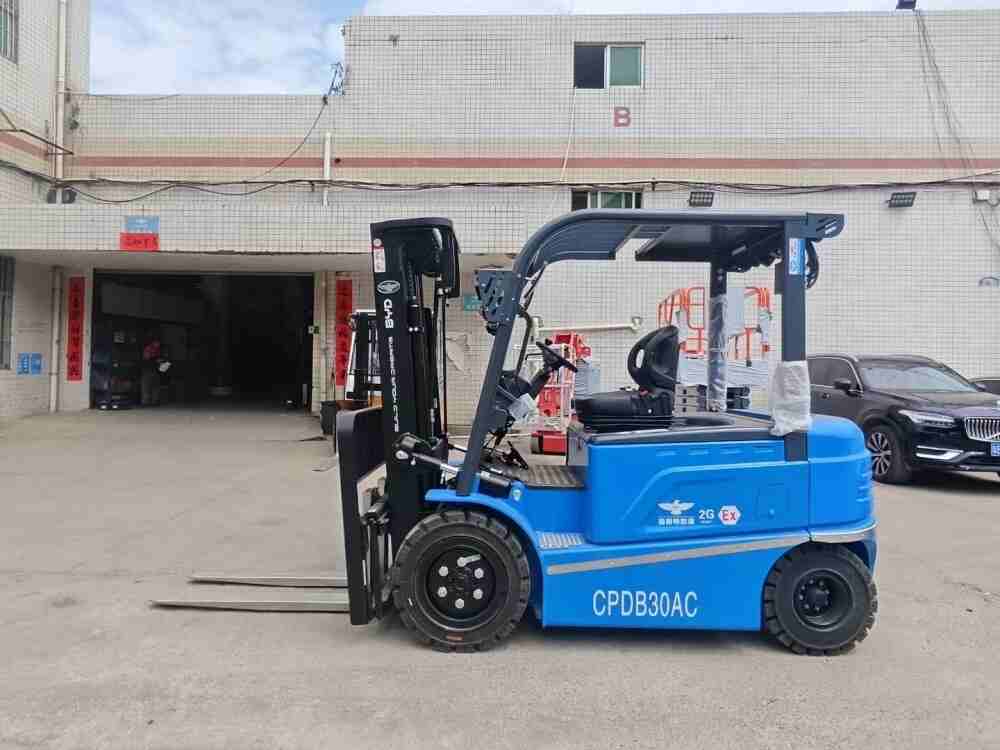
We are Jian Shu New Energy, focusing on BYD electric forklifts, we are fully familiar with local climate features and operation scenarios in Port Harcourt, and can provide targeted cost assessment schemes for fleets of different scales. For more customized advice, you can send an email to [email protected] for professional support.


