简体中文
 Русский
 Français
 Português
 Español
 لالعربية


Port Harcourt, as the core port and logistics hub in southern Nigeria, has a large number of three-wheel electric forklifts widely deployed in cargo handling, short-distance transit and warehouse sorting scenarios in port yards, suburban distribution centers and freight stations. For operation sites that do not have stable grid access for the time being, many local operation teams choose generator-backed charging solutions to support the daily operation of these material handling equipment, and clarifying the actual comprehensive cost of this mode is of great significance for controlling the overall operation expenditure.
The first core part of the cost is fuel consumption. Referring to the current local fuel price level, to fully charge the standard power battery of a common three-wheel electric forklift, the diesel generator needs to run for several hours under corresponding load to output enough electric energy, and the direct fuel cost per full charge is significantly higher than the charging cost under stable grid supply condition. If the equipment runs continuously for more than 8 hours a day, the monthly fuel expenditure of generator-backed charging will occupy a considerable proportion in the daily operation budget of the handling team.
The second part is the hidden operation and maintenance cost that is easily ignored in the initial budget. The generator will face continuous high-load operation state for a long time to meet the centralized charging demand of multiple forklifts, which will accelerate the wear of internal moving parts. The required regular oil replacement, filter element check, aging component replacement and routine fault troubleshooting will generate continuous additional expenses, which will further increase the comprehensive use cost of the charging solution.
There is also extra energy loss and equipment wear cost in the actual operation process. In the process of the generator converting fuel into electric energy and then transmitting it to the forklift battery for storage, there is inevitable energy conversion loss, and the unstable instantaneous power output of some generators may also cause extra impact on the forklift power battery, which will invisibly shorten the average service life of the battery and bring additional replacement cost in the long run.
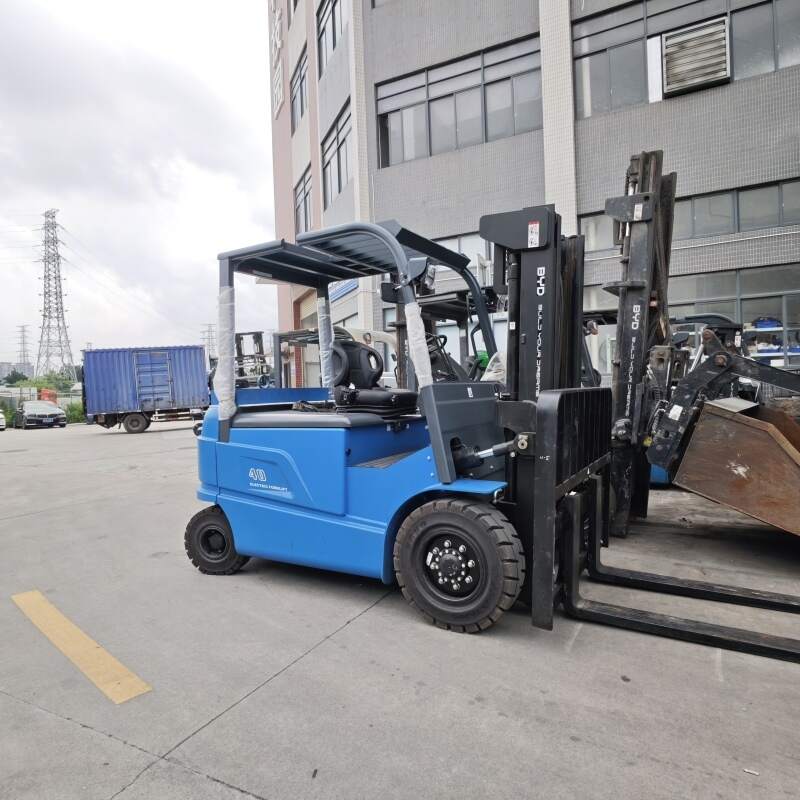
At present, many local operation teams have begun to optimize the generator-backed charging mode by arranging centralized charging in the period with lower fuel price, configuring professional voltage stabilization equipment to reduce energy loss, to control the comprehensive cost within a more reasonable range. We are Jianshu New Energy, focusing on BYD electric forklift related services, and can provide targeted operation cost optimization suggestions for three-wheel forklift users in Port Harcourt. If you have related demands for cost reduction and efficiency improvement of material handling equipment, you can send email to [email protected] for consultation.