
 简体中文
简体中文 Русский
 Français
 Português
 Español
 لالعربية

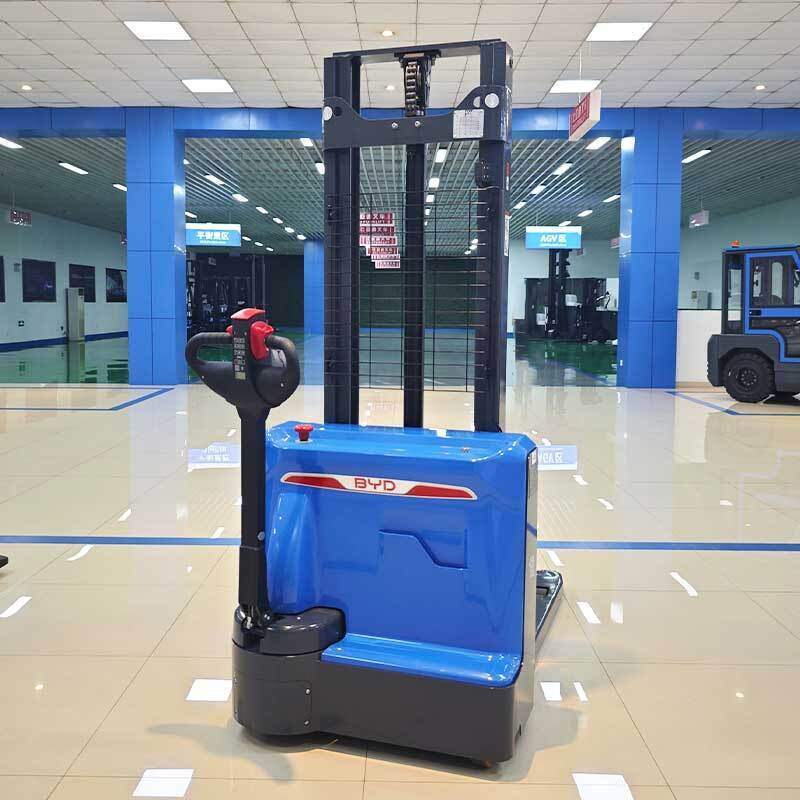
Electric pallet jacks serve as core material handling equipment for most warehouse, logistics and retail storage scenarios, and their daily operation stability directly influences the overall efficiency of cargo circulation. Many operation teams only focus on regular mechanical maintenance of the equipment itself, while ignoring the non-negligible influence of ambient factors that may cause unexpected performance fluctuations or even unnecessary failures.
The first core environmental factor is ambient operating temperature. Under continuous high temperature environment above 35℃, the heat dissipation efficiency of the driving motor and the integrated control panel will drop obviously, and the battery pack will see faster chemical reaction consumption, leading to shorter continuous working duration per full charge. In low temperature environment below 0℃, the available capacity of the battery pack will decrease by a certain proportion, and the hydraulic oil inside the lifting cylinder will become higher in viscosity, leading to slower response of lifting and descending operations. Operation teams can arrange proper preheating process with no load for 8 to 10 minutes before heavy duty work in cold seasons, and avoid long time continuous full-load operation under direct sunlight in hot summer to reduce extra performance loss.
The second key factor is the ground condition of the working area. Unpaved rough ground, scattered sharp metal debris, accumulated ponding or oil stains will bring extra negative impacts to the daily performance of electric pallet jacks. Sharp debris may scratch the surface of walking wheels or even damage the sealing structure of wheel hubs, ponding may seep into the wiring port of the driving motor and cause poor circuit connection, while oil stains will reduce the friction force between walking wheels and the ground, extending the braking distance and bringing hidden safety risks. Operation teams can arrange regular cleaning for the working aisle, and repair the cracked or sunken ground area in time to maintain proper ground condition.
The third influential factor is dust and corrosive media in the air. For working scenarios such as grain processing warehouses, building material storage sites and chemical product storage areas, floating fine dust or trace corrosive vapor will accumulate on the heat dissipation gaps of the motor, the ventilation grille of the battery pack and the surface of circuit interfaces after long-term operation. This situation will block heat dissipation channels and accelerate the aging of metal parts, leading to increased failure probability. Corresponding teams can arrange regular surface cleaning for the equipment after work, and wipe the parts contacting corrosive media in time to reduce performance loss.
The fourth factor is the ventilation condition of the operation and charging area. In completely enclosed narrow space without sufficient air circulation, the tiny amount of gas separated out during battery charging and high-intensity discharging will accumulate locally, which will not only affect the battery service life, but also bring potential safety risks. It is recommended to arrange proper ventilation facilities for the charging area, and avoid long-time continuous operation of electric pallet jacks in fully sealed spaces.
Reasonable control of all above environmental factors can effectively keep the daily performance of electric pallet jacks within the optimal stable range, reduce unexpected maintenance cost, and extend the overall service life of the equipment.


