
 简体中文
 Русский
 Français
 Português
 Español
 لالعربية


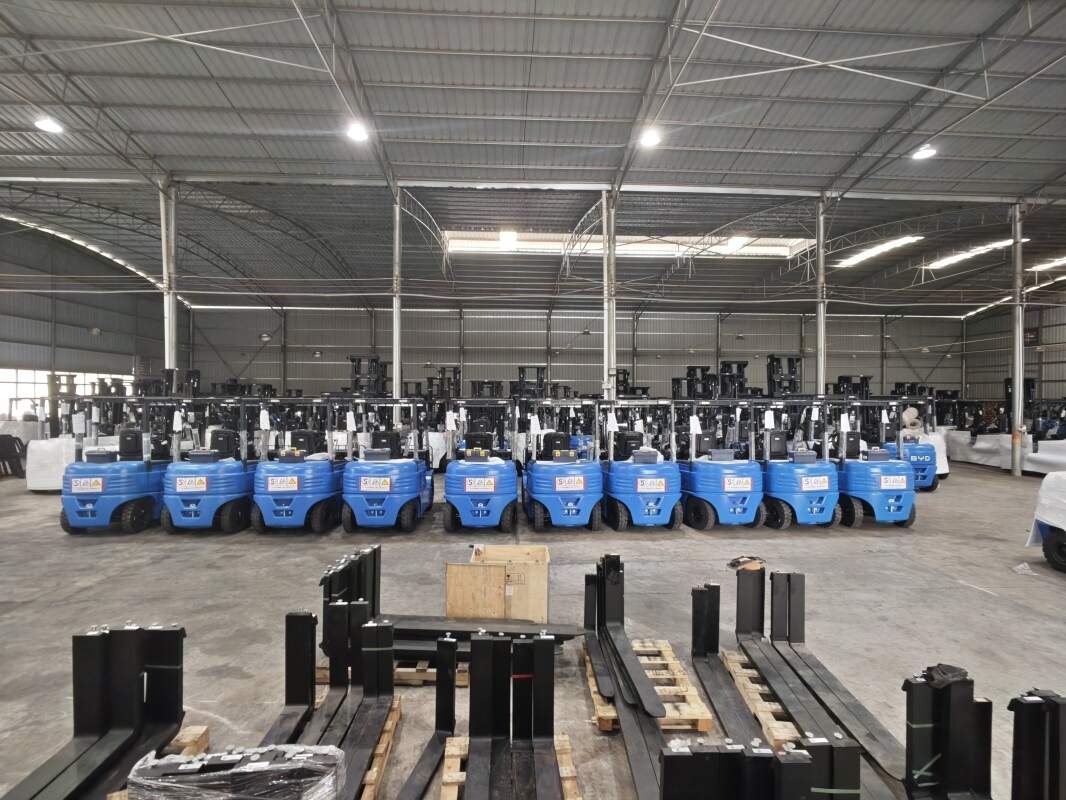
As the global logistics and warehouse industry shifts to low-carbon, high-efficiency operation mode, electric forklifts have become one of the most widely applied material handling equipment in different industrial scenarios. To help operators grasp core skills of using this type of equipment properly, this guide sorts out practical professional knowledge from operation norms to daily maintenance for on-site practitioners.
Core Operation Norms for Safe Daily Use
Before starting the equipment, operators need to conduct basic pre-checks, including inspecting the battery power level, braking system sensitivity, lifting components flexibility and body surface condition, to avoid hidden risks caused by overlooked tiny problems. During the operation process, operators need to keep the load within the rated load range, avoid sharp acceleration and sudden stop, and keep a safe distance from surrounding personnel and shelves to prevent accidental collisions. For high-lifting operation scenarios, operators should keep the center of gravity of the goods stable to avoid rollover risks, and do not allow any personnel to stand under the lifting forks for unrelated operations.
Daily Maintenance Strategies to Extend Equipment Service Life
Daily maintenance is a core step to reduce equipment failure rate and lower long-term usage cost. For the power battery component, users need to follow the official charging rules, avoid over-discharging and overcharging, and place the battery in a dry, ventilated and constant-temperature storage environment when it is not used for a long time. Operators also need to regularly clean the dust and sundries accumulated on the body surface and heat dissipation structure, check the wear condition of tires, transmission parts and electrical wiring, and replace worn components in time according to actual usage status.
Performance Optimization Tips for Different Scenarios
For narrow aisle warehouse scenarios, operators can adjust the running speed to a low and stable level to match the small operation space, which can effectively improve the access efficiency of dense goods. For long-time continuous working scenarios, it is suggested to arrange reasonable battery replacement schedule according to the actual operation intensity, to avoid unexpected shutdown caused by insufficient power that affects the overall logistics rhythm. Users can also adjust the parameter settings of the lifting system according to the average weight of daily handled goods, to balance operation efficiency and energy consumption.


