
 简体中文
 Русский
 Français
 Português
 Español
 لالعربية


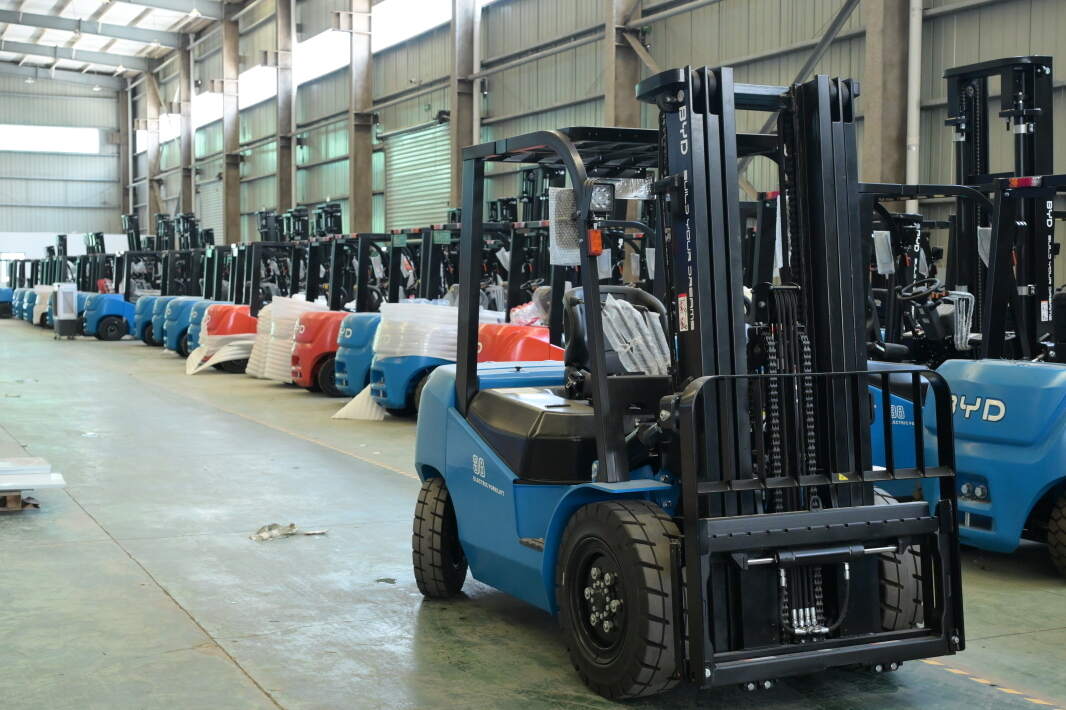
As the core handling equipment of modern warehouse and logistics systems, electric forklifts have been widely applied across various industrial sectors in recent years, for their low noise, near-zero direct emission and flexible operation performance. Mastering correct use and maintenance rules can help operators give full play to the equipment’s working performance, reduce unnecessary operation cost, and lower potential safety risks in daily operation process.
Core Performance Adaptability of Electric Forklifts for Daily Scenarios
Different from internal combustion driven handling equipment, electric forklifts rely on electric power drive systems to complete cargo stacking, short-distance transportation and vehicle loading and unloading tasks. Most models can operate stably in closed indoor spaces without producing exhaust gas that harms indoor air quality, which fits well the application needs of food processing, electronic manufacturing, cold chain storage and other scenarios with strict requirements for environmental cleanliness. The power output of the drive system can be adjusted smoothly according to actual operation needs, bringing friendly control experience for operators who have completed basic operation training.
Standard Operation Rules to Reduce Unnecessary Equipment Wear
Before starting the equipment for each shift, operators need to check the remaining power level, the sensitivity of the braking system, the flexible state of the lifting mechanism and the intact condition of the warning lights first, to eliminate hidden risks that may cause abnormal operation in advance. During the operation process, operators should avoid sudden acceleration or sharp steering when carrying heavy loads, and keep the cargo gantry at a proper backward tilt angle when transporting goods to prevent the goods from falling off accidentally. It is not advised to overload the equipment beyond the rated load capacity for a long period, which will bring extra wear on the drive motor and the hydraulic lifting system.
Scientific Daily Maintenance Measures to Extend Service Life
After finishing daily operation tasks, operators need to park the equipment in a designated flat and ventilated area, lower the lifting gantry and forks to the lowest position, and turn off the power supply following the standard process. Operators should regularly clean the dust and sundries accumulated on the surface of the battery compartment, driving wheels and the body, to avoid sundries blocking the normal heat dissipation path of core components. For the supporting power battery pack, follow the corresponding charging specifications, avoid over-discharging the battery to extremely low power level for a long time, and arrange charging work in a cool and dry environment as much as possible to maintain the stability of the battery performance. Long-term adherence to these standardized management rules can bring considerable positive improvement on the overall operation efficiency of the logistics handling system.


