
 简体中文
简体中文 Русский
 Français
 Português
 Español
 لالعربية

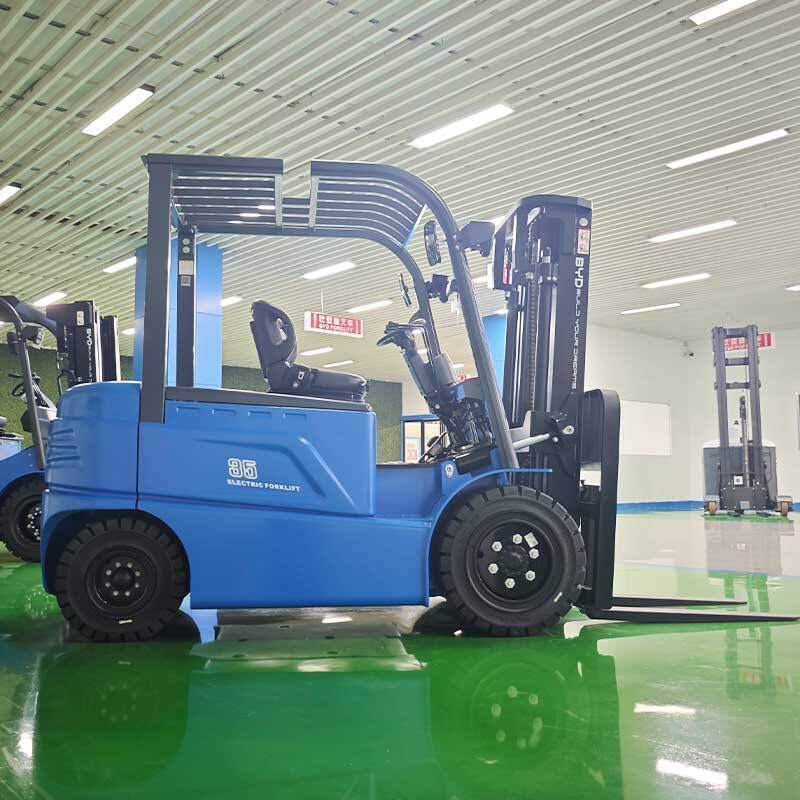
As a core low-carbon material handling equipment widely used in modern logistics scenarios, electric forklifts have gained growing popularity for their low noise, zero local emission and relatively easy operation features. Mastering proper usage and management rules can help enterprises get better return from equipment investment in daily operations.
Core Standard Operation Principles
Before each startup, operators need to complete basic pre-inspection work, including checking remaining battery power, confirming the tightness of load forks, testing the flexibility of steering and braking systems, to avoid hidden safety risks in subsequent operations. During the running process, operators need to match the actual load with the rated load capacity of the equipment, avoid overloading for a long time, and keep a stable running speed when passing narrow aisles or uneven road surfaces, no sudden acceleration or sudden braking that may cause load falling or equipment component wear. For operations at high lifting heights, relevant personnel need to maintain a stable viewing angle and avoid misoperation caused by blind spots.
Routine Daily Maintenance Essentials
Regular standardized maintenance work can effectively reduce the failure rate of electric forklifts and extend their overall service cycle. The core of daily maintenance focuses on battery management, operators need to follow the correct charging specifications, avoid over-discharging the battery to extremely low power level for a long time, and keep the surface of the battery and surrounding wiring clean and dry to prevent leakage risks. Besides, personnel need to check the wear degree of solid or pneumatic tires on a regular basis, replace aging wear parts in time when the wear degree reaches the preset warning line, and regularly lubricate the movable connecting parts of the gantry to ensure flexible lifting performance.
Scenario-Based Efficiency Optimization Suggestions
For different application scenarios, targeted adjustment of operation rules can further improve the use efficiency of electric forklifts. For example, in closed warehouse scenarios with frequent access, enterprises can arrange operation routes reasonably to reduce unnecessary empty driving distance, thus cutting extra power consumption. For low-temperature working environments, relevant personnel can take necessary protective measures for the battery components to maintain stable power output performance. All operation and maintenance work should be carried out in combination with the equipment’s official operation specification, to get the best use effect under the premise of ensuring operation safety.


