
 简体中文
简体中文 Русский
 Français
 Português
 Español
 لالعربية

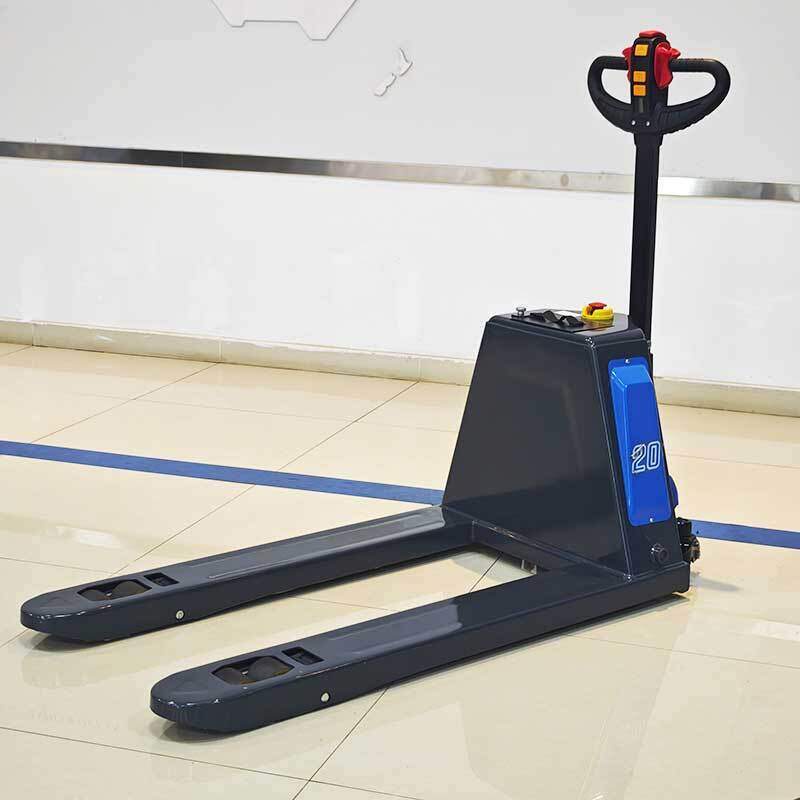
Against the background of accelerating low-carbon transformation of the logistics industry, electric forklifts have become one of the most widely used material handling equipment in indoor storage, distribution centers and light industrial operation scenarios. Compared with traditional internal combustion counterparts, they feature lower noise, zero local emissions and more flexible operation, while proper use and standardized management can further release their application value.
Pre-Operation Daily Check Specifications
Before starting any operation, operators need to complete a series of basic checks to eliminate hidden risks in advance. First, confirm the remaining power level of the power system, and check the connection of the power interface to avoid loose contact that may cause unexpected power off during operation. Second, test the sensitivity of the braking system, steering system and all lighting and warning indicator lights, to ensure all functional components respond normally. Third, check the wear degree of the fork arms and the tightness of the load backrest, and remove foreign objects stuck in the wheel gaps to avoid unstable driving status in the following tasks.
Standard Operation Best Practices
During the operation process, operators need to follow the load limit specifications set for the equipment, avoid long-time overload use that will cause extra loss to the hydraulic system and bearing structure. When driving in narrow warehouse aisles, keep a safe distance from surrounding shelves and personnel, avoid sudden acceleration and sudden braking that may cause the goods to slip off the forks. For ramp operation, keep the load facing the uphill direction, and do not turn on the slope to avoid side tilting. As most electric forklifts are designed for indoor closed scenarios, it is not recommended to use them in long-term heavy rain or highly corrosive environments without targeted protective measures.
Routine Maintenance and Upkeep Suggestions
After finishing daily operation, operators need to park the equipment in the designated special area, lower the fork arm to the horizontal position close to the ground, and cut off the main power supply in time. For the power system, follow the corresponding charging specifications, avoid full discharge for a long time, and do not leave the equipment in a state of insufficient power for more than 48 hours. Regularly clean the dust and debris accumulated on the surface of the equipment and the heat dissipation structure, to ensure the heat dissipation efficiency of the motor and control module. Carrying out regular maintenance according to the official operation manual can effectively extend the service life of the equipment, and reduce the overall operating cost of the warehouse.


