
 简体中文
 Русский
 Français
 Português
 Español
 لالعربية


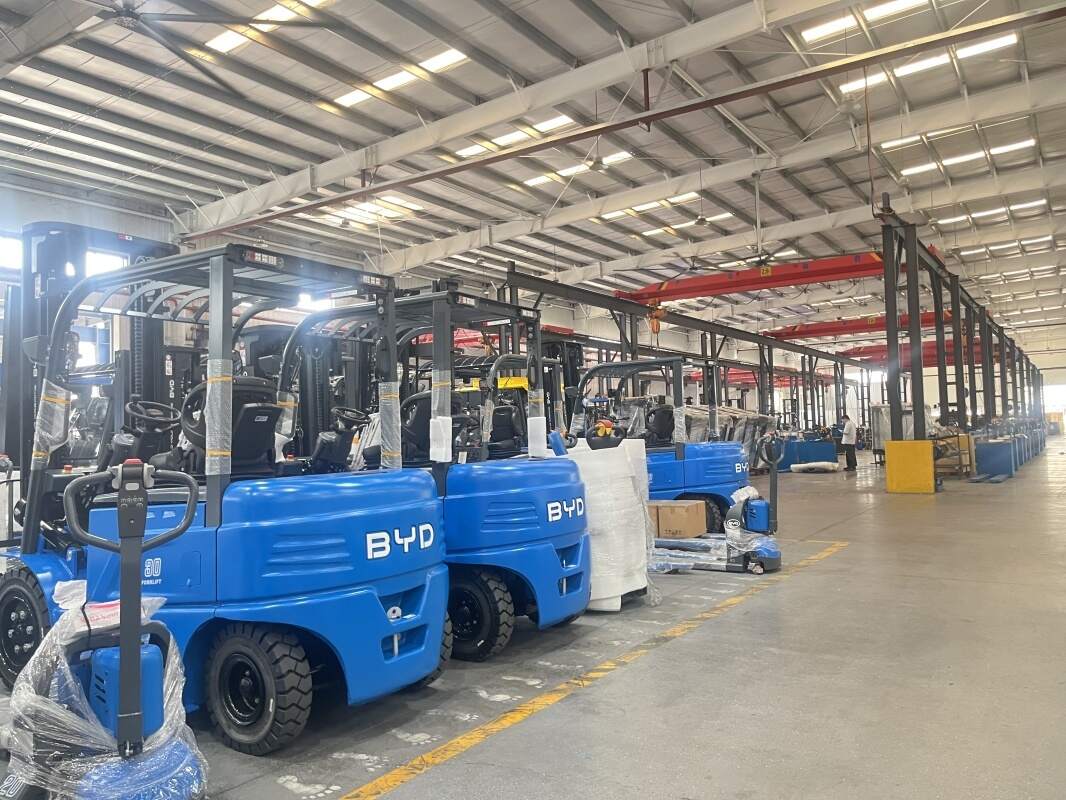
With the continuous development of modern logistics and warehousing industries, electric forklifts have become one of the most widely used material handling equipment in closed operation spaces. Many operation teams are looking for systematic methods to give full play to the value of such equipment, reduce unnecessary wear and tear, and control long-term operation costs. The following content shares practical professional knowledge covering multiple links of equipment use.
Core Advantages of Electric Forklifts in Daily Material Handling
Compared with traditional internal combustion powered handling equipment, electric forklifts produce no tail gas during operation, and the overall operating noise is controlled at a relatively low level, which is more friendly to the working environment of closed warehouses. The power output of electric forklifts is more stable, and the control sensitivity of the lifting and walking structure is more suitable for the access operation of precision pallet goods, which can reduce the risk of accidental collision during the handling process. The power system of this type of equipment has fewer redundant components, and the basic structure is relatively simple, which will not bring too much extra workload for daily maintenance.
Routine Maintenance Points to Extend Equipment Service Life
The daily maintenance of electric forklifts does not require overly complicated operation procedures. Operators need to clean the dust, debris and accumulated water attached to the surface of the equipment in time after each shift, regularly check whether the connection parts of the power module are firm, and avoid abnormal energy consumption caused by loose lines. It is also necessary to check the lubrication degree of the brake system and the lifting hydraulic structure regularly, supplement the lubricating medium that meets the specification in time, and adjust and replace the parts in advance when slight wear signs are found, to prevent small problems from expanding and affecting the overall service cycle.
Operation Standardization to Reduce Unnecessary Energy Consumption
Standardized operation habits can significantly reduce the unnecessary energy consumption of equipment. Operators need to be familiar with the load threshold of the equipment in advance, and do not transport goods exceeding the rated load of the equipment for a long time. In the process of long-distance goods transfer, try to keep driving at a constant speed, reduce the frequency of sudden acceleration and sudden deceleration, and turn off unnecessary power supply modules in time during non-operation parking periods to reduce energy loss in standby state. These small operation adjustments do not require additional cost investment, and long-term adherence can effectively extend the working duration of a single full charge of the power pack.
Scenario Adaptation to Improve Overall Working Efficiency
Different warehouse scenarios can be adjusted with corresponding matching strategies. In narrow aisle operation scenarios, the steering parameter sensitivity of the equipment can be adjusted appropriately to meet the steering demand in narrow spaces. When working in low temperature and high humidity environment, the protection of the power system should be done in advance to avoid the interference of environmental factors on the operation state. The operation team can reasonably plan the use schedule of equipment in different shifts according to the daily operation volume, reduce the idle waiting time of the equipment, and maximize the operation potential of each unit.


