
 简体中文
 Русский
 Français
 Português
 Español
 لالعربية


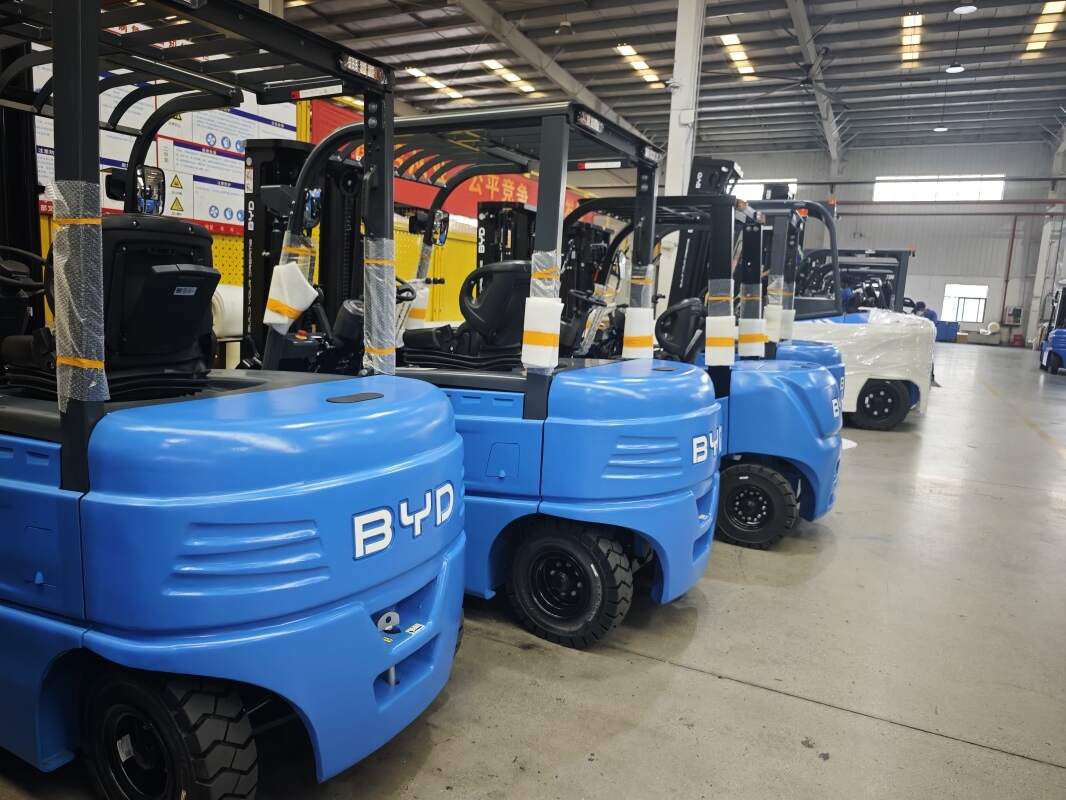
Against the general trend of low-carbon transformation in the logistics and industrial sectors, electric forklifts have become one of the most widely used material handling equipment for their low local emission, low noise and easy operation features. Mastering standardized operation and management rules can help relevant operators give full play to the performance advantages of the equipment, and avoid unnecessary operation risks and extra cost consumption.
Core Pre-operation Inspection Rules for Electric Forklifts
Before each start-up operation, operators shall complete a full range of basic checks according to the preset process. The check scope covers the remaining power level of the power unit, the sensitivity of the braking system and steering lever, the wear degree of the tire surface, the normal operation of warning lights and sound prompts, as well as the smoothness of the lifting structure. Operators shall confirm that the operation site meets the equipment operation requirements, including the ground load-bearing capacity, the reserved width of the passage, and the condition of no obvious obstacle in the driving route.
Key Optimization Measures to Improve Operation Efficiency
In the daily operation process, operators shall avoid frequent sharp acceleration and sharp deceleration as much as possible, to reduce unnecessary power consumption and abrasion of transmission components. When the equipment is in heavy load state, the lifting height of the goods shall be controlled within a reasonable range, and high-speed driving shall not be carried out to ensure operation stability. When the equipment is in idle state for more than 5 minutes, the non-necessary auxiliary power system can be turned off to reduce invalid energy consumption, and the equipment shall not pass through the accumulated water area with depth exceeding the specified threshold, to prevent the internal electrical components from damp.
Routine Maintenance Points to Extend Equipment Service Life
After each shift operation, operators shall park the equipment in the designated storage area in a fixed position, and carry out standardized charging according to the power supplement specification, to avoid long-term over-discharge of the power unit. The dust and debris accumulated on the surface of the equipment and the heat dissipation part of the power system shall be cleaned regularly, and the wear condition of the external connecting line shall be checked regularly. Once abnormal noise or obvious performance attenuation is found in the use process, the relevant professional technical personnel shall be contacted for troubleshooting in time, and the core electrical components shall not be disassembled without professional guidance. Formulating a complete set of operation and maintenance management system suitable for the actual use scenario can help the electric forklift maintain a stable running state for a long time, create higher use value for the material handling work of warehouses, manufacturing factories and other places, and effectively control the total use cost in the whole life cycle.


