
 简体中文
简体中文 Русский
 Français
 Português
 Español
 لالعربية

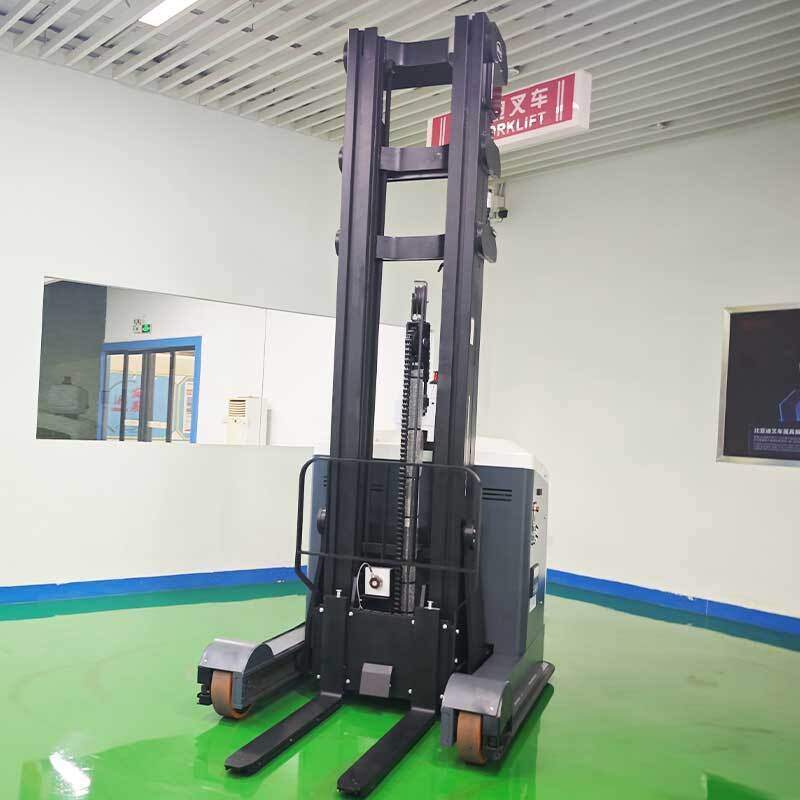
To master stable load-placement skill of electric pallet trucks is the core competency for frontline warehouse operators, which directly relates to cargo integrity, operation efficiency and on-site handling safety. Unlike idle fast driving training, the load-placement precision drills focus on subtle operation control, which is suitable for both new employees with less than 1 month of operation experience and skilled operators who want to correct existing bad habits.
Before starting all formal drills, you need to finish full pre-drill preparations first. Clear the designated 20-square-meter training site to remove all scattered sundries, protruding obstacles and unrelated personnel, check the running state of the electric pallet truck to confirm its power is sufficient, brake response is sensitive, and the fork surface has no obvious damage. Prepare standard simulation loads with uniform weight, and paste obvious alignment marking lines on the side of the load, meanwhile draw corresponding reference lines on the ground or the edge of target storage positions. All participants shall wear required labor protection gear as per site management rules to eliminate potential safety risks in advance.
The first core drill is low-speed alignment practice. Operators control the electric pallet truck to approach the preset placement position at the lowest adjustable speed, keep the two forks fully horizontal, adjust the direction slightly to keep the body parallel to the reference line on the ground, slowly push the load to the designated position. After each attempt, stop the vehicle and measure the actual deviation between the load and the standard position, record the operation feel of acceleration and steering, get familiar with the low-speed response characteristics of the vehicle, and gradually control the placement deviation within the allowed 3cm range.
The second core drill is height positioning calibration practice. For placement scenarios with different shelf heights, operators train to control the lifting travel of the hydraulic lever, make the fork rise to the target height steadily, avoid over-lifting that may scratch the upper goods and insufficient lifting that may jam the bottom of the pallet. Repeated practice helps operators form muscle memory of lever adjustment, and control the height error within 2cm stably.
The third core drill is narrow aisle adaptive practice. Set up a simulated narrow aisle with a width only 30cm larger than the body width, operators need to judge the distance between the body and the shelves on both sides through the side observation mirrors, finish the complete load placement process without stretching head out for observation, adapt to the limited operation space in common warehousing environments.
After each training session, count the deviation data of 5 consecutive placement operations, record the progress of each operator. Long-term adherence to such systematic drills can effectively reduce cargo damage rate, lower the probability of collision accidents, extend the service life of core components of the electric pallet truck, and bring stable optimization effect for the daily operation of the whole warehouse.


