简体中文
 Русский
 Français
 Português
 Español
 لالعربية


In Burkina Faso’s fast-growing logistics, agricultural processing and mineral distribution sectors, four-wheel forklifts are core handling equipment supporting daily operational efficiency. Many local enterprise operators face common choices when purchasing new handling equipment, weighing comprehensive cost inputs between traditional diesel models and new energy electric models to match their long-term operational plans.
For traditional diesel four-wheel forklifts, the upfront purchase cost is usually at a relatively low level at the initial stage. But in the long-term daily operation process, operators need to bear continuous expenditure on diesel fuel. Affected by regional energy supply fluctuations, the local diesel price often shows obvious periodic changes, which brings unstable cost control expectations for enterprises that run forklifts for more than 4 hours a day. In addition, regular maintenance of diesel forklifts involves replacement of engine-related parts, oil and filter elements, which accumulates to a considerable amount of expenditure in 3 to 5 years of use. Local environmental protection management requirements for exhaust emissions also add extra inspection and rectification costs for some diesel equipment users in recent years.
For electric four-wheel forklifts, the upfront purchase input is relatively higher than diesel models, but the follow-up operational cost advantage is very prominent. The local grid electricity price is stable for a long time, and the power consumption cost per unit of handling operation is far lower than the corresponding diesel cost. Even for enterprises that use off-grid photovoltaic power supply to charge equipment, the long-term power cost can be controlled at a more predictable low level. The structural characteristics of electric forklifts determine that they do not need complex engine maintenance procedures, only regular check of battery, tire and brake systems, which greatly reduces the annual maintenance labor cost and parts cost. Under the same annual working hours, the total 5-year total ownership cost of electric four-wheel forklifts is obviously lower than that of equivalent diesel models for most local users.
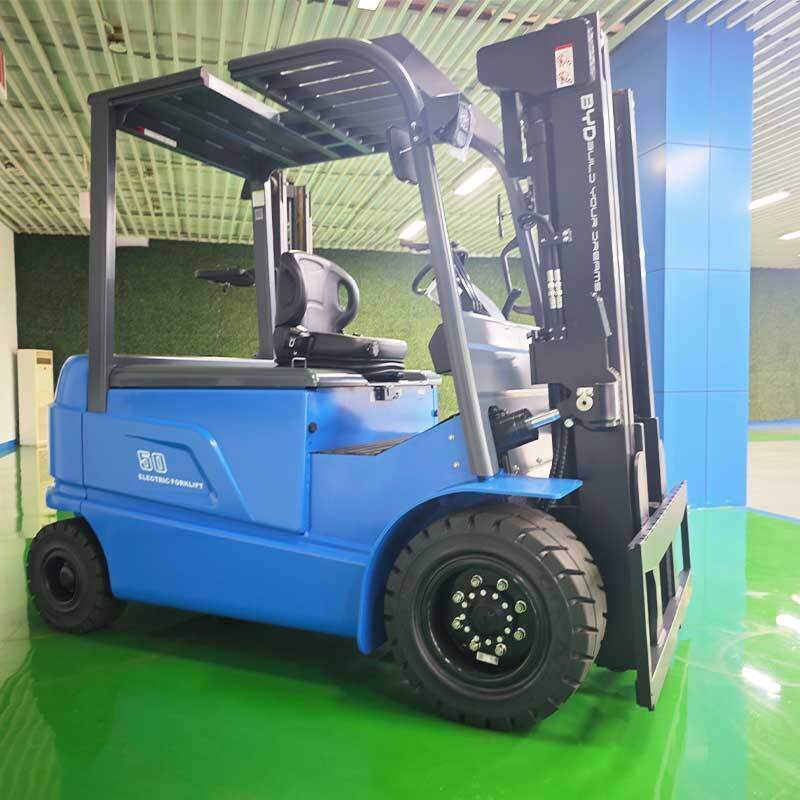
It is worth noting that electric forklifts also have obvious advantages in operating noise and on-site emission performance, which can improve the working environment of on-site operators and avoid additional emission-related management costs. We are Jian Shu New Energy, focusing on BYD electric forklift products. For any relevant consultation, you can send email to [email protected].