
 简体中文
 Русский
 Français
 Português
 Español
 لالعربية


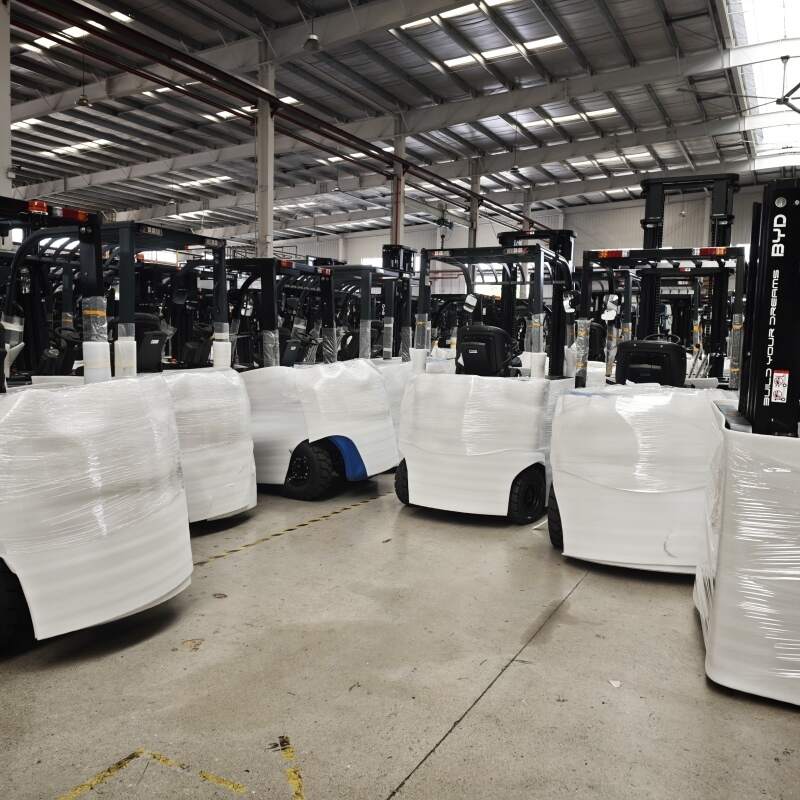
Against the backdrop of rising demand for low-carbon and low-noise material handling solutions in modern logistics and manufacturing scenarios, electric forklifts have become a widely adopted option across various indoor and enclosed operation sites. Mastering systematic operation and maintenance knowledge can help site operators fully leverage the performance of the equipment while reducing unnecessary operation risks.
Core Pre-operation Inspection Protocols
Before starting any shift work, operators need to complete a full set of pre-use checks to avoid potential hidden faults that may cause operation interruption. The inspection scope includes checking the residual power level of the power supply, confirming the tightness of each connecting part of the lifting gantry, testing the flexibility of steering and braking systems, and verifying the normal display status of all instrument indicators. Operators should also check the surrounding operation space to eliminate obstacles that may affect the moving route of the equipment before formal operation. For sites with complex ground conditions, staff can also check the flatness of the main operation routes in advance to avoid sudden impact on the equipment body.
Standard Operation Best Practices for Extended Service Life
Following standardized operation habits can effectively reduce the wear of core components of electric forklifts and maintain stable long-term performance. Operators should avoid sudden acceleration or sharp steering when the equipment is carrying full loads, and try to keep the load center within the allowable range specified in the equipment parameter sheet to avoid excessive pressure on the load bearing structure. When the equipment is working on sloped roads, the load side should be kept facing the uphill direction to prevent goods from slipping off, and operators should not park the equipment on the sloped surface for a long time without necessary fixing measures. For long-distance moving scenarios in large warehouse spaces, operators should maintain a stable low to medium speed to reduce unnecessary consumption of power output components.
Routine Maintenance Tips to Reduce Unplanned Downtime
Daily regular maintenance work does not require complex professional operation skills, and the completion of relevant work by on-site operation teams can effectively extend the average service cycle of electric forklifts. After each shift, operators should wipe off the dust and residual sundries on the surface of the equipment, especially clean the sundries stuck on the heat dissipation structure of the power system, to avoid affecting the normal heat dissipation effect during subsequent operation. Operators should also arrange regular checks on the wear degree of walking wheels and hydraulic sealing components, and replace the corresponding accessories in time when the wear degree reaches the preset threshold, to avoid sudden leakage or jamming faults during operation. Reasonable arrangement of charging according to the type of power units can also maintain the activity of the power core, and avoid frequent over-discharge that may affect the overall power storage capacity in the long run.


