
 简体中文
 Русский
 Français
 Português
 Español
 لالعربية


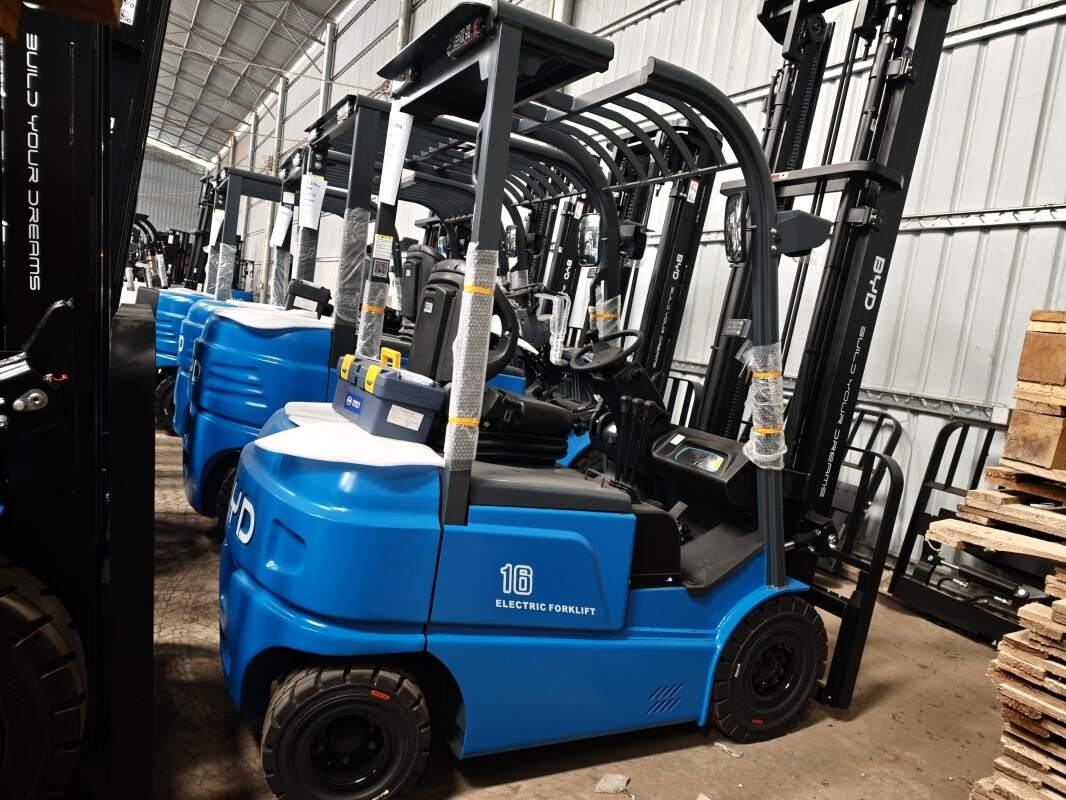
As low-emission and low-noise logistics equipment, electric forklifts have been widely applied in closed warehouse, cold chain storage and indoor industrial handling scenarios in recent years. Many frontline operators and warehouse managers seek practical, easy-to-follow methods to make full use of the equipment’s inherent advantages in daily use, without extra unnecessary operation cost. This guide covers core practical points across operation, maintenance and efficiency optimization, to offer systematic reference for relevant practitioners.
Core Principles for Standard Daily Operation
Before every formal shift, operators need to complete pre-inspection work on key components, including the brake system, steering structure, fork wear status and remaining battery level, to eliminate hidden risks in advance. During the operation process, it is not recommended to carry loads that exceed the rated load range of the equipment, and the driving speed should be adjusted dynamically according to the on-site personnel density, channel width and ground condition. Sudden braking and sharp turning should be avoided as much as possible, to reduce extra wear on the tire assembly and load bearing structure. Operators should also avoid long-time parking on slopes that exceed the equipment’s rated allowable gradient, to prevent abnormal displacement or unexpected power consumption.
Routine Maintenance Measures to Extend Service Life
After each shift, operators need to park the equipment in the designated ventilated and dry area, instead of leaving it in open areas with heavy dust or splashing liquid. For battery management, it is advisable to arrange charging before the battery power drops to the overly low threshold, to avoid irreversible impact on the battery cycle life. Regularly wipe off dust and stains on the battery surface, and check the tightness of all electrical connection ports, to prevent abnormal heat generation caused by poor contact. Lubrication work on moving parts such as lifting chains and wheel rotating shafts can be arranged on a fixed cycle, to keep the operation of the whole equipment smooth.
Efficiency Improvement Strategies for Material Handling Scenarios
Warehouse operation teams can map out the most reasonable daily driving routes in advance according to the location of cargo storage areas and delivery ports, to reduce unnecessary detour distance in the handling process. Reasonable scheduling across different shifts can also avoid long-time continuous high-load operation of single unit, and keep the equipment working within the reasonable load range that the design allows. This arrangement can promote the stability of daily operation, and reduce the overall energy consumption level and long-term operation input.


