
 简体中文
 Русский
 Français
 Português
 Español
 لالعربية


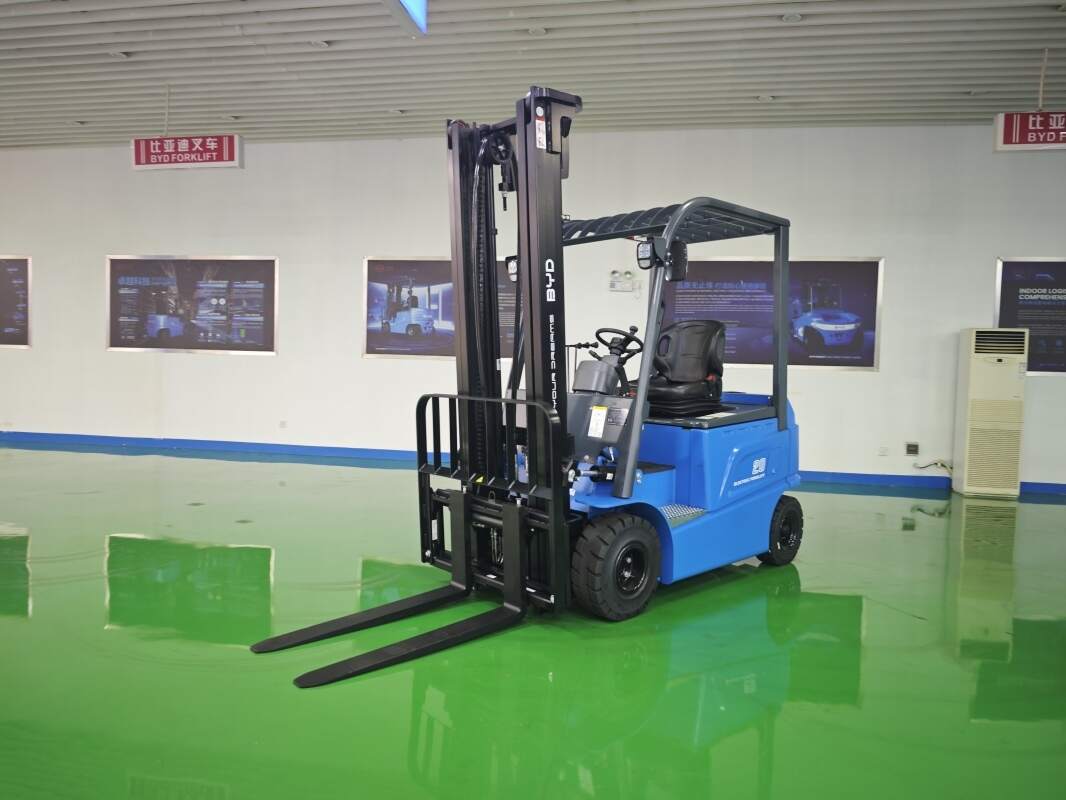
As one of the most widely used material handling equipment in modern industrial and warehousing scenarios, electric forklifts have gained increasing popularity in recent years with the development of low-carbon logistics trends. Mastering correct use and maintenance knowledge can help relevant personnel give full play to the value of the equipment in daily work.
Core Performance Advantages of Electric Forklifts
Different from traditional internal combustion handling equipment, electric forklifts produce no exhaust emission on the working site, which is very suitable for enclosed storage spaces, food processing workshops and other scenarios with high requirements for environmental hygiene. The overall noise level during operation is significantly lower, which can reduce the long-term noise interference to on-site operators, and create a more comfortable working environment for the whole team. Its energy consumption cost per unit of operation is also relatively lower, which helps to control the daily operating expenditure of logistics links.
Standardized Daily Operation Specifications
Before each shift of formal operation, operators need to complete a pre-use inspection, which covers the remaining power of the power system, the flexibility of the braking structure, the smoothness of the lifting mast, and the integrity of the lighting and warning devices. Operators should avoid overloading beyond the rated load range, keep a stable driving speed in the channel area of the warehouse, and avoid sharp steering or sudden braking at high speed. When operating on a ramp with a large slope, personnel should keep the load facing the upper direction of the slope, and do not turn on the slope to avoid unnecessary safety risks.
Routine Maintenance Suggestions
In daily maintenance work, personnel need to regularly clean the dust and debris accumulated at the heat dissipation outlet of the power motor, to avoid affecting the normal heat dissipation effect and causing abnormal temperature rise during long-time operation. It is necessary to check the connection status of the power interface regularly, wipe the dust on the surface of the battery pack, and avoid the situation of insufficient power supply caused by poor contact. The sealing performance of the hydraulic lifting system should be checked every three months, to find and deal with potential oil leakage risks in time.
Scenario-based Efficiency Optimization Tips
For narrow channel operation scenarios, personnel can switch to the corresponding low-speed steering mode to improve the flexibility of turning and passing. In low temperature environment, preheating the power system for a short time before formal operation can help maintain stable output performance. If the equipment needs to be idle for a long time, it is recommended to keep the battery level between 40% and 60%, and start the equipment for 10 minutes of no-load operation every two weeks, to prolong the overall service life of the equipment.


